Flat White vs Latte: Flavor, Texture and Brewing Parameters

Introduction: Flat White, one of the most popular espresso-based coffees in recent years, is often compared with latte. Although both are built on espresso and milk, they differ noticeably in milk foam thickness, coffee strength and mouthfeel. This article takes a closer look at Flat White's flavor characteristics, compares it with latte on the key points, and offers professional brewing parameters and practical tips to help you better understand this delicate, silky cup.
Whether it is an everyday americano or latte, or something more distinctive like cappuccino or Flat White, most common coffee drinks are based on espresso. By adjusting the ratio of coffee to milk, or changing how the milk foam is handled, you can create coffee styles that are quite different from one another. Flat White, in particular, was refined from the traditional hot latte and, with its stronger coffee flavor and distinctive milk foam texture, has gradually become a new favorite among coffee lovers.
As for the origin of Flat White, both Australia and New Zealand claim to be its birthplace, and the question remains unsettled. What is clear, however, is that the birth of Flat White reflected consumers' growing pursuit of coffee flavor. In the 1980s, as people's demands for coffee quality rose, they wanted neither too much milk diluting the coffee's true character nor to give up the intense taste of espresso. Flat White emerged in response, using less milk and finer foam to present a unique balance between espresso and latte, and gradually became an important part of local coffee culture.

In practice, different regions and shops adopt different methods for making Flat White depending on the characteristics of the beans they use and the flavor they are aiming for. The mainstream approaches fall into two main categories: one uses a double ristretto as the base, paired with steamed fresh milk, to highlight a rich, full-bodied taste; the other uses a single espresso blended with thinner foam to create a lighter version. Because bean varieties, roast levels and shop styles vary, specific recipes are also adjusted. For example, some shops, when using a blend with a fresh flavor profile, tend to use a double ristretto as the base to strengthen the coffee's layers.

The difference between Flat White and latte is most immediately apparent in foam thickness and overall mouthfeel. Flat White's signature feature is its "flat" foam layer; the "Flat" in the English name refers to exactly this. A finished Flat White should have a foam layer so thin that it sits level with the rim of the cup, with no obvious dome, ensuring that every sip delivers both the intensity of espresso and the silkiness of foam. By comparison, cappuccino has the thickest foam, usually 1–2 cm; latte's foam is mostly 0.5–0.7 cm thick; and Flat White's foam is strictly controlled at 0.3–0.5 cm—once it exceeds 0.5 cm, the "flat" effect is hard to achieve. To highlight the coffee's crema, some baristas even skip foaming the milk and pour hot milk directly, but in most cases a fine foam layer of about 0.3 cm is retained to improve the drinking experience.

Beyond foam thickness, Flat White and latte also differ significantly in the amount of milk used. Flat White pursues a stronger coffee taste, so the ratio of coffee to milk is tighter. If the same milk ratio as latte were used, the overall flavor would easily lean toward "coffee-flavored milk," losing the layering that Flat White should have. Taking a common small size as an example: if using a 180 ml cup with a double ristretto (coffee liquid extracted from about 30 g of coffee grounds) as the base, roughly 150 g of hot milk is usually added, which ensures the coffee's intensity while not being completely masked by the milk.
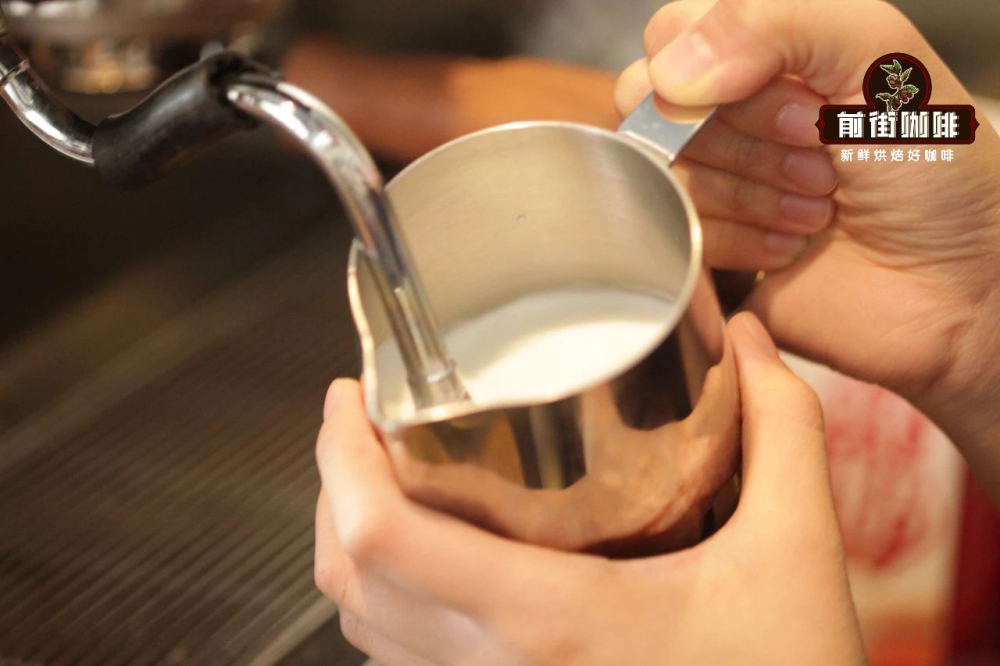
For coffee lovers who want to make Flat White at home, mastering the basic process and key parameters is especially important. First, the choice of espresso is key; extracting at a 1:1.6 coffee-to-liquid ratio is recommended—for example, 20 g of coffee grounds extracting 32 g of coffee liquid—with extraction time controlled between 27 and 30 seconds to obtain an espresso base of moderate strength and balanced taste. For the milk, prepare about 170 ml of chilled fresh milk and steam it to a dense, fine foam, with thickness controlled at around 5 mm and temperature ideally 55–65°C, so it is smooth without being too hot. Combine the espresso base and hot milk thoroughly, gently swirling the cup to ensure even mixing. The finished Flat White should have a delicate, silky mouthfeel and balanced coffee aroma.


A freshly made Flat White first greets the palate with a silky texture reminiscent of chocolate milk, accompanied by the rich flavor of butter cookies, with a lasting and clearly layered finish. This unique mouthfeel comes both from the intense espresso base and from the fine foam that sets it off. By controlling foam thickness and milk ratio, Flat White successfully finds a balance between espresso and latte, satisfying coffee lovers' pursuit of intense flavor while retaining the smoothness and mildness that milk brings.