Flat White Explained: Differences and Home Brewing Guide

Introduction: Flat White, also known in Chinese as aobai, furuibai, or aoruibai, is often confused under different names, but they all refer to the same classic coffee—Flat White. This article takes a deep dive into the origin debate and flavor characteristics of this milk coffee, compares it in detail with latte and cappuccino, and provides professional-grade home brewing parameters and techniques to help you precisely master every flavor layer.
When ordering at a café, you often encounter names like aobai, furuibai, aoruibai, or even chunyi bai—but they all point to the same classic coffee drink: Flat White. This milk coffee, known for its velvety microfoam and rich coffee flavor, has gradually become a daily choice for coffee lovers worldwide thanks to its balanced texture and unique drinking experience. So why exactly is it so popular? And how does it fundamentally differ from the common latte?
The origin of the Flat White remains disputed between Australia and New Zealand. Both sides insist the coffee originated in their country, but what is certain is that its birth is closely tied to the introduction of espresso machines in the 1970s. In Australia, traditional coffee shops had long relied on French presses and manual pour-over until Italians brought espresso technology, which drove a revolution in milk coffee culture. Compared with the traditional latte, local consumers preferred drinks with thinner foam and more pronounced coffee flavor. By the 1980s, the Flat White had officially entered café menus and gradually spread to European and American markets.

The global popularity of the Flat White owes much to commercial brand promotion. In 2015, an international chain introduced it to the Chinese market under the name “furuibai,” which accelerated its spread. Its core appeal lies in the unique drinking experience: with every sip, consumers can feel the delicate fusion of foam, coffee, and milk. To achieve this effect, the foam must be sufficiently velvety and on the thin side, while the milk temperature must be kept within a suitable range so the drink can be finished quickly before the foam separates. This also places higher demands on coffee bean quality and milk steaming technique—poor-quality beans or coarse foam will directly expose flaws.

With the rise of the specialty coffee wave, the use of single-origin espresso (SOE) has brought more flavor possibilities to the Flat White. Compared with a large latte or a thick-foam cappuccino, the small-format Flat White better highlights the regional characteristics of the coffee beans themselves, satisfying consumers’ demand for aromatic complexity and layered texture. This pursuit of pure coffee flavor has made it the daily first choice for specialty coffee enthusiasts.
From a preparation standpoint, although the Flat White and the latte are both milk coffees, they differ significantly. Latte means “milk” in Italian, emphasizing the balance between coffee and milk—you can perceive the richness of the coffee while savoring the sweetness of the milk, with neither masking the other. The Flat White, by contrast, puts coffee at its core, with milk serving only as a flavor carrier. In practice, its coffee flavor is more concentrated and its texture richer.

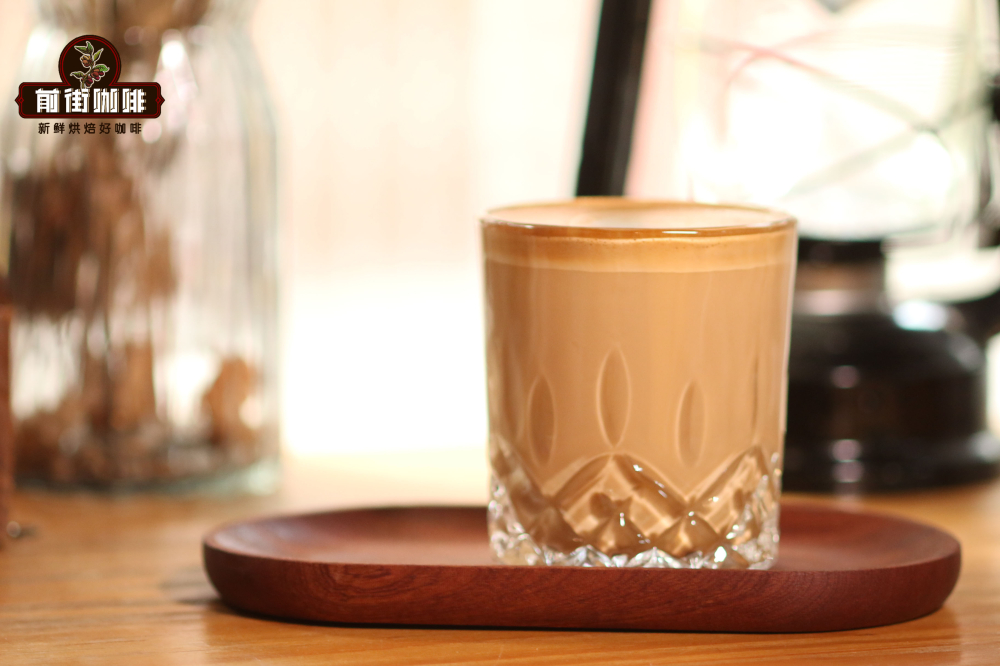
The choice of cup size and base directly affects the final flavor. New Zealand baristas typically use a small cup of about 150 ml and insist on a double espresso as the base, increasing the coffee ratio by reducing the amount of milk; some Melbourne baristas use a double ristretto (a concentrated version of espresso, extracting only the early and middle portions for a more intense taste) to maintain a foam thickness similar to a latte in the same cup size. Australian baristas pay more attention to controlling foam thickness—the foam layer of a standard Flat White is usually 0.3–0.5 cm, and it needs to be thin enough to sit level with the rim of the cup, avoiding a dome, so that every sip contains both coffee liquid and velvety foam.

Making a Flat White at home is not difficult; the key is precise control of parameters. For the coffee base, a double espresso (or double ristretto) is recommended. The extraction recipe for a double ristretto is: 20 g of coffee grounds extracting 30 g of coffee liquid in 22–24 seconds (adjust specific parameters according to bean characteristics). Steam the milk more gently than for a latte, reducing air incorporation to obtain a thinner, more velvety foam layer, with the temperature ideally controlled at 55–60°C. When pouring 150 ml of steamed milk into the coffee, there is no need to deliberately create latte art; the thin foam will leave a flat surface, which is also the origin of its Chinese nickname “pingbai coffee” (flat white).

In terms of flavor, a high-quality Flat White typically presents a rich fusion of chocolate and milk, accompanied by a berry-like sweet-tart finish, with a velvety entry and lingering aftertaste. If you prefer the bittersweet char of a dark roast, you can choose a blend (such as a recipe combining Brazilian, Indonesian, and Vietnamese beans), using a double standard espresso (1:2 coffee-to-liquid ratio, 20 g of grounds extracting 40 g of liquid, 28–32 seconds of extraction) as the base, paired with 150 ml of thin-foam milk, and finally pouring in a simple pattern to obtain a rich, sweet, and toasty version.
It is worth noting that different cafés may have subtle differences in their definition of a Flat White—some strictly distinguish foam thickness, while others emphasize cup size or base type. But the core remains unchanged: through a precise ratio of coffee to milk, present a refined milk coffee with a prominent coffee flavor and balanced texture. Whether you are an enthusiast pursuing specialty flavors or an everyday coffee drinker, understanding these differences can help you more accurately choose the cup you want.