Pour-Over Essentials: How Narrow-Spout Kettles Work and Why They Differ from Regular Kettles
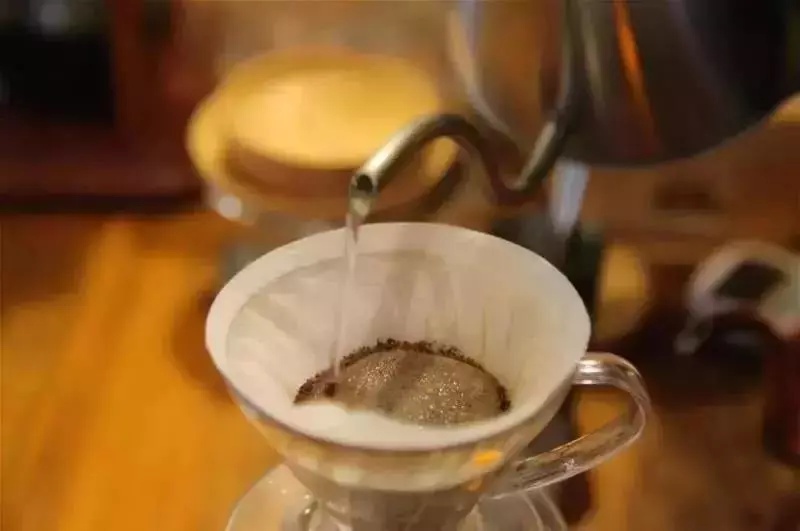
Introduction: Many coffee beginners are curious about the long, thin spout of a pour-over kettle—why does professional brewing use this special design? This article explains in depth the core advantages of the narrow-spout kettle (gooseneck kettle) in controlling water flow stability and evenly extracting coffee grounds, and contrasts the flavor defects that ordinary kettles easily cause during brewing. By mastering these basic principles, even complete beginners can significantly improve the consistency of their pour-over coffee.
When watching a barista brew for the first time, that slender, curved spout is often the most eye-catching tool. This professional implement, known as a narrow-spout kettle (or gooseneck kettle), is fundamentally different from an everyday household kettle. Its core value lies in achieving even extraction of the coffee bed through precise water flow control—a seemingly simple process that is in fact the key link affecting the final flavor.

The essence of pour-over coffee is using hot water to penetrate the coffee bed and extract its flavor compounds. But in practice, the stability of the water flow directly affects extraction evenness. The curved spout design of a narrow-spout kettle helps users pour in circles at a constant flow rate, avoiding the common beginner problem of "the stream surges and dwindles." When the output is unstable, some coffee grounds are over-extracted and turn bitter, while other areas may be under-extracted, leaving the flavor thin.
Although a regular wide-mouth kettle holds more, its straight spout causes three major defects: first, the larger opening makes the flow hard to control, easily forming an unstable column of water; second, fast pouring causes the water temperature to drop sharply (lab data shows that for every 30% increase in flow rate, the water temperature drops by about 1-2°C); finally, the stream easily punches straight through the center of the bed, leaving the outer coffee grounds insufficiently contacted. Combined, these factors significantly alter the coffee's proper flavor layers.
Professional narrow-spout kettles typically have a precise spout aperture of 1-1.5mm, paired with an ideal flow rate range of 120-150ml/min. When using one, keep the spout 2-3cm above the coffee bed and pour slowly in a "no"-shaped (loop) path (aim for a single pour lasting 1 minute 30 seconds to 2 minutes). This technique lets the hot water evenly saturate every coffee particle, maximizing the release of floral, fruity notes and sweetness.
For beginners to pour-over, choosing a narrow-spout kettle of moderate weight is especially important (a capacity of 300-500ml is recommended, with the body weighing no more than 400g). An overly heavy body increases strain on the wrist and instead harms control precision. And even if an ordinary household kettle is fitted with a narrow spout, it is hard to match the fluid-dynamics design of a professional spout; long-term use may build incorrect pouring habits.
It is worth noting that water flow stability is only one element of pour-over success. The coffee-to-water ratio (1:15-1:17 recommended), grind size (medium-fine, similar to fine sugar), and water hardness (TDS of 50-150ppm recommended) also need systematic adjustment. But mastering narrow-spout kettle technique can at least solve 80% of extraction problems caused by improper pouring—which is why almost all specialty coffee shops insist on using professional gooseneck kettles.


