Fine Fines in Pour-Over Coffee: Flat vs Conical Burrs and Flavor
Introduction: Fine fines in pour-over coffee can enhance flavor complexity, but in excess they cause uneven extraction and a harsh, bitter taste. This article takes an in-depth look at what causes fines, compares the characteristics of the three mainstream grinder burr types—flat, conical, and ghost-tooth—teaches you to accurately judge the level of fines, and offers multi-dimensional solutions such as sifting and adjusting brewing technique to help you balance flavor and extraction efficiency.
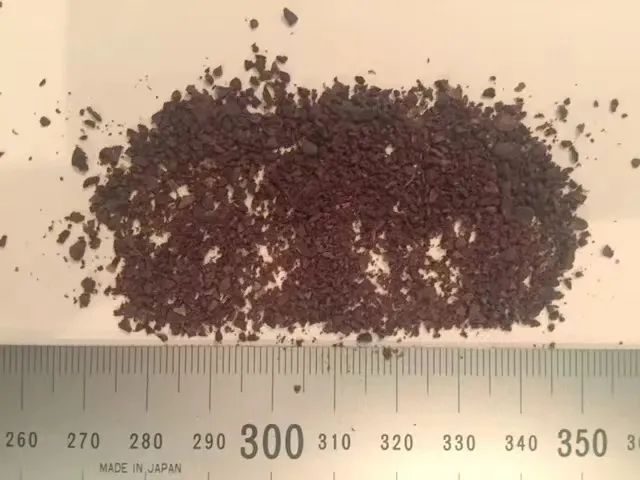
Although fines (particles under 0.25mm in diameter, with a flour-like texture) make up only a small share of coffee grounds, they contribute significantly to overall flavor body and aroma complexity—a moderate amount of fines increases the extraction surface area and brings a richer taste experience. Yet many coffee enthusiasts avoid fines, because when the proportion of fines is too high, it easily causes clogged drainage, pronounced burnt-bitter notes, or even excessive astringency, seriously hurting the brewing experience.
In fact, fines are a normal part of the grinding process. No matter how high-quality the grinder, it cannot grind coffee beans into perfectly uniform particles; differences in coarseness always exist. "Uniform grinding" means the ratio of coarse to fine particles is closer to the ideal state. The core source of this variation is the working principle of the grinder's burrs: coffee beans are first crushed and fractured, then cut into particles, and the crushing-and-bursting process itself produces fines. The amount of fines generated is closely related to burr type and size.
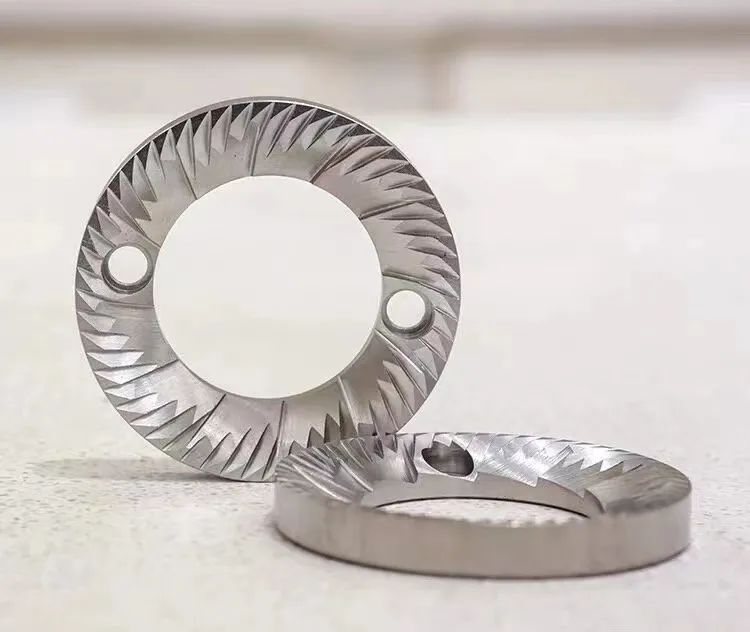
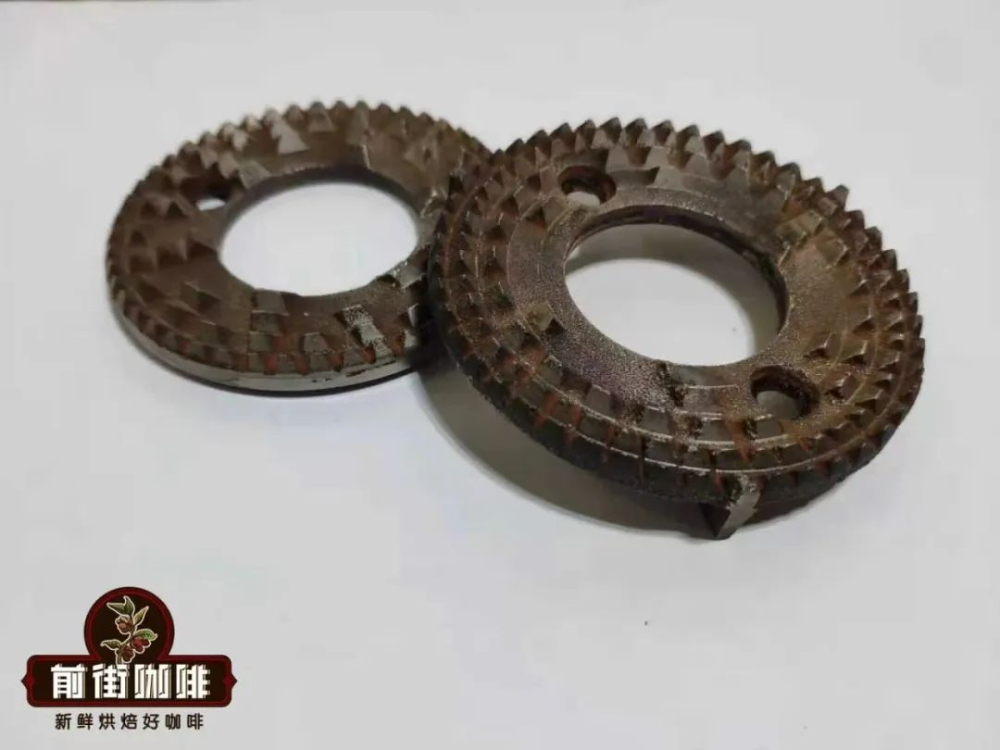
Mainstream grinder burrs fall into three categories—flat, conical, and ghost-tooth—each with unique grinding characteristics. Flat burrs consist of two parallel, identically sized discs that pulverize beans by direct cutting. This design makes most coffee particles flat and flake-like, generates relatively fewer fines, and favors fuller extraction of coffee compounds—which is why most high-end professional grinders use flat burrs.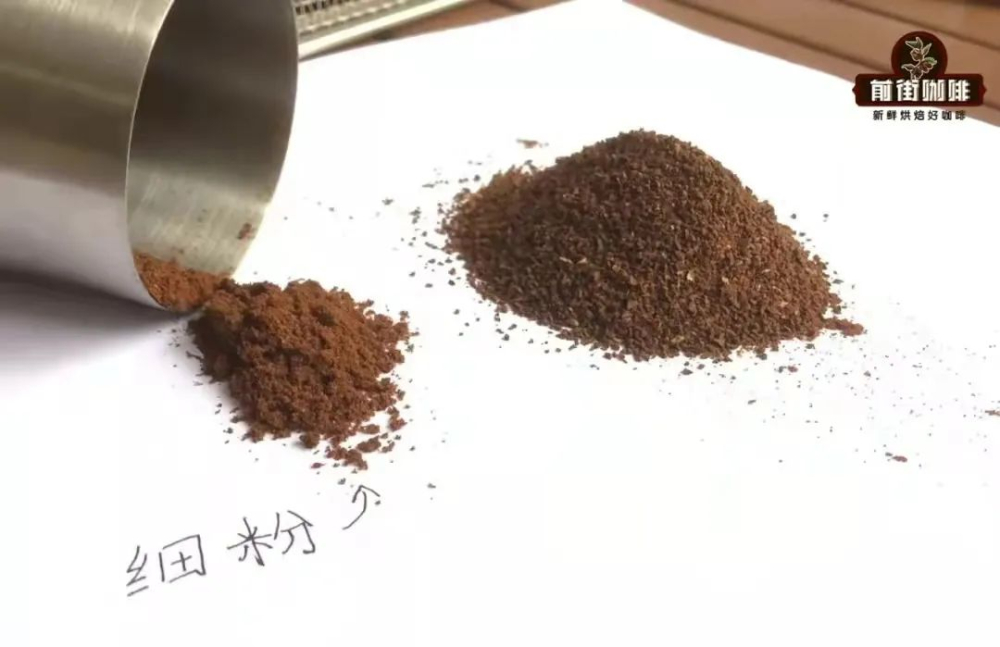
The ghost-tooth burr can be seen as an improved version of the flat burr. It also consists of two symmetrical discs, but its surface is not sharp blades; instead it is lined with tooth-like "spikes." This structure makes the ground particles more regular in shape, but because the number of "offcuts" at particle edges increases, it produces more fines than flat burrs. That said, ghost-tooth burrs can also release richer flavor layers, though they demand greater skill—a slight misstep easily leads to unbalanced extraction.
Conical burrs are the most common type in home and portable settings, with an inner burr nested inside an outer burr. During operation, beans are first crushed into larger chunks, then through continuous crushing and cutting form irregular polyhedral particles. Because conical burrs rely on crushing rather than direct cutting, they naturally produce more fines, and the particle-size gap from coarse particles is more pronounced. This is especially true of small hand grinders (with smaller burrs), whose grinding uniformity is inherently weaker; if the proportion of fines is too high, the coffee bed tends to turn muddy during brewing, leading to poor drainage.
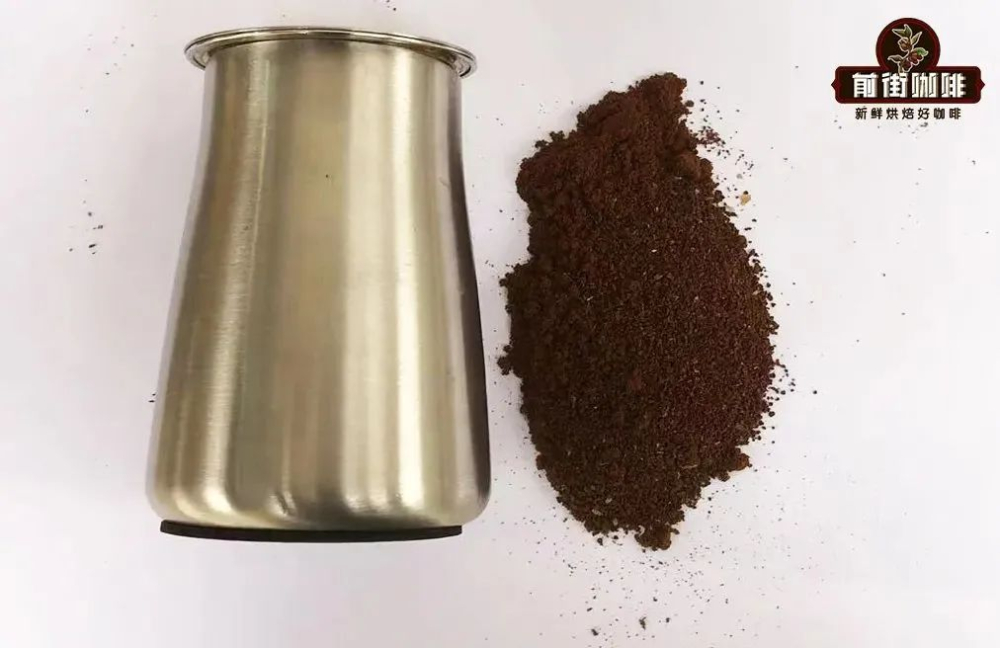
For the problem of too many fines, solutions need to be adjusted flexibly to the actual situation. The most direct fix is physical sifting: use a fines sieve (with holes of about 0.25mm) costing only a few dozen yuan, pour in the ground coffee and shake thoroughly; the fines pass through the mesh and separate out, leaving coarser particles better suited to stable extraction.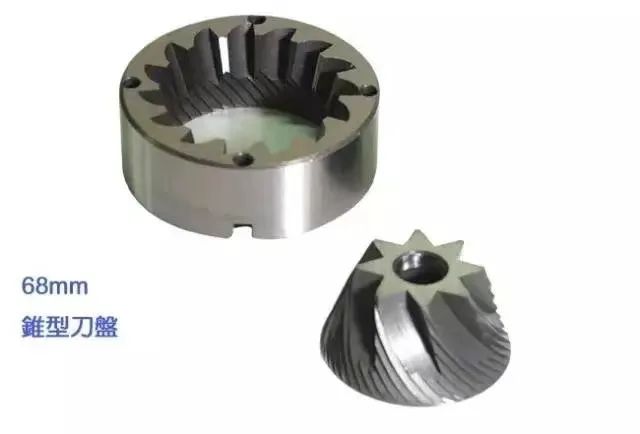
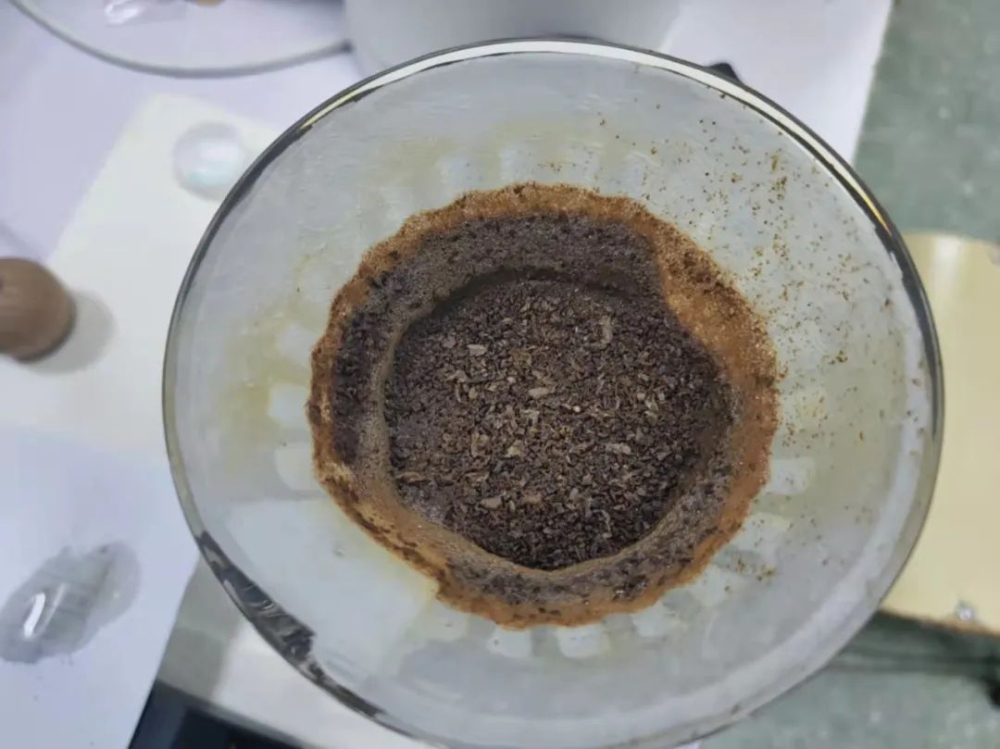
If sifting seems cumbersome, you can also improve things by optimizing your brewing technique. When you notice localized muddiness in the coffee bed (fines covering less than 50% of the area) and noticeably slower drainage, try the "immersion-style pouring method": after blooming, pour in small circles centered on the middle, adding all the required water at once. A strong stream pushes the coffee bed upward, so more grounds cling to the filter wall, reducing the bed's overall thickness; small circles keep edge grounds from being washed back to the center, while lowering agitation intensity to prevent over-extraction of fines. This method shifts the brewing mode toward a combination of immersion and drip, effectively easing the clogging caused by fines.
Another common situation is a coffee bed containing both obvious muddiness (fines) and coarse particles—usually a sign of improper grind setting or insufficient grinder performance. Here excessive fines coexist with overly coarse particles; though drainage is slower, the coffee often tastes thin with prominent bitterness. Try first setting the grinder finer to narrow the particle-size gap between coarse and fine; if problems remain after adjustment, use the immersion-style pouring method described above as a remedy. (Some users report that after grinding finer on hand grinders, fines (<0.25mm) actually decrease; this phenomenon has no authoritative data to verify it and is for reference in actual practice only)