Luckin Coffee's Malaysia Expansion Plan Revealed: Partner Unknown, How to Break Through in Southeast Asia?
Introduction: Chinese coffee chain brand Luckin plans to enter the Malaysian market, intending to open stores in partnership with a local listed company and has formulated a five-year expansion strategy. Currently, Luckin has surpassed 20,000 stores in mainland China, with only 38 directly operated stores overseas in Singapore. This overseas move has sparked heated discussion among consumers, from pricing strategy to market competition—can Luckin replicate its success in Southeast Asia? This article reviews the latest developments and industry background, analyzing the key considerations of Luckin's global layout.
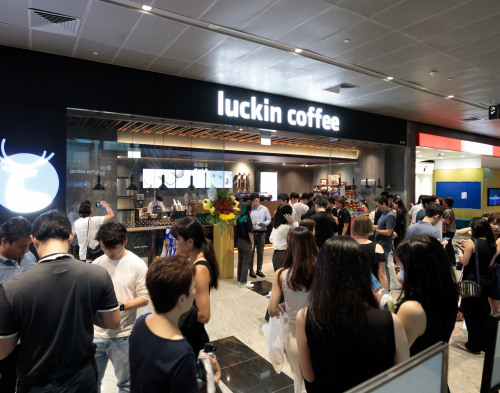
According to overseas media reports, Luckin Coffee is preparing to enter the Malaysian market, planning to join hands with local listed enterprises to expand its business, and has drafted a five-year store growth blueprint. As the coffee brand with the largest store scale in China (currently over 20,000 stores), Luckin had previously only entered the Singapore market, where it currently operates 38 directly operated stores.
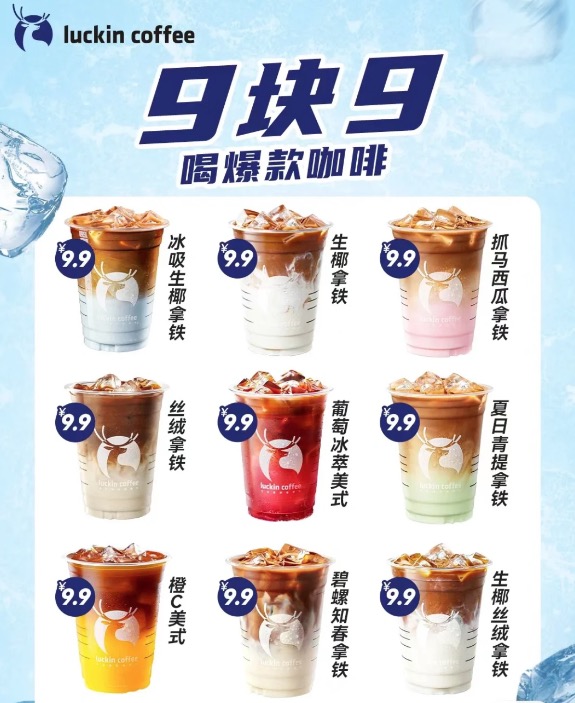
Once the news broke, social media reacted enthusiastically. Many Malaysian netizens look forward to Luckin launching promotional offers, and even joked that if it follows the domestic "9.9 yuan" pricing (about 5.99 ringgit), it would need to be adjusted to 6.9 ringgit (about 11 yuan) based on the exchange rate to be competitive.
Some industry observers pointed out that although a low-price strategy can quickly open up the market, without differentiated advantages it may fall into a sustained price war with local brands (such as Cotti). Some analysts believe that stores with superior locations in the early stage can maintain foot traffic through advertising, but profit pressure will increase significantly after long-term expansion.
Regarding the identity of the partner, Malaysian media disclosed that Luckin had approached Berjaya Food (BJ FOOD), the Starbucks Malaysia franchisee. The group's founder, Vincent Tan, is not only the holder of the Starbucks franchise in Malaysia but also a key figure who brought McDonald's to Malaysia.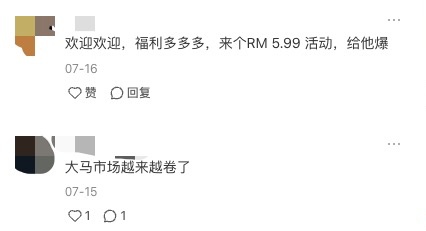 However, other rumors say Luckin may choose a partner with a different listed company background, and the final details are still awaiting official announcement.
Luckin's internationalization attempts can be traced back to 2019, originally planned to launch in 2020 but suspended due to the pandemic and financial problems. After the new management took office, following research on Southeast Asia, Japan and South Korea and other markets, Singapore was ultimately chosen as the first stop. Notably, the Singapore stores adopt a directly operated model, accumulating operational experience for subsequent overseas expansion.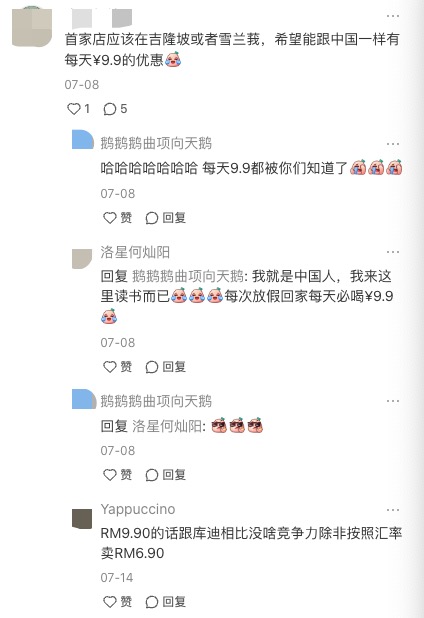
Currently, Chinese tea beverage brands are accelerating their overseas expansion: in 2023, Heytea entered the UK, Australia and Canada markets, ChaBaiDao landed in South Korea, Mixue Bingcheng's overseas stores exceeded 4,000, and Chagee expanded to over 100 stores. Southeast Asia, due to cultural proximity and similar consumption habits, has become the preferred destination for most brands—Mixue Bingcheng entered Vietnam in 2018, Chagee chose Malaysia in 2019, Naixue Tea returned to Thailand in 2023, and Yihetang landed in Indonesia in 2024.
Industry analysts point out that domestic market saturation and homogeneous competition are the main drivers. Taking Luckin as an example, in the first half of 2024 it launched 52 new products (including innovative products such as Chu Orange Latte and Huangshan Maofeng Latte), with the Little White Pear Latte reaching 7.24 million cups in sales in its first week, but continued "9.9 yuan promotions" led to a decline in average customer spending, with Q1 net profit turning to a loss of 71.42 million yuan year-on-year (revenue still grew 41.5%).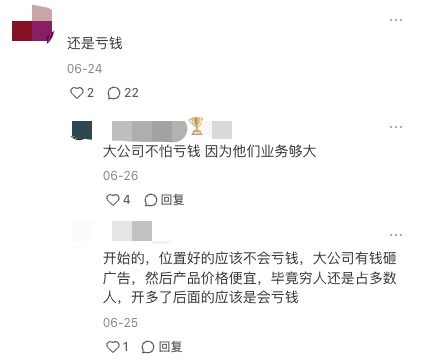
Against the backdrop of high store density and fierce price wars, the Southeast Asian market has become a new growth pole. Consumers can pay attention to the location strategy of Luckin's first Malaysian store—usually prioritizing commercial centers or transportation hubs, combined with localized menu adjustments (such as adding durian-flavored products). As for whether its cooperation with the Starbucks franchisee can materialize, it will become an important window for observing competition in the China-Malaysia coffee industry.