Nayuki Expects Nearly 500 Million Yuan Loss in First Half: Behind the Tea Drink Store Closure Wave
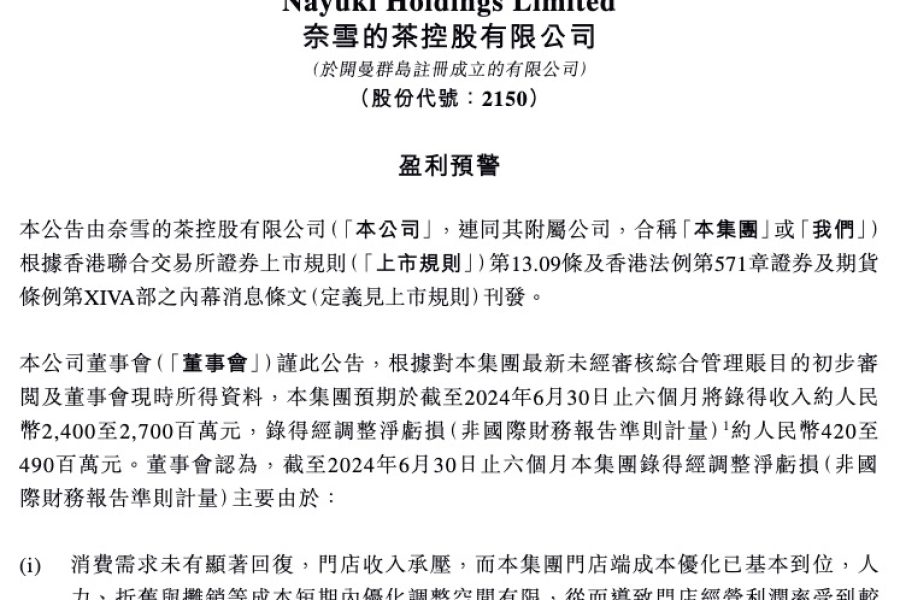
Introduction: Nayuki's Tea has issued a 2024 first-half profit warning, expecting revenue of 2.4 to 2.7 billion yuan, but an adjusted net loss of 420 to 490 million yuan. Facing consumption downgrading and high store costs, Nayuki, once established in the market with a high-end image, is now mired in operational difficulties. This article analyzes in depth its store strategy missteps, the impact of the price war and the challenges of brand transformation, and, combined with the latest store closure data and market feedback, interprets the current challenges and response strategies of the new tea drinks industry.
Recently, Nayuki's Tea issued a 2024 first-half profit warning in accordance with Hong Kong Stock Exchange rules, sparking widespread discussion in the market. According to the announcement data, the company expects to achieve revenue of about 2.4 billion to 2.7 billion yuan during the period, but the adjusted net loss will reach 420 to 490 million yuan.
Regarding such a significant loss, Nayuki officially explained that it mainly stems from the slow recovery of consumer demand, with store revenue under pressure, while store-level labor, waste and selling costs are difficult to compress further in the short term, putting enormous pressure on overall operating profit. In plain terms, in the current market environment where "9.9 yuan milk tea" prevails, Nayuki has neither achieved hit product sales nor is cost control close to its limit, and the former "white rich beauty" brand of tea drinks is now facing unprecedented operational pressure.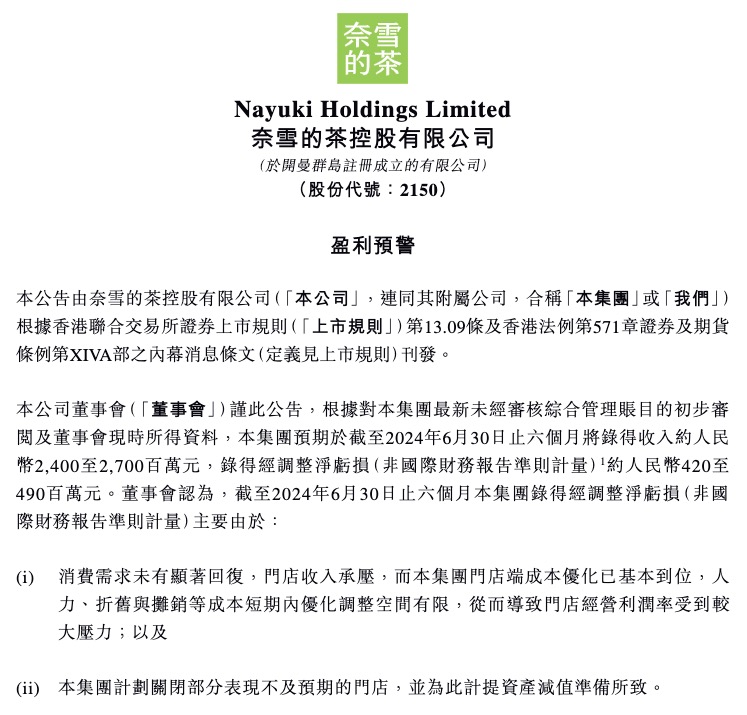
Under performance pressure, Nayuki has begun closing a batch of underperforming stores, including its sub-brand Taigai and its first store at Shop G/F, The Peak Galleria, Hong Kong, which was once a symbol of the brand. These measures are seen as an important step for the brand to control losses, but they also signal that Nayuki may face a new wave of store closures.
In terms of expansion pace, Nayuki's store growth clearly lags behind its peers. Data shows that in the second quarter of 2024, its directly operated stores added 48 and closed 48, for a net increase of zero. Although franchising has been open for a year, the number of franchise stores has grown by less than 300. As of June 30, Nayuki had a total of 1,894 directly operated and franchise stores, while the net increase in stores in the first half of 2024 was 320, averaging about 53 new stores per month, a growth rate far below other rapidly expanding tea drink brands.
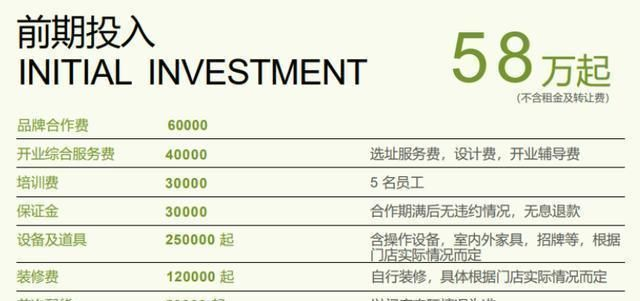
Behind Nayuki's slow expansion is inseparable from its long-held high-end brand positioning. In the early days, Nayuki set high entry thresholds for franchisees, requiring a single-store investment of up to one million yuan and a store area of 90 to 170 square meters. Even after later adjusting its strategy and lowering the threshold, a single-store investment still requires 580,000 yuan and a minimum store area of 40 square meters, standards that remain far above most tea drink brands.
However, while maintaining its high-end image and expanding slowly, Nayuki has also had to join the industry's widespread price war. According to financial reports, its average selling price per order fell from 34.3 yuan in 2022 to 29.6 yuan in 2023. The price-cutting strategy did stimulate sales in the short term, helping the brand achieve a profit of 2.1 billion yuan in 2023, but this approach did not win recognition from the capital market, and the company's stock price fell sharply after the financial report was released.
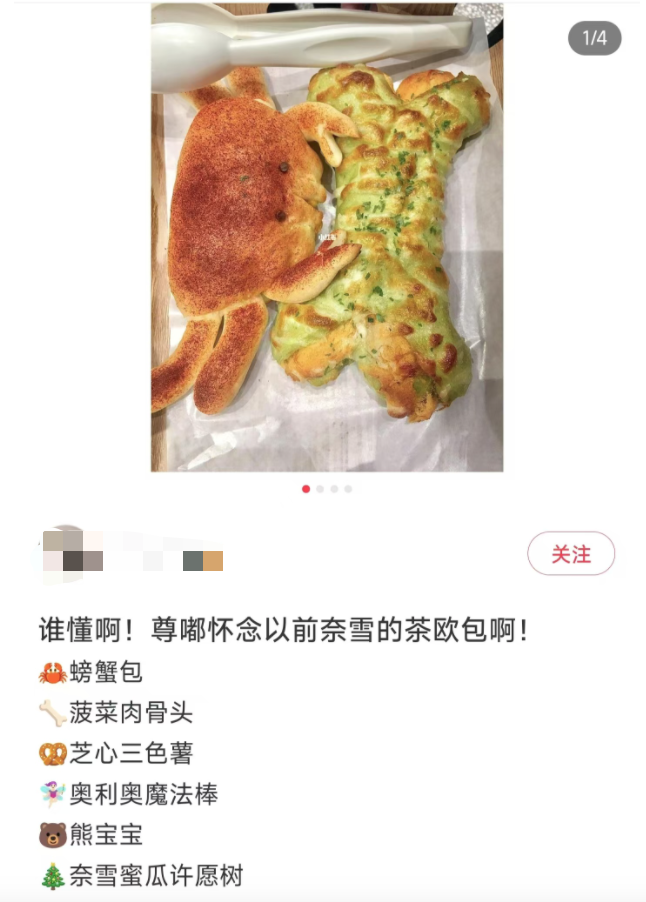
More seriously, continuous price cuts have forced Nayuki to make concessions in raw material procurement and production processes, which in turn has affected product quality and triggered widespread consumer dissatisfaction. Many users report that the brand's new product development efforts have weakened, and the once popular fruit tea series is updated slowly; some consumers even believe its product strength is now inferior to that of its sister brand Lelecha. In addition, Nayuki's earlier decision to cancel in-store freshly made soft European bread has also sparked controversy. Many longtime customers miss the freshly made European bread of the past, believing it not only enhanced the consumption experience but also drove tea drink sales. Today's pre-made bread is not only smaller in size but also far worse in taste, further weakening users' brand loyalty.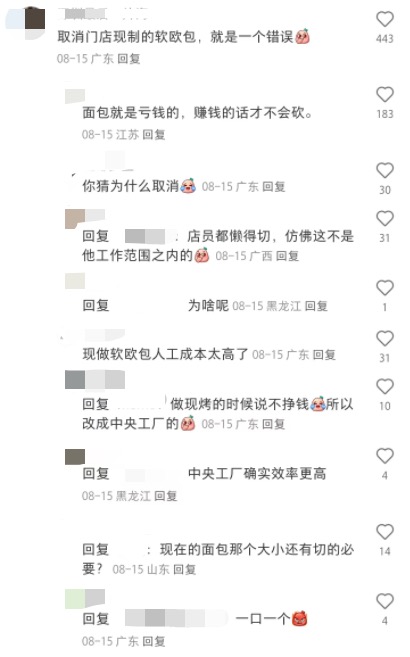
While store closures and declining reputation frequently occur in the domestic market, Nayuki is also actively seeking overseas opportunities. This year, it opened a flagship store in Central World, a top shopping mall in Thailand, and initial business performance has been acceptable. However, some industry insiders point out that relying solely on going overseas cannot solve the fundamental problems of brand aging and outdated operating models. If Nayuki wants to regain growth in the highly competitive new tea drinks market, it still needs to work on multiple fronts, including product innovation, store model optimization and brand positioning adjustment.