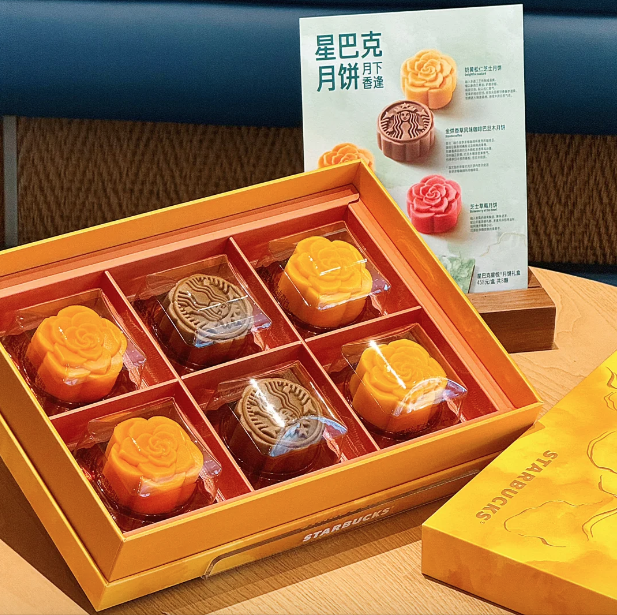
Starbucks mooncakes hard to sell: staff KPI pressure and market challenges
Introduction: As the Mid-Autumn Festival approaches, Starbucks mooncake sales have once again become a headache for employees. On social platforms, related complaint posts exceed one million, with employees resorting to every trick to complete sales tasks. This article takes a deep dive into why Starbucks mooncakes are hard to sell year after year, why employees are under immense pressure, and why the brand has persisted in launching new offerings for 24 years, revealing the market logic and real dilemmas behind it.
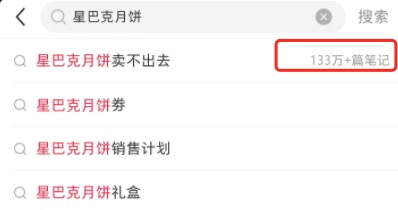
With the Mid-Autumn Festival approaching, Starbucks employees face their annual "sales exam"—pushing mooncakes. On social platforms, posts under the hashtag #StarbucksMooncakesCantBeSold have exceeded 1.33 million, most from frontline employees venting about sales pressure and the difficulty of meeting targets. Many employees even say they are willing to sell at "rock-bottom" or "fire-sale" prices, or bundle gifts to hit KPIs, with some hoping netizens can help them "out."
For many Starbucks employees, peddling mooncakes every year is a "workplace nightmare." According to multiple employees, the brand launches new mooncake gift boxes each year and assigns specific sales tasks to each store during the presale period. If tasks are not completed, store managers and employees often have to absorb unsold inventory themselves. Some stores even mobilize part-time students to help sell.
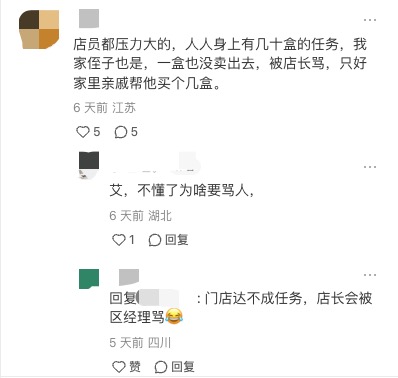
"Every employee has a sales target of dozens of boxes, and the pressure is huge," one netizen revealed. His nephew, a Starbucks clerk, sold not a single box and was harshly criticized by the store manager, ultimately relying on relatives to take the stock. The manager's anxiety stems from the store missing its sales target, which brings pressure from the district manager—a cascading assessment mechanism.
More controversially, media have reported that Starbucks required employees to buy mooncakes out of their own pockets to meet sales goals. It was said that on the first day of launch, each store had to sell 25 boxes or employees had to cover the shortfall themselves. Although Starbucks officially denied it quickly, calling it an individual store's action that has been stopped, many employees say internal sales pressure is indeed widespread and frontline staff are often forced to "grit their teeth" and push sales.
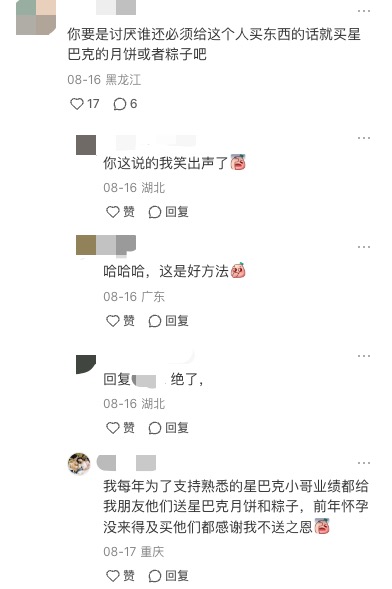
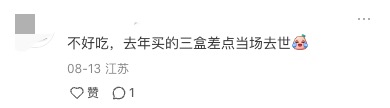
Yet puzzlingly, despite being an internationally renowned brand, Starbucks mooncakes are repeatedly criticized by consumers as "bad-tasting." On social platforms, negative reviews of their taste keep surfacing. Some loyal fans even say bluntly: "Really, stop making them. I've never had mooncakes this bad—indescribable." Others joke: "If you want to prank someone, give them Starbucks mooncakes or zongzi." One consumer recalled: "I bought three boxes last year and almost threw up on the spot."
In fact, this is not the first time Starbucks mooncakes have chilled in the Chinese market; the "expensive and bad-tasting" label has persisted for years. But curiously, why has Starbucks insisted on launching mooncake gift boxes in China for 24 years? There are multiple considerations behind it.
First, as an important food of a traditional Chinese festival, mooncakes are a key vehicle for brand exposure and cultural integration. Starbucks hopes to further its localization strategy in China by continuously launching innovative flavors and using festive foods to get closer to Chinese consumers. A similar success story is KFC, whose Chinese items such as the Old Beijing chicken wrap and breakfast congee have won broad market recognition.
Second, Starbucks still has strong brand appeal in China, especially among mid-to-high-end consumers. In some business gifting and employee benefit scenarios, Starbucks mooncakes were once seen as a "face-saving" choice. There was a time when receiving a Starbucks mooncake gift box meant not only festive ritual but also a certain recognition of brand value.
However, as competition intensifies, more and more new players are entering the traditional mooncake track, including luxury brands such as Hermès and Louis Vuitton, which have launched crossover mooncake gift boxes. By comparison, Starbucks mooncakes offer neither a price advantage nor a taste reputation, and a sales model sustained only by brand halo is facing severe challenges.
According to Starbucks insiders, although this year's gift box prices have been lowered, the average unit price is still as high as 57 yuan, and overall pricing remains high. To complete tasks, some employees have to split gift boxes and sell individual mooncakes. Even so, as consumers make increasingly rational purchasing decisions, unless Starbucks makes substantive adjustments in quality, pricing or marketing strategy, sales pressure will likely only intensify year by year.