Behind Six Walnuts' Sales Decline: How Can Yangyuan Drinks Break Out of Single-Product Trap?

Introduction: The plant protein drink that once became a nationwide hit thanks to the slogan 'Use your brain, drink more Six Walnuts' is now facing continuous sales decline. Yangyuan Drinks' revenue slightly declined in the first half of 2024; although net profit grew, it could not hide the lack of market confidence. This article deeply analyzes the reasons for Six Walnuts' weak sales, discusses the hidden concerns of Yangyuan Drinks' single product structure, and interprets the impact of insufficient R&D investment on future development.
The catchy advertising slogan 'Use your brain, drink more Six Walnuts' once made Six Walnuts a phenomenal product in the plant protein beverage market. Its parent company, Yangyuan Drinks, reached a revenue peak of 9.117 billion yuan in 2015, but performance has been declining ever since and has never surpassed that high point.
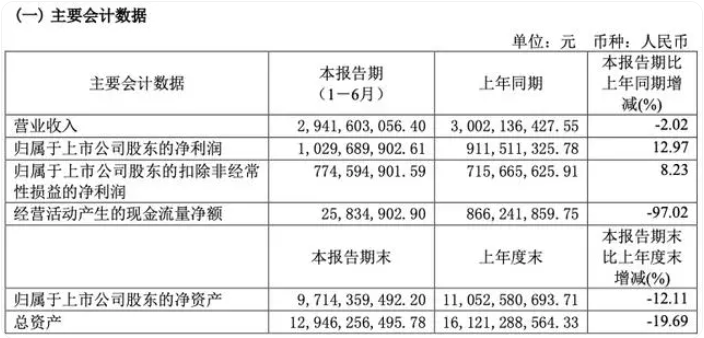
On August 26, 2024, Yangyuan Drinks released its semi-annual report, showing revenue of approximately 2.942 billion yuan for the period, down 2.02% year-on-year; net profit was approximately 1.03 billion yuan, up 12.97% year-on-year. Despite the profit increase, non-recurring net profit was 775 million yuan, up only 8.23%. After the report was released, the company's stock price hit the daily limit down that day, closing at 19.23 yuan, with market value shrinking to 24.335 billion yuan, reflecting market concerns about future profitability.
Yangyuan Drinks went public in 2018 with an issue price as high as 78.73 yuan per share. In its first year of listing, the company's market value reached 60.999 billion yuan, but performance has never regained its former glory. Notably, the company has long relied on a single product line of walnut milk, with its most famous brand being Six Walnuts.

Regarding the revenue decline in the first half, the company explained it was mainly affected by weak market demand. Although net profit grew, the report did not explain the reason in detail. Analysts believe this may be related to cost control—during the reporting period, operating costs, advertising expenses, and administrative expenses decreased by 5.33%, 0.07%, and 1.91%, respectively.
Looking at historical data, Yangyuan Drinks has long adopted a strategy of 'heavy marketing, light R&D.' Between 2014 and 2018, advertising investment reached 2 billion yuan, while R&D expenses during the same period were only 19 million yuan, a gap of more than 100 times. In 2017, sales expenses were 1.073 billion yuan, while R&D expenses were only 11.1 million yuan; by the first half of 2023, R&D expenses had further dropped to 13.98 million yuan, while sales expenses reached 318 million yuan, expanding the ratio to 22 times.

The problems brought by this investment structure are obvious. In the current context of weak consumer market and intensified competition, the risk of over-reliance on a single hit product is magnified. Six Walnuts, as the source of more than 90% of Yangyuan Drinks' revenue, is facing the challenge of declining consumer attention.
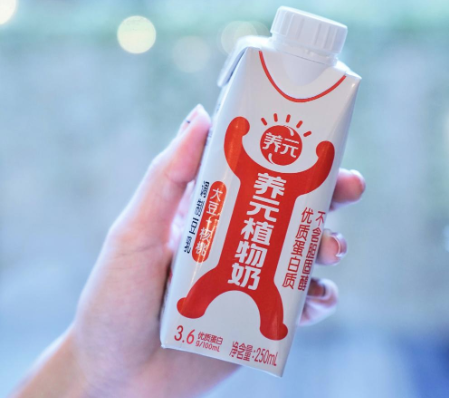
In terms of new product expansion, Yangyuan Drinks has launched a plant-based milk series, but the results are limited. In 2023, revenue from this category was only 1.315 million yuan, in stark contrast to the 5.7 billion yuan sales scale of walnut milk. This indicates that the company's attempts at product diversification have not yet gained market recognition.
Industry analysis points out that when revenue scale shrinks, companies tend to prioritize cutting R&D spending, but this may further weaken innovation capability. For Yangyuan Drinks, how to break through the bottleneck of a single product structure and develop a new hit product that can succeed Six Walnuts will be key to determining its future development.


