Huzhou café HIV rumor: how police handled the online rumormonger
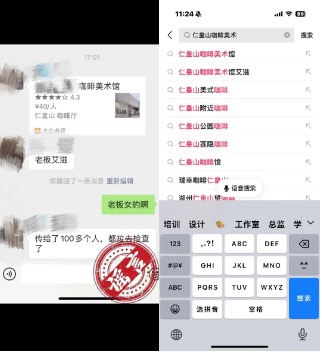
Introduction: A rumor that the owner of a popular café in Huzhou had HIV and infected many people sparked heated discussion on social platforms, causing customer panic and damaging the shop's reputation. This article reconstructs the full course of events, explains how police quickly investigated and punished the rumormonger, explores the potential harm of online rumors to the coffee industry, and shows you how to identify similar false information.
Recently, a shocking message circulated on social platforms: the owner of a popular café in Huzhou, Zhejiang, was said to have HIV and to have infected more than a hundred people, and some rumors even claimed that those involved had been gathered for testing. The message and its images spread rapidly and became a local online hot topic. Many customers who had visited the café became anxious, worried about their health, and for a time local residents were in a state of alarm.

Faced with the sudden malicious accusation, the café owner chose not to remain silent. She promptly reported the matter to the police, demanding a thorough investigation of the facts to defend her reputation. The cybersecurity detachment of the Huzhou Public Security Bureau responded quickly, launching an investigation immediately and soon uncovering the truth.

According to police, the originator of the rumor was a local resident surnamed Shen. Unexpectedly, Shen had never met the café owner and had no connection with her at all. He had merely heard this unverified "shocking news" while chatting with friends and, out of curiosity and a love of gossip, forwarded it to a social group with more than 400 members, causing the rumor to spread rapidly and badly affecting the person involved and public order.
Article 25 of the Law of the People's Republic of China on Penalties for Administration of Public Security clearly provides that anyone who spreads rumors, falsely reports dangers, epidemics or police incidents, or otherwise intentionally disrupts public order may be detained for 5 to 10 days and fined up to 500 yuan; if the circumstances are relatively minor, the person may be detained for up to 5 days or fined up to 500 yuan.
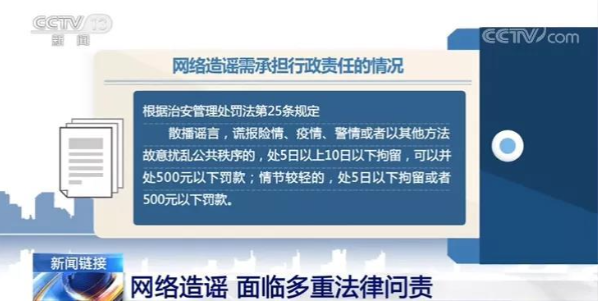
Police investigation confirmed that Shen's actions constituted fabricating facts and disrupting public order. Under the above legal provisions, Shen was placed under administrative detention for four days in accordance with the law.
In fact, this is not the first time online rumors have affected the coffee industry. As early as 2018, an article titled "Starbucks' Biggest Scandal Exposed: Drinking Coffee Causes Cancer" went viral on WeChat Moments, with views exceeding ten million. The self-media account exaggerated a U.S. court ruling and deliberately singled out Starbucks to create a sensation. Subsequently, authoritative media including People's Daily and CCTV, as well as several nutrition experts, stepped forward to refute the rumor. The public account was banned by the WeChat platform for long-term publication of sensational content, and the related article was deleted.
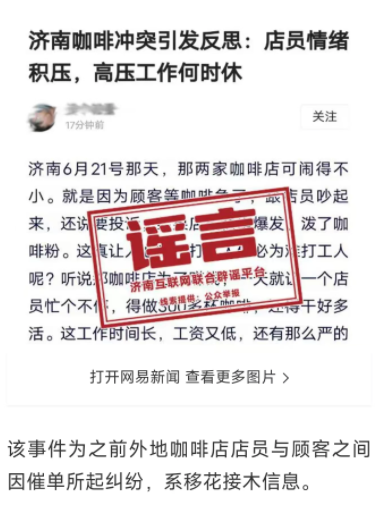
According to a notice from the Jinan internet joint rumor-refutation platform, on June 24 this year a netizen claimed that "on June 21 in Jinan, a café employee threw coffee powder at a customer who was urging an order." After verification, the claim was entirely false, and no such incident occurred in Jinan.
In its notice, police specifically reminded internet users to communicate cautiously online, noting that fabricating and spreading rumors are illegal acts that will face legal punishment, and that in serious cases people may even bear criminal responsibility.
The "HIV rumor" incident involving the Huzhou café owner once again warns us that online rumors not only harm individual reputation but also undermine social trust and order. As ordinary internet users, we should strengthen our legal awareness, proactively verify sources of information, and refrain from fabricating, believing or spreading rumors, so as to jointly maintain a clean and harmonious online environment. Only when everyone is vigilant will rumors stop with the wise.


