Non-Dairy Creamer Sales Fall: Jiahe Food's Zero-Additive Challenge
Introduction: In the first half of 2024, Jiahe Food saw both revenue and profit decline, reflecting an industry shift marked by a sharp drop in demand for non-dairy creamer. This article provides an in-depth analysis of the transformation challenges facing this former 'king of non-dairy creamer,' explores paths for companies to break through under the 0 non-dairy creamer trend, and reveals how consumers' new demand for healthy beverages is reshaping the entire industry chain.
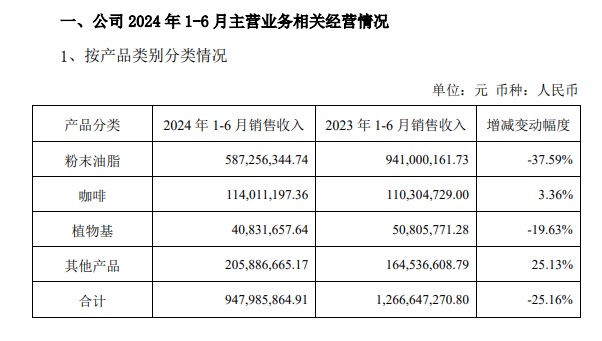
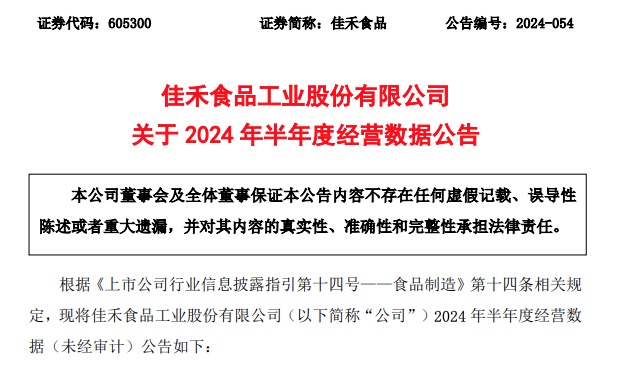
On August 31, Jiahe Food released its 2024 semi-annual financial report, showing that the company's total operating revenue for the period was 1.073 billion yuan, down 19.12% year on year; net profit attributable to the parent company was 69.4439 million yuan, a decline of 48.77%. Behind the sharp drop in performance is the industry reality of continued weakening demand for non-dairy creamer.
{{IMG}}
Since its establishment in 2001, Jiahe Food has long focused on the R&D and production of non-dairy creamer, coffee, and solid beverages. Public data show that in the 2018 domestic market, its non-dairy creamer products held a 14.33% share, and its export share reached 26.85%, firmly ranking it as an industry leader. When the company listed in July 2021, its stock price once soared to a historical high of 32.95 yuan, with total market value exceeding 13 billion yuan.
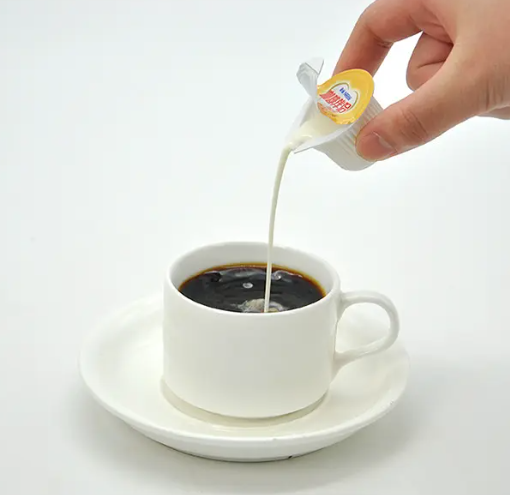
Non-dairy creamer, commonly known as 'coffee mate,' is a food ingredient born in the 1950s and made primarily from edible vegetable oil. Its biggest feature is that it can significantly improve the taste of beverages—just a small amount can make bitter coffee smooth and fragrant, while also offering good solubility and a long shelf life. These characteristics quickly made it a common ingredient in the global coffee industry.
{{IMG}}
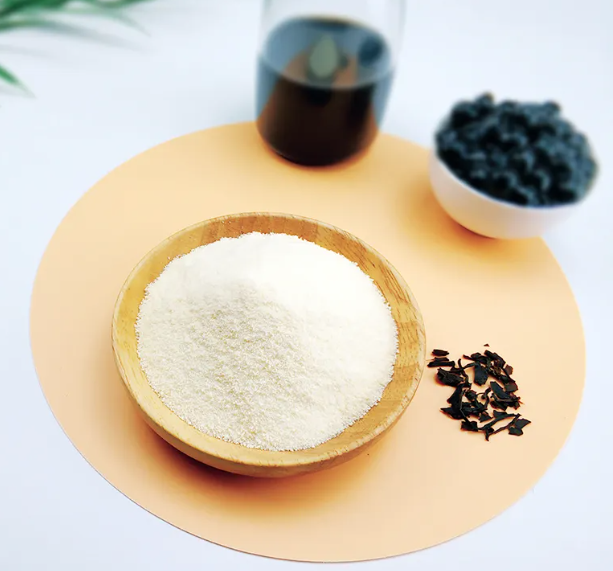
In the 1990s, as international coffee brands such as Nestlé entered the Chinese market, non-dairy creamer began to become widely known to consumers. In the early stages of instant coffee popularization, adding non-dairy creamer became a common practice to improve taste. But what truly drove the explosive growth of the non-dairy creamer industry was the rise of the domestic milk tea industry. In the 1990s, when dairy supply was limited, non-dairy creamer combined with various additives formed the main flavor base of early milk tea.
With the development of the tea beverage market, although ingredient quality has continued to improve and components such as broken tea leaves and fresh fruit have gradually become widespread, non-dairy creamer remains one of the core ingredients in many milk tea products. Jiahe Food disclosed in its 2021 IPO prospectus that its customers include many well-known tea beverage brands such as CoCo Fresh Tea & Juice, Auntea Jenny, GoodMe, and Mixue Bingcheng, as well as food companies such as Xiangpiaopiao and Uni-President.
{{IMG}}
It should be noted that non-dairy creamer itself is a legal food additive, but because its main raw material, hydrogenated vegetable oil, may produce trans fatty acids during processing, and excessive intake of trans fatty acids increases the risk of cardiovascular disease. The World Health Organization launched the 'REPLACE' action in 2018, planning to eliminate industrially produced trans fatty acids from the global food supply chain by 2023.
As consumer health awareness increases, non-dairy creamer has gradually become a focus of controversy. Although the scientific community points out that 'non-dairy creamer is not equal to trans fatty acids,' there remains widespread concern in public perception, and there is even a phenomenon of 'turning pale at the mention of non-dairy creamer.' This change in consumer psychology has directly affected market demand.
{{IMG}}
Since 2023, domestic new tea beverage brands have set off a wave of 'removing non-dairy creamer.' At the end of July, Chagee took the lead in launching 'Bingbolang non-hydrogenated base milk,' clearly indicating that it contains no non-dairy creamer and no hydrogenated vegetable oil; in August, ChaBaiDao launched its true fresh milk tea series, highlighting '0 non-dairy creamer, 0 trans fatty acids'; in September, Heytea launched a dedicated true milk product, emphasizing that every 100 milliliters contains 3.8 grams of high-quality protein and no additives. These measures reflect the industry's overall shift toward health-oriented transformation.
{{IMG}}
Performance pressure is directly reflected in the capital market. After the semi-annual report was released, Jiahe Food's stock price fell to 10.57 yuan, down nearly 70% from its historical high of 32.95 yuan. Facing the challenges of the '0 non-dairy creamer' era, this company that once grew rapidly on its non-dairy creamer business urgently needs to find new growth points. Whether it can successfully transform in the future will become an important case for observing how traditional food ingredient companies respond to consumption upgrading.
{{IMG}}
It is worth noting that although market demand for non-dairy creamer is declining, in certain specific application scenarios, its unique functional properties remain irreplaceable. For relevant companies, how to meet the needs of different consumer groups through technological innovation while ensuring product safety will be the key factor determining future development.