Starbucks China's New Leadership Speculation: Splitting the Business to Meet the 9.9 Yuan Coffee Challenge?
Lead: Starbucks' new CEO's first open letter focuses on community experience, while its China unit faces a price war from local brands. Q3 2024 revenue fell 10.71%, highlighting the conflict between the company-owned model and 9.9 yuan competition. Investors are debating a spin-off of the China business, and can Brian Niccol, who once saved Chipotle, repeat his success? This article analyzes Starbucks China's dilemma and potential changes.
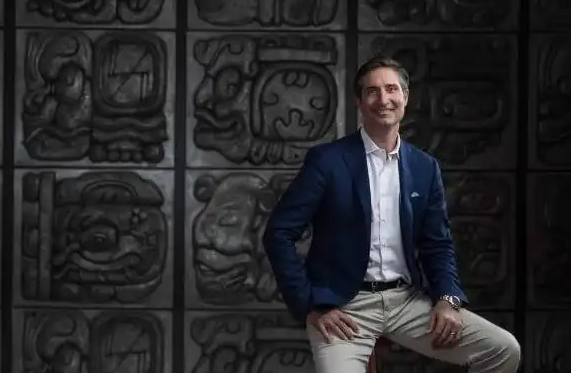
In his first open letter to all employees after taking office, Starbucks' new CEO Brian Niccol emphasized the need to return the brand to its essence, reaffirming that Starbucks is a coffeehouse centered on community and offering customers a quality coffee experience. He mentioned that Starbucks' foundation stems from a persistent pursuit of high-quality coffee; every cup is carefully handcrafted by baristas in green aprons and ultimately presented to customers to savor. In Starbucks' philosophy, coffee is not just a simple beverage but a work embodying craftsmanship. Moreover, Starbucks stores are not merely places to drink coffee but spaces where people gather, community centers that inspire conversation and foster friendship.
The Chinese market has always been vibrant, and for Starbucks it is an important market that requires deeper exploration of growth potential and full leverage of its unique advantages. China is Starbucks' second-largest market globally; however, affected by the downturn in the consumer market and the fierce price war among local coffee brands, financial data for the third quarter of 2024 shows that Starbucks' revenue in the Chinese market declined significantly, down 10.71% year on year, to US$734 million.
It should be noted that in the Chinese market, Starbucks has consistently refrained from adopting a franchise model; all of its stores in mainland China are operated directly by the company, with no franchising business offered externally. But as competition in the Chinese market intensifies and consumer demand continues to change, Starbucks China is facing unprecedented and severe challenges.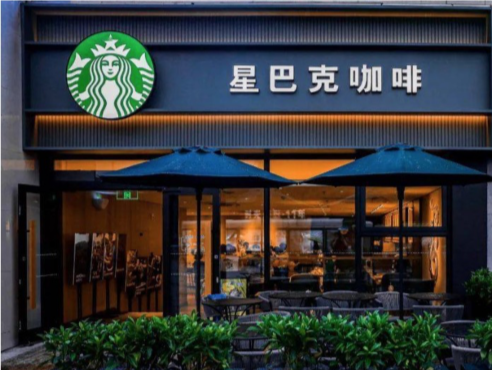
Currently, China's domestic coffee market has fallen into a prolonged price war. With the rapid rise of Chinese local coffee brands such as Luckin and Cotti, the notion of "coffee for 9.9 yuan" has been deeply implanted in consumers' minds. To secure a place in the fierce market competition, Starbucks has also had to change, setting aside its former premium posture and attracting customers through various low-price promotions, such as offers of "three cups for 59.9 yuan, two cups for 45.9 yuan, and a single cup for 19.9 yuan."
Financial reports for the third quarter of 2024 show that in the Chinese market, Starbucks not only saw a reduction in average spending per order but also a decline in transaction volume. Although Starbucks China launched promotional offers to increase purchase frequency, which can to some extent boost sales and profit growth, this approach of "trading price for volume" clearly conflicts with Starbucks' original brand positioning.
Given this situation, some investors have suggested that Starbucks should consider splitting its China business and making it an independent division in order to boost the company's share price. As early as July this year, Starbucks' former CEO Laxman Narasimhan had expressed on an earnings call the idea of spinning off Starbucks' China business.
Now, market analysts believe that Brian Niccol's appointment further increases the likelihood of Starbucks splitting its China business. Brian Niccol has extensive experience; he has successively led the chain restaurant companies Taco Bell and Chipotle out of operational difficulties. During his tenure, Chipotle's annual revenue grew by an average of 34%, operating profit by 91%, and net income by an average of 175%.
Previously, before Brian Niccol took over Chipotle, the company had, in order to reduce costs, adopted measures such as simplifying operating procedures or lowering ingredient quality, which resulted in a serious food safety crisis between 2015 and 2016, forcing more than 40 stores to close. The executive team at the time adopted a "low-price strategy," but this further damaged Chipotle's brand image; in the eyes of American consumers, it became synonymous with "cheap and unsafe."
However, when Brian Niccol arrived at Chipotle, he took a firm stance against the "price war." Shortly after taking office, he immediately halted all of Chipotle's low-price promotions and strategies. He keenly observed that among Chipotle's core consumer group at the time, "millennials" accounted for an increasing share, and these young consumers cared most about "health," not simply "low prices."
Subsequently, Brian Niccol shifted Chipotle's corporate strategy toward "freshly made, fresh ingredients, and health," and began moderately raising product prices. Through the implementation of this series of measures, Chipotle ultimately successfully rose to become one of the top four chain restaurant giants by market value, and its share price reached its highest point since inception. Now, regarding possible changes for Starbucks in the Chinese market, relevant personnel at Starbucks China told the media that the personnel adjustments at Starbucks headquarters will not involve the Chinese market.