Tea Baidao Expands in Seoul: Overseas Strategy and Market Performance
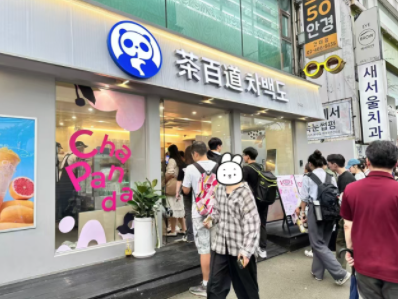
Introduction: Tea Baidao's new store at Konkuk University Station in Seoul has sparked a consumer frenzy, even drawing out-of-town customers who traveled across cities to join the activities. Following its first store in Gangnam earlier this year, this is another placement in the greater Seoul area. This article analyzes Tea Baidao's strategic considerations for entering Korea, its localization strategy and market feedback, and also interprets the growth logic behind its stock performance, offering valuable reference for readers following the internationalization of tea beverage brands.
Recently, Tea Baidao's new store at Konkuk University Station in Seoul officially opened, with huge crowds on site—some consumers even traveled from Busan to Konkuk University Station to take part in the new store's activities.
This is another new store Tea Baidao has opened in the greater Seoul area, after opening its first overseas store in Seoul's Gangnam District in early 2024.
In recent years, competition in China's new tea beverage industry has intensified, the market has gradually become saturated, and overall consumer demand has been weak, prompting many brands to turn their eyes overseas in search of incremental growth. Nearby regions such as Southeast Asia and Japan and Korea, with similar cultures and large consumer potential, have become popular choices for tea brands going overseas.
Among them, Mixue Bingcheng has expanded rapidly in Southeast Asia with a low-price strategy, leading in store numbers; brands such as Nayuki and Chagee have also laid out overseas markets one after another. Compared with the highly competitive domestic market environment, these regions not only have more market gaps, but consumers' willingness to pay for quality tea beverages is also relatively higher.
It is worth noting that before Tea Baidao went public, it chose Korea as the first stop of its overseas expansion, rather than Southeast Asia, which most brands prioritize. Tea Baidao co-founder Gu Jilin said in an interview that Korea, as a representative developed economy in the East Asian cultural sphere, is an ideal market for validating the overseas store model, helping to distill reusable operating experience and lay the foundation for subsequently expanding into similar markets.
On January 26, 2024, Tea Baidao opened its first Korean store in Seoul's core Gangnam commercial district. The store design incorporates a large number of panda elements, which both convey the brand's characteristics and form a friendly interaction with local aesthetics. In addition to classic products such as jasmine fresh milk and mango pomelo sago, it also specially launched a Korea-exclusive drink—a fruit tea made with Hallabong fruit, which has been widely praised by local customers since its launch.
Previously, Korean local milk tea products had relatively simple forms, mostly made with tapioca pearls and non-dairy creamer, similar to the Taiwanese-style milk tea popular in the domestic market in its early days, and lacked freshly made tea drinks using fresh fruit and milk. After Tea Baidao entered, through store displays and social media marketing, it focused on highlighting the product concepts of "freshness" and "health," quickly forming a differentiated competitive advantage.
According to feedback from local consumers, the new Konkuk University Tea Baidao store launched a "buy one, get one free" promotion in its first three days of opening, and customers could also participate in a lottery with their receipts for a chance to win gifts such as traditional Chinese-style fans. After the official opening, consumers could still win a half-price second cup through receipt lotteries, and limited-edition custom refrigerator magnets and other souvenirs were given away, attracting foot traffic with high-value promotions.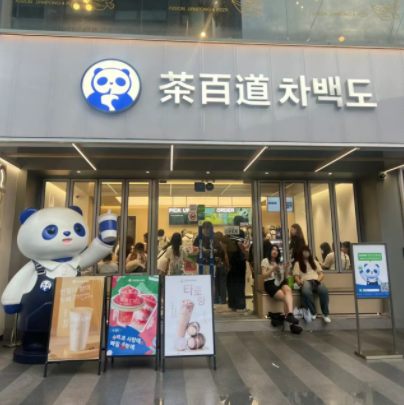
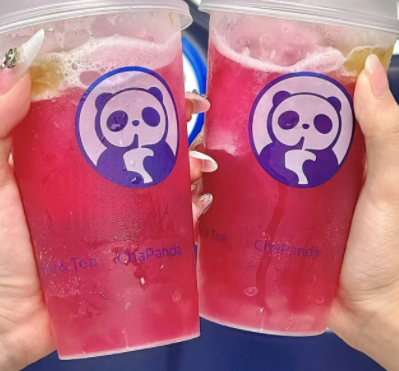
In terms of product innovation, Tea Baidao's Korean market launched the limited-edition "Purple Grape Frozen Slush." The product uses hand-peeled Korean-grown Kyoho grapes and Yunnan Summer Black grape juice, paired with a jasmine tea base and chewy jelly, becoming another highlight of the Purple Grape series and further enriching the product line.
Wang Huan, head of Tea Baidao's Korean market, revealed that local consumers currently account for more than 80% of the brand's customers in Korea, with a repurchase rate as high as 45%. Based on good market feedback, Tea Baidao plans to accelerate its pace of opening stores in Korea and stated that "on the premise of complying with relevant rules, it will gradually open up franchising" to expand market coverage in a more flexible way.
The capital market has also given positive feedback on Tea Baidao's overseas expansion. According to Zhitong Finance, Tea Baidao (02555.HK) has shown strong stock performance recently, with a single-day gain of over 9% and a cumulative rise of nearly 70% over the past six trading days. As of the latest data, the stock price was HK$6.89, up 8.68%, with a turnover of HK$8.5231 million.