Eastroc Super Drink Sugar Revealed: 66.5g per 500ml Bottle, Equal to 15 Sugar Cubes
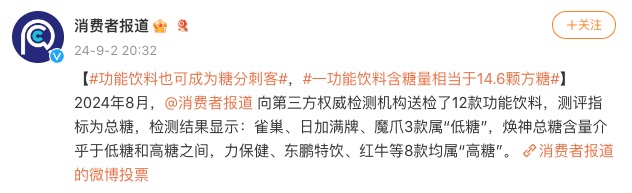
Introduction: The functional beverage Eastroc Super Drink has drawn attention due to its high sugar content. Recent testing shows that a 500ml bottle of Eastroc Super Drink contains as much as 66.5g of sugar, equivalent to about 15 sugar cubes, far exceeding the daily recommended intake. This article provides an in-depth analysis of the sugar composition of this popular functional drink, its health impacts, and the key indicators consumers should pay attention to when choosing functional beverages, helping you find a balance between refreshment and health.
Recently, a professional ingredient assessment of popular functional beverages on the market has made Eastroc Super Drink the focus of discussion. As a leading domestic functional beverage, Eastroc Super Drink is widely popular for its "refreshing and energizing" positioning, but its sugar content is staggering.
According to professional testing, each bottle (500ml) of Eastroc Super Drink contains as much as 66.5 grams of sugar, equivalent to about 14.6 to 15 standard sugar cubes (calculated at 4.54g per cube). This sugar content even exceeds that of what people commonly call "happy fat soda"—traditional carbonated drinks.
In this sugar content evaluation of 12 mainstream functional beverages, brands included Nestlé, Ri-Ka-Man, Monster, Livita, Red Bull, and others. The results showed that only a few brands such as Nestlé, Ri-Ka-Man, and Monster fell into the "low sugar" category, while 8 products including Livita, Red Bull, and Eastroc Super Drink were classified as "high sugar." Among them, Eastroc Super Drink topped the list with 66.5g of sugar per bottle.
In response to such test data, Eastroc Beverage stated that its product formula has been evaluated and approved by relevant national authorities, and recommended that consumers drink no more than one bottle per day. However, for ordinary consumers who need to control their daily sugar intake, such a recommendation may still seem lenient.
According to the Dietary Guidelines for Chinese Residents, adults should limit their daily added sugar intake to within 25 grams, and preferably not exceed 50 grams. However, a bottle of Eastroc Super Drink contains as much as 66.5 grams of sugar, meaning that drinking just one bottle easily exceeds the daily recommended upper limit for sugar intake. Long-term consumption will undoubtedly burden health.
In fact, a high-sugar diet is closely associated with various health problems. Excessive sugar intake causes blood sugar to rise rapidly, stimulating the pancreas to secrete large amounts of insulin. Insulin not only helps lower blood sugar but also promotes the conversion of excess sugar into fat stored in the body. Over time, this can easily lead to weight gain and even increase the risk of chronic diseases such as obesity and diabetes.
Although high sugar is detrimental to health, sugar plays an indispensable role in the functional beverage sector. Sugar can quickly provide energy and, once absorbed by the body, is converted into glucose, helping to raise blood sugar levels and thereby alleviate fatigue and symptoms of low blood sugar. This is one reason why most functional beverages, including Eastroc Super Drink, contain relatively high amounts of sugar.
However, different regions have different standards for defining "high-sugar" beverages. For example, Hong Kong's Department of Health stipulates that if the sugar content per 100 milliliters of a beverage exceeds 7.5 grams, it is considered a high-sugar beverage. Eastroc Super Drink contains 13.3 grams of sugar per 100 milliliters, clearly exceeding this standard and qualifying as a typical high-sugar drink.
It is worth noting that the main consumer group of Eastroc Super Drink is changing. According to relevant 2024 financial reports, in addition to traditional physical laborers such as truck drivers and delivery riders, an increasing number of white-collar workers in first- and second-tier cities have begun to use it as a refreshment choice during overtime and late nights. However, when these urban professionals seeking efficiency and energy rely on "one bottle for a boost," they may inadvertently consume excessive sugar, which can instead affect their health.
From a corporate operations perspective, sugar is also one of the important raw materials for Eastroc Super Drink. According to its prospectus, white granulated sugar is the single item with the highest proportion of Eastroc's raw material costs, with procurement amounting to 22.7034 million yuan in 2020, accounting for 23.7% of overall raw material costs, second only to flavors at 16.62%. This also explains why sugar occupies an important position in the product formula—not only for taste and functional considerations but also closely related to its cost structure.
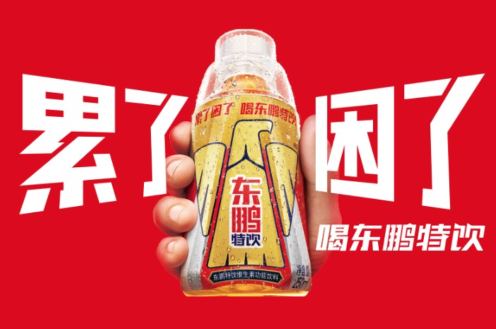
Overall, although Eastroc Super Drink is favored by many consumers for its refreshing effect, the health risks associated with its high sugar content cannot be ignored. For those pursuing a healthy lifestyle, especially urban office workers who frequently need a refreshment boost, it is all the more important to pay attention to the ingredient list when choosing functional beverages, try to choose low-sugar or sugar-free versions, or control consumption when necessary to avoid excessive sugar intake affecting health.


