The truth about review control at tea shops: Chagee's assessment standards spark debate
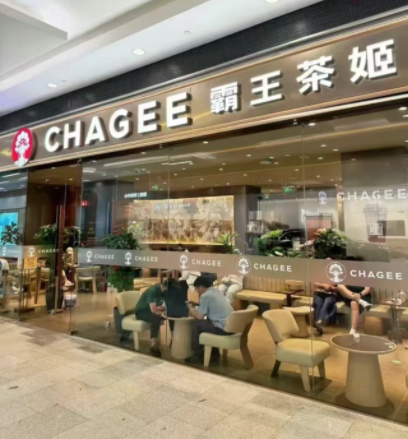
Introduction: Recent rumors about Chagee's strict control of negative reviews have sparked heated debate. Is the alleged assessment standard of 'only three negative reviews allowed per 10,000 orders' true? How do stores respond to negative customer feedback? This article takes an in-depth look at service quality control mechanisms in the tea industry, presents the full picture of the incident, and offers practical advice for consumers and industry practitioners.
Service quality control in the tea industry has recently become a focal point. Rumors suggest that Chagee imposes strict negative review controls on stores, requiring no more than three negative reviews per 10,000 orders, or else the pay of all store employees will be affected. This claim has attracted widespread attention. What is the actual situation?
It is understood that Chagee classifies stores into four grades, A, B, C and D, with A-grade stores receiving rewards while lower-grade stores face penalties. If a store's rating fails to meet standards over the long term, its renewal eligibility may be affected. Among the many assessment indicators, the customer negative review rate, though only one item, has a key impact on store grading.
Under this assessment mechanism, store employees have adopted various measures to reduce negative reviews. Common practices include offering free orders to dissatisfied customers, remaking drinks, and even proactively contacting customers to request that they delete negative reviews. These measures have become routine procedures for handling customer complaints at some stores.
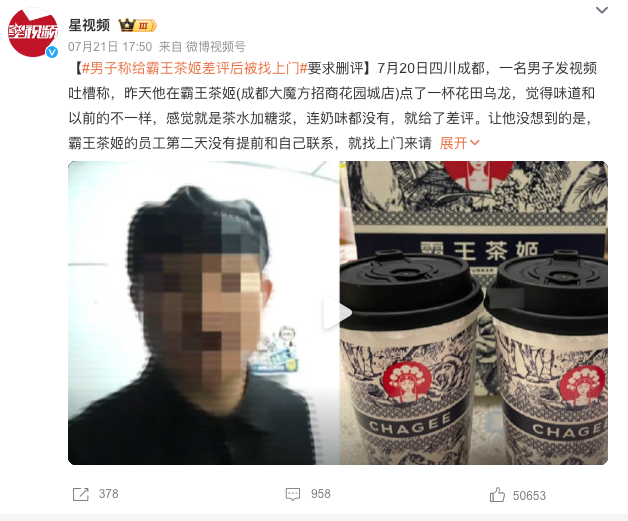
In July this year, a consumer negative review incident sparked heated discussion. After a customer in Chengdu gave a negative review out of dissatisfaction with the Huatian Oolong drink, a store employee visited the customer's home the next day to communicate. The incident quickly trended on social platforms and triggered public discussion.
The store involved explained that because it could not reach the customer through regular channels, employees chose to visit in person. Chagee customer service stated that the store hoped to understand customer feedback and improve service in a friendly manner. However, similar incidents are not isolated cases.
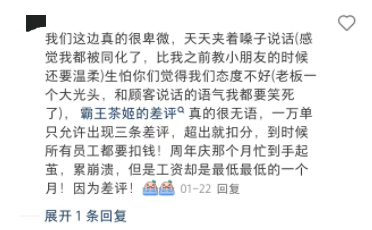
Several former Chagee employees revealed that stores are limited to three negative reviews per month, and exceeding this may result in performance bonuses being zeroed out. To avoid negative reviews, employees often appease customers through refunds, remaking drinks, or even giving away merchandise. Some employees admitted to enormous work pressure; even during the busy anniversary celebration period, they earned minimum wage despite hard work due to the impact of negative reviews.
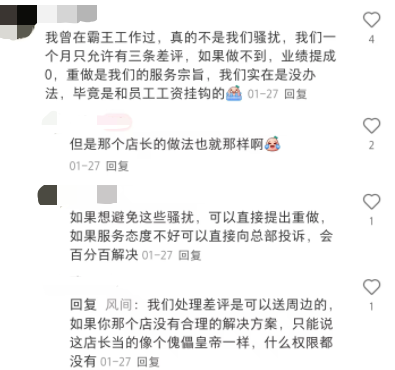
The impact of negative reviews on store employees is not limited to the financial level. According to employee reports, after a store receives a negative review, the performance of all employees is affected, regardless of whether they were directly involved in the complaint. Sometimes the customer service staff responsible for handling complaints are also held accountable. This joint liability mechanism increases employees' work pressure.
Faced with strict assessment standards, some stores are alleged to have adopted unconventional means to handle negative reviews, including hiring professional teams to delete negative comments. Some employees believe that the current assessment system has to some extent deviated from its original purpose, focusing more on the efficiency of handling negative reviews than on actual service improvement.
On September 23, Chagee officially responded that the online claim of 'only three negative reviews allowed per 10,000 orders' is untrue. The company does have a store operations assessment mechanism, but consumer satisfaction is only one indicator; the evaluation system includes multiple dimensions and does not simply use the number of negative reviews as the sole standard.

For consumers, when encountering service problems, they can provide feedback through official channels. Industry insiders suggest that customers should reflect their experience objectively when reviewing, avoiding letting isolated situations affect overall evaluations. For practitioners, establishing a reasonable service quality control mechanism that improves customer satisfaction while safeguarding employee rights is key to the sustained and healthy development of the industry.


