First Mango Pomelo Sago Specialty Store Opens in Shanghai: A Full Breakdown of Three Limited Drinks
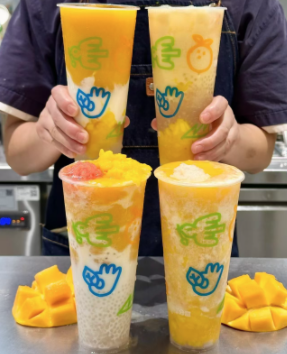
Introduction: From street-side sweet soup to a new-style tea hit, the evolution of mango pomelo sago has witnessed both innovation and controversy in the beverage industry. Recently, the country's first mango pomelo sago specialty store opened in Shanghai, offering only three core products. This article takes a deep look at the product selection logic of this 20-square-meter store, the differences between the products, and real consumer feedback, to help you understand the modern expression of this classic dessert.
The mango pomelo sago I remember was once a sweet treat shared with classmates after school. This sweet soup dessert originating from Guangdong features the slight tartness of pomelo, the sweetness of mango, the chewy bounce of sago, and the richness of coconut milk. It is not only rich in texture but also packed with nutrients such as vitamins.
With the rise of healthy eating trends, traditional bowl-served mango pomelo sago has been redesigned by new-style tea brands. Among them, Qifen Tian became a signature brand through improved techniques—dicing large chunks of mango for easy drinking through a straw, adjusting the volume to 500 ml for easier takeaway, and optimizing the recipe for a more refreshing taste. Data shows that this brand has opened more than 1,500 stores nationwide on the strength of its mango pomelo sago alone.
On September 30, Qifen Tian launched the country's first themed specialty store at Shanghai's Cloud Nine Shopping Mall in Changning. Unlike regular stores, this one focuses solely on three mango pomelo sago derivative drinks: a classic version that recreates the original 1987 flavor, a 2007 version that highlights fresh fruit texture, and a Gelato version with innovatively added ice cream, priced between 15 and 20 yuan.
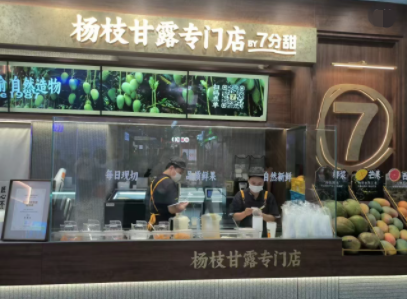
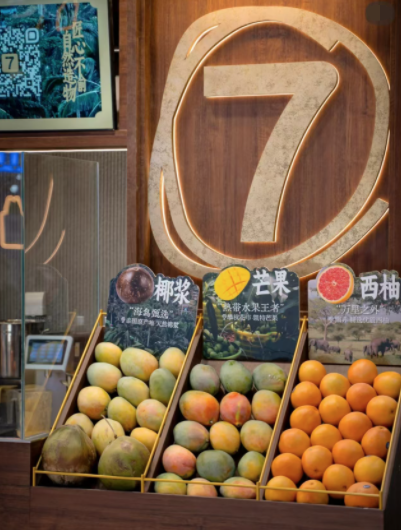
The store design continues a minimalist style, with about 20 square meters of space in natural wood tones, and an open preparation counter showing the pre-processing of fresh mangoes. A specially arranged ingredient display area showcases seasonal coconuts, mangoes, and pomelos, reinforcing the brand image of "handmade to order."
Market response confirms consumers' interest in niche categories—sales exceeded 10,000 cups in the first week of opening, with average daily revenue reaching 25,000 yuan. However, reviews on social media are polarized. Supporters believe its classic version perfectly reproduces the traditional flavor, while critics point out that an overly high proportion of sago affects the overall texture, and some users report that the mango pieces are too small and the jam flavor is too strong.
Notably, discussion about the authenticity of mango pomelo sago continues to heat up. Some argue that modern versions rely excessively on ice and flavorings, departing from the balanced pairing of mango and pomelo in traditional Guangdong methods. But some industry insiders point out that in the highly competitive tea beverage market, continuous product iteration is more important than sticking rigidly to tradition.

From a business perspective, this specialty store is both a clever branding attempt and a sample for the industry to observe in-depth development of a single product. For consumers, whether for a nostalgic visit or a new tasting experience, it offers a chance to get a close-up feel for the evolution of mango pomelo sago—just as the customers waiting in line demonstrate, people's anticipation for classic flavors has never faded.