Luckin opens 10,000 stores in a year: profit challenges behind coffee expansion
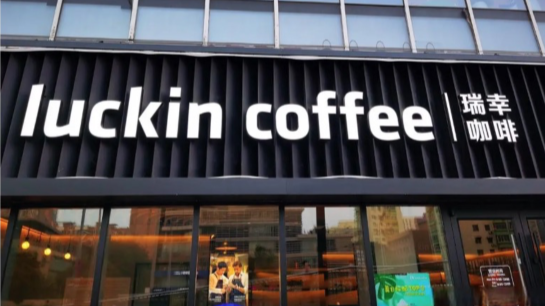
Introduction: From its 10,000th store to its 20,000th, Luckin took only one year—a pace that even surpasses Mixue Bingcheng, known for its rapid store rollout. The latest data show its total store count has exceeded 19,000, cementing its position as the leader in China's coffee industry. But behind the rapid expansion, problems such as declining store-level profitability and a prolonged price war are gradually emerging. This article breaks down Luckin's expansion logic, the competitive landscape, and how to find a balance between scale and profit.
According to the latest statistics, after reaching the 10,000-store milestone on June 5, 2023, Luckin Coffee expanded its store network to 19,961 stores (as of June 30, 2024) in just one year, including 13,056 self-operated stores and 6,905 franchised stores. This means net store additions over the past 12 months just exceeded the 10,000 mark, equivalent to about 27 new stores per day.
This expansion pace is remarkable—Luckin took five years to complete its first 10,000-store layout, but only one year to double it. By comparison, Mixue Bingcheng, widely regarded as the industry's "store-opening maniac," added only just over 7,000 stores in the same period. Notably, Luckin took only 12 months to reach its second 10,000 stores, while Cotti Coffee, the industry's second player, has yet to surpass 9,000 stores in total.
In terms of market share, Luckin's current scale of about 20,000 stores is close to the combined store count of major competitors such as Starbucks, Cotti, Lucky Cup and Huka. Cotti's store count is about one-third of Luckin's, while Lucky Cup's is only one-seventh. In China's restaurant chain sector, only Shaxian Snacks, Wallace, Mixue Bingcheng and Lanzhou noodles currently maintain larger store networks.
However, the side effects of rapid expansion are now emerging. Its first-quarter 2024 financial report showed that Luckin posted a net loss again after six quarters, amounting to 83.2 million yuan. Although second-quarter revenue grew by 2.2 billion yuan year on year, its net profit margin fell to 10.4% (16.1% in the same period last year). More critically, same-store sales at self-operated stores declined year on year for two consecutive quarters, reflecting weakening store-level profitability.
Financial report analysis points out that the core reason for profit pressure is the ongoing 9.9 yuan high-quality coffee promotion, a strategy that directly lowered the average selling price of products. To address this, Luckin has begun adjusting its subsidy strategy: some 9.9 yuan drinks have been raised to 11.9 yuan, and the number of drinks available in the "weekly 9.9 yuan zone" was cut from 8 in February to 5 in March.
But Luckin is not the only player caught up in the price war. Its main competitor Cotti has announced that it will extend its subsidy policy until the end of 2026 and plans to maintain a "9.9 yuan storewide" promotion for the next three years; even Starbucks, long committed to a premium positioning, has launched limited-time offers such as "three cups for 49.9 yuan" and "two cups for 39.9 yuan." This industry-wide price competition makes it difficult for Luckin to end its low-price strategy on its own.
For consumers, this is undoubtedly the best time to enjoy high-value coffee, but industry observers point out that a prolonged price war could lead to declining product quality or reduced service. For Luckin, while maintaining its market leadership, how to optimize its cost structure and improve store-level operating efficiency will be the key issue determining whether it can achieve sustainable growth.