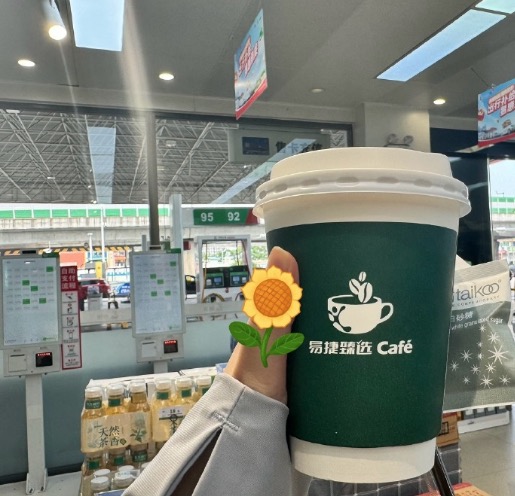
Behind EasyCoffee's Operational Anomaly: Challenges of the Gas Station Coffee Model
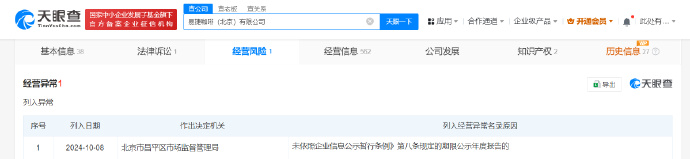
Lead: Latest business registration information shows that EasyCoffee (Beijing) Co., Ltd., under Sinopec, has been listed in the directory of enterprises with operational anomalies due to failure to publicly disclose its annual report on time. This gas station coffee brand, which tested the waters relying on a nationwide network of 28,000 convenience stores, once attracted attention with its "92#-98#" creative product line, but its development history has exposed deep-seated problems in scenario adaptation and operational synergy. This article reviews its key milestones from cooperative trial to independent operation, and analyzes the opportunities and bottlenecks of the gas station coffee format.
The latest data from the National Enterprise Credit Information Publicity System shows that EasyCoffee (Beijing) Co., Ltd. was listed in the directory of enterprises with operational anomalies by the Changping District Market Supervision Administration of Beijing for failing to submit its annual report on time. This enterprise, with a registered capital of 60 million RMB, was established in February 2021 and is 100% held by Sinopec EasyJoy Sales Co., Ltd. Its business scope, in addition to catering services, also covers cross-sector fields such as artificial intelligence software development and commercial equipment manufacturing.
Coffee experiment in gas stations
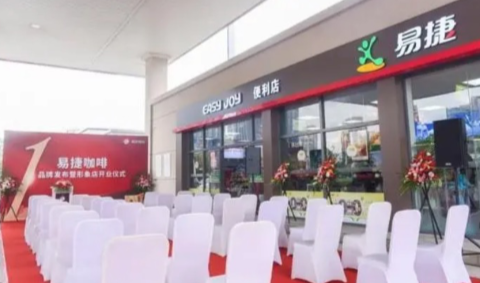
As the core carrier of Sinopec's non-oil business, the EasyJoy brand operates the largest directly-operated convenience store network in China—over 28,000 stores and nearly 10,000 car care centers.EasyCoffee launched its pilot in September 2019, with the first 9 stores located in Sinopec gas stations in Suzhou, and a simultaneous brand image store opened on Xinghu Street in Suzhou. The project was the first cooperation between Sinopec and the internet coffee brand Coffee Box, marking the traditional energy company's official entry into the freshly ground coffee track.
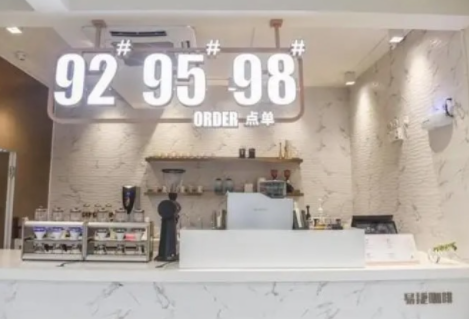
The brand created a unique "92#/95#/98#" product grading system: basic black and white coffee corresponds to fuel grade 92#, fashion special drinks are marked 95#, and specialty coffee falls under 98#. This naming logic not only continues the consumption cognition of gas stations but also covers the 15-35 yuan price range through differentiated pricing. According to public information, its average daily cup output per store is about 120-150 cups, with the main customer base being drivers waiting to refuel and convenience store shoppers.
Equity changes and strategic adjustments
At the end of 2020, Sinopec announced deepened cooperation with Coffee Box, planning to promote large-scale replication of stores within the EasyJoy convenience store system through a joint venture. However, business registration shows that Lianxiang Business Consulting Company completely exited in June 2024, and EasyCoffee became a wholly-owned subsidiary of Sinopec EasyJoy. It is worth noting that at the time of registration, Lianxiang Business held 10% of shares and Sinopec EasyJoy held 90%; this adjustment changed it to a wholly-owned holding model.
In terms of operating model, EasyCoffee attempted to break through the traditional convenience store consumption scenario: supporting delivery service within 3 kilometers, and developing portable cup types suitable for car cup holders. Technologically, its POS system is integrated with the EasyJoy convenience store cashier network, and member points can be accumulated across business lines. However, in actual operation, it was found that during peak hours, queues of refueling vehicles can cause congestion in the store's flow, and some outlets have less than 6 hours of effective daily business time.
Gains and losses of cross-sector cooperation
In July 2022, international coffee brand Tims China reached a strategic cooperation with EasyJoy, planning to open store-in-stores at some outlets and jointly develop ready-to-drink coffee products. This "dual-brand entry" model attempts to balance the demand for quality coffee and convenient service, but limited by the space planning of gas station outlets, the actual implementation progress is slower than expected. Industry insiders analyze that coffee consumption in gas station scenarios has obvious seasonal fluctuations; in winter, low temperatures cause hot drinks to account for over 70%, while in summer, the surge in demand for iced drinks places higher demands on refrigeration equipment.
Regarding the current operational anomaly status, Sinopec officials have not yet publicly explained the specific reasons. Industry observers point out that gas station coffee needs to balance the dual demands of "fast service" and "quality experience"—maintaining the efficiency of completing orders within 3 minutes, while finding it difficult to achieve professional-level roasting displays in limited space. This exploration of business models in special scenarios still needs to address core issues such as optimizing sales per square meter, equipment adaptability, and cultivating consumer habits.