Nestlé's 2025 Global Restructuring: Greater China Merged into AOA, What Changes?
Introduction: From January 2025, Nestlé Group will comprehensively restructure its global organizational framework, streamlining its original five geographic regions into three major regions. Among them, Greater China will no longer operate independently but will be incorporated as part of the Asia, Oceania, and Africa (AOA) region. This adjustment not only involves regional mergers and executive changes but will also affect future performance reporting methods. This article will provide an in-depth interpretation of the background of Nestlé's structural optimization, the specific adjustment contents, and the potential impact on the Greater China market.
On October 17, 2024, Nestlé Group, the world's leading food and beverage company, officially announced that its board of directors had approved a major organizational restructuring plan, which will be officially implemented on January 1, 2025. This adjustment aims to enhance global business synergy efficiency, strengthen market responsiveness, and optimize the management structure.
According to the new plan, Nestlé will streamline its original five geographic regional markets—the Americas (AMS), Europe (EUR), Asia, Greater China (GCR), and Oceania and Africa—into three major regions: the Americas (AMS), Europe (EUR), and Asia, Oceania, and Africa (AOA). This change means that Greater China, which was originally independent, will no longer exist as a separate reporting region.
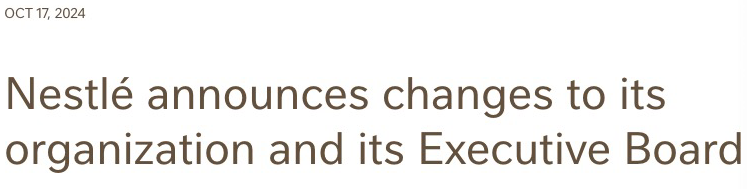
Specifically, the Latin America (LATAM) and North America (NA) regions, which were originally independent, will be merged into a new Americas (AMS) region, with Steve Presley appointed as the regional head. He will be transferred from his current position to Nestlé Group's headquarters in Vevey, Switzerland, and will report directly to the headquarters. The Europe (EUR) region will maintain its status quo, continuing to be led by Guillaume Le Cunff without adjustment.
It is worth noting that Greater China (GCR) will be incorporated into the Asia, Oceania, and Africa (AOA) region, which will be managed overall by Remy Ejel. The current Greater China executive, David Zhang, will step down from the Nestlé Group Executive Board but will continue to serve as Chairman and CEO of Greater China, maintaining daily management of local business.
After this adjustment, Nestlé Group's future performance reporting structure will also change, being disclosed in five main parts: the Americas (AMS), Asia, Oceania, and Africa (AOA), Europe (EUR), Nestlé Health Science, and Nespresso. To maintain market transparency, Nestlé also stated that it will continue to voluntarily disclose quarterly sales performance for North America, Latin America, and Greater China separately within the AMS and AOA regions.
Nestlé officially stated that the core purpose of this structural adjustment is to further optimize the global business layout, improve overall operational efficiency, and enhance the company's flexibility in responding to changes in various regional markets worldwide. Nestlé CEO Laurent Freixe mentioned in a statement: "By creating a leaner Group Executive Board structure and strengthening collaboration between the headquarters leadership team and regional management, we can accelerate decision-making processes and more efficiently advance the implementation of global strategic plans."
According to public information, Nestlé's last large-scale restructuring was in 2022, led by then-CEO Mark Schneider. That adjustment was also intended to strengthen focus on key regional markets, improve overall profitability, and enhance market agility by better aligning with local consumer needs.
Regarding the incorporation of Greater China into the AOA region, some industry analysts believe that the most direct change will be the adjustment of the management team's reporting lines. In the future, Greater China's performance and strategic execution will be reported to the AOA region rather than directly to the group headquarters. However, Nestlé specifically emphasized that this adjustment is not due to poor performance in Greater China. In fact, in the first three quarters of 2024, Nestlé's total global sales were CHF 67.1 billion, a year-on-year decrease of 2.4%, of which Greater China's sales were CHF 3.55 billion, a decline of 2%. Despite this, Nestlé still affirms the strategic importance of the Greater China market.

Zhang Xiqiang, Chairman and CEO of Nestlé Greater China, further explained in an internal letter that the main purpose of this adjustment is to smoothly complete the organizational transition and reduce unnecessary reporting levels, thereby improving overall operational efficiency. He clearly stated: "This is not because we have poor performance in certain regions, but to better execute strategy and serve the market."
Zhang Xiqiang also revealed in the letter that to demonstrate long-term commitment and emphasis on the Chinese market, Nestlé Group has confirmed that the 2025 global board meeting will be held in China for the first time, and all global board members will visit China. This move is seen as high recognition of the Greater China market's status and brings more confidence to the local management team.
It is worth noting that although Greater China has been merged in terms of organizational structure, the daily operations and business strategy of this market are expected to remain stable. Nestlé stated that the Greater China management team structure is currently complete, and all business units are advancing in an orderly manner according to established strategies, with no drastic changes expected in the short term due to the structural adjustment.
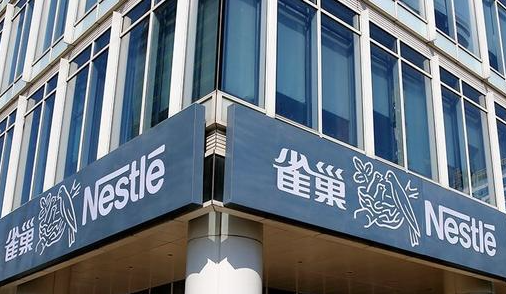
For coffee industry practitioners and market observers, Nestlé's adjustment is not just a simple organizational optimization but may also bring subtle adjustments to regional market strategies, resource allocation, and even product line layout. Especially in a highly competitive and rapidly changing market like Greater China, how to balance headquarters strategy with local needs will be a key focus worth continuous attention in the future.