Feihe Responds to Japanese Ingredient Controversy: Tech Cooperation or Ingredient Dependence?
Introduction: Recently, the domestic formula brand Feihe was rumored to "import Japanese ingredients," sparking consumer concern. In fact, this stems from an intent for technical cooperation between Feihe and a Japanese company, which was misread as ingredient dependence or even brand investment. This article reconstructs the course of events, explains the background of the lactoferrin technology cooperation, clarifies the false rumors, and introduces Feihe's independent R&D progress in the infant formula field, to help consumers understand the facts more fully.
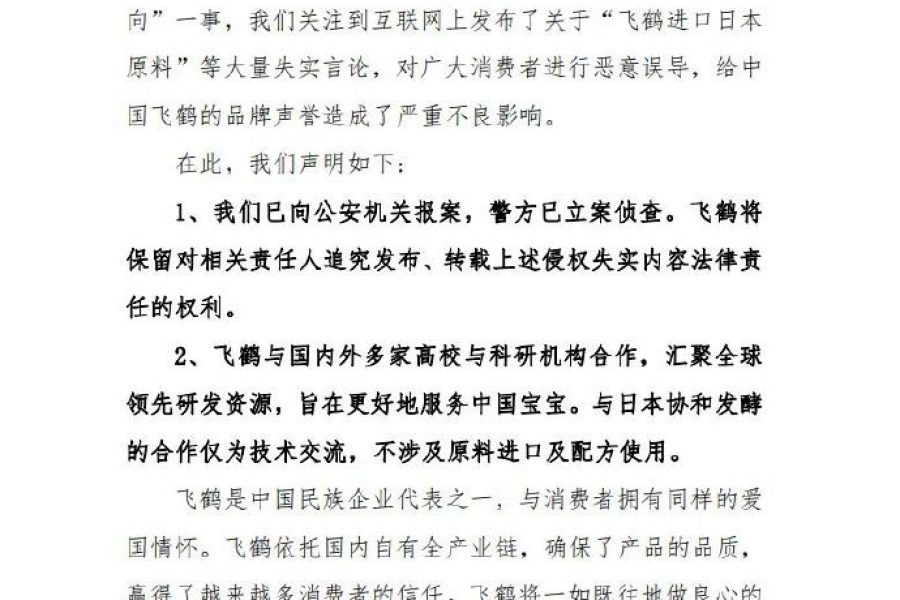
On October 18, Heilongjiang Feihe Dairy Co., Ltd. issued a formal statement through official channels to refute false information circulating online, such as "Feihe imports Japanese ingredients." These untrue claims not only misled consumers but also caused serious negative impact on the domestic formula brand image that Feihe has long built. Feihe has now reported the matter to public security authorities, and the relevant case has been filed for investigation by the police.
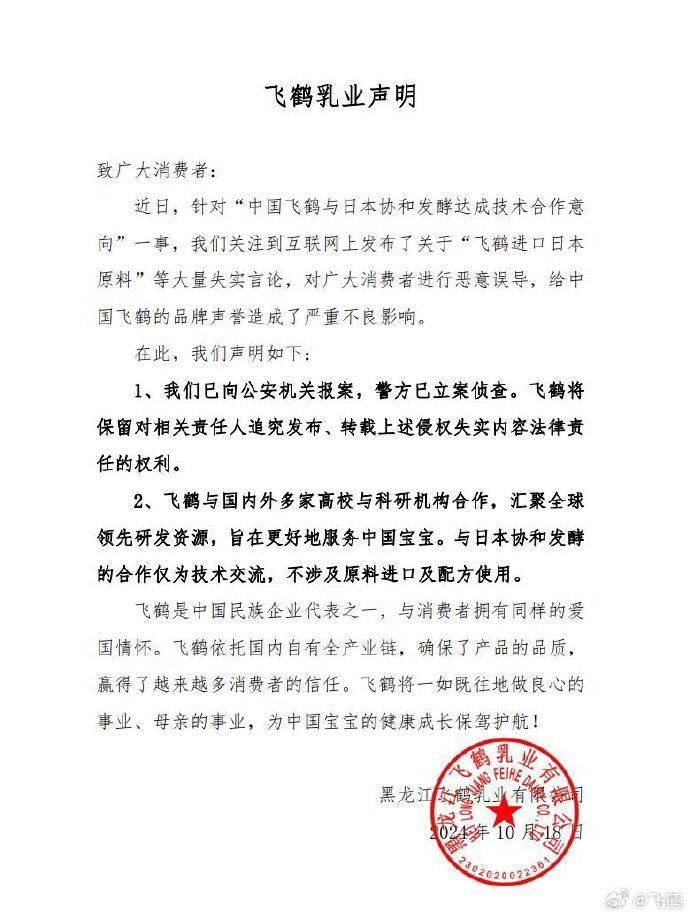
The incident can be traced back to October 3 this year, when Feihe signed a "mutual technical cooperation letter of intent" with Kyowa Hakko, a well-known Chinese fermentation technology company—Japan's Kyowa Hakko—and announced that the two sides would jointly establish a China-Japan joint innovation laboratory. The laboratory's main goal is to focus on R&D of fermentation-based lactoferrin production technology, intending to enhance through technological innovation the production capacity of a core immune component in infant formula.
According to public information, lactoferrin (LF) is an important iron-binding glycoprotein belonging to the transferrin family. It naturally exists in human milk and various secretions, with the highest content in breast milk, especially colostrum. Lactoferrin has important immune-regulatory functions, capable of inhibiting the growth of pathogenic microorganisms by competing for iron sources, thereby providing important immune protection for infants.
It is worth noting that lactoferrin in China was previously mainly dependent on imports, and its price rose more than tenfold in just a few years; unstable supply has long been an industry problem. To break this bottleneck, Feihe has invested substantial resources in recent years and successfully built the country's first independently operated "lactoferrin production line," taking a key step toward breaking international monopoly.
The Japanese company Kyowa Hakko, which reached the cooperation intent with Feihe this time, was founded in 1949 and is a globally leading fermentation technology enterprise. The company is not only the world's first to commercialize fermentation-based amino acid production technology, but also at the international forefront in the R&D, production and sales of human milk oligosaccharides (HMOs), postbiotics and various functional ingredients. The cooperation was intended to complement each other's technical strengths and jointly explore a new path for efficiently producing lactoferrin through fermentation processes.
However, such normal news of technical cooperation was deliberately distorted by some internet users. Some misread the cooperation as "Feihe being invested in by a Japanese company," and even further spread the rumor that "Feihe imports Japanese ingredients." Some irresponsible remarks also strained to link sensitive topics such as Japanese nuclear pollution with formula safety, causing false information to spread rapidly and triggering consumer panic.
In response, Feihe clearly stated in its statement that the cooperation with Kyowa Hakko remains at the "letter of intent signing" stage and has not involved any ingredient procurement or capital injection. Even if the cooperation deepens in the future, it will be limited to "mutual technical cooperation" and joint development of "fermented lactoferrin technology," completely unrelated to ingredient imports or capital cooperation. In addition, Feihe has long maintained close cooperation with many universities and research institutions at home and abroad, with R&D resources spanning the globe, and is by no means dependent on a single external technology or ingredient source.
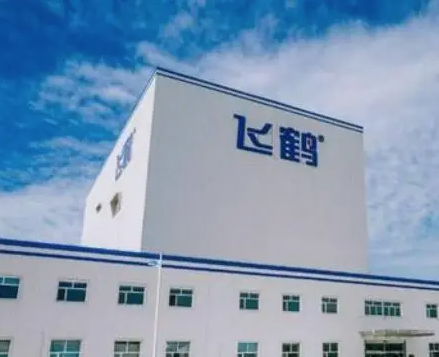
Public information shows that Feihe Dairy was founded in 1962 and is headquartered in Qiqihar, Heilongjiang Province, China—known as "the hometown of the red-crowned crane." As one of the earliest infant formula companies in China, Feihe has focused on the R&D, production and sales of infant formula for 56 years. Currently, Feihe has 8 core processing bases across the country and a sales and R&D center in Beijing, with a sales network covering 32 provinces and municipalities nationwide. In 2019, Feihe successfully listed on the Hong Kong Stock Exchange, becoming the domestic dairy company with the highest IPO market value on the HKEX at that time.
This incident once again reminds consumers to make rational judgments when obtaining information and avoid being misled by false rumors. More understanding and support should also be given to the technological progress and independent R&D of domestic formula brands.


