Yili Expands Sugar-Free Tea: 2024 Q3 Report Reveals New Beverage Strategy
Introduction: Domestic dairy giant Yili released an important signal at its 2024 Q3 earnings briefing: although the dairy business is under pressure, the sugar-free tea segment has become a new growth point. Its Yike Huoquan freshly brewed tea series is rising rapidly on the strength of differentiated design and a health positioning. This article provides an in-depth analysis of its product technology highlights, market strategy and industry trends.
The latest financial report data shows that Yili's total revenue in the first three quarters of 2024 reached 89.039 billion yuan, with net profit attributable to shareholders of 10.868 billion yuan, firmly holding the industry's top position. Particularly noteworthy is that Q3 net profit grew 8.53% year on year, and the brightest part of this report card is its water and tea beverage business—the freshly brewed tea series achieved growth exceeding expectations, becoming a frequently discussed term at the earnings meeting.
This freshly brewed tea that has attracted attention comes from Yili's sub-brand Yike Huoquan, and currently highlights two signature flavors: Huangshan Maofeng jasmine tea (green tea type) and Wuyishan Da Hong Pao oolong tea (red tea type). The product development team revealed that raw material selection is extremely meticulous—for example, the green tea uses Maofeng from the core production area of Huangshan, Anhui, while the oolong tea uses Da Hong Pao from the Zhengyan production area of Wuyishan, Fujian, paired with high-quality jasmine from Hengxian, Guangxi, and brewed with Arshan volcanic natural mineral water to bring out the best flavor.
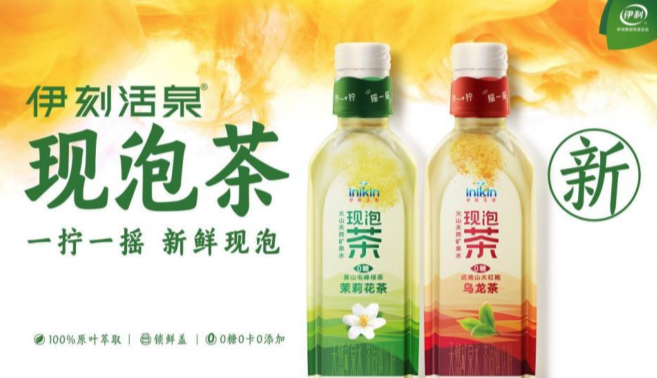
The series' biggest technological breakthrough is the original tea-water separation freshness-lock cap. The patented design seals freeze-dried tea powder inside the cap's inner chamber; when drinking, simply twist to open, and the tea powder automatically falls into the water, completing brewing in 3 seconds. This "brew fresh, drink fresh" mode solves the pain point of traditional tea beverages changing flavor after long storage, and also reduces additive use by more than 30% compared with ordinary bottled tea. Laboratory tests show that this technology can raise the retention rate of tea flavor compounds to more than 85% of freshly brewed tea.
In terms of health indicators, the product strictly implements the "three-no standard": zero sucrose, zero fat, zero calories, and no added artificial flavors, colors or preservatives. Nutritionists suggest that this type of sugar-free tea is especially suitable for fitness enthusiasts and people controlling sugar intake as a daily hydration choice; drinking 1-2 bottles per day (about 500 ml per bottle) will not cause an extra calorie burden.
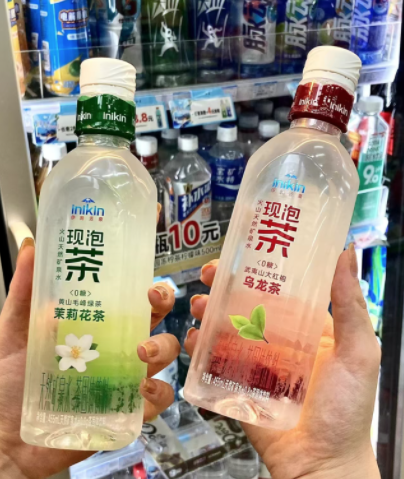
However, Yili management admitted that freshly brewed tea is still in the market cultivation stage. Limited by production capacity allocation, the product is initially supplied in limited quantities at convenience stores, O2O platforms and e-commerce platforms in first-tier cities such as Beijing, Shanghai, Guangzhou and Shenzhen. The production line manager said that after the new production line is put into operation in 2025, distribution is expected to expand to supermarket systems in major cities nationwide, with plans to launch more regional tea varieties such as Yunnan Pu'er and West Lake Longjing.
From the broader industry environment, the dairy market is facing severe challenges. Nielsen IQ monitoring data shows that in the first eight months of 2024, dairy sales across all channels fell 2.1% year on year, while the beverage market maintained strong growth of 6.9% over the same period. Yili's own financial report also shows that Q3 liquid milk revenue fell 10.31% year on year, and the milk powder business became one of the few growth points (+6.56%). Against this background, entering the high-growth tea beverage segment has become a strategic necessity.
Worth noting is the transformation trend across the entire bottled tea market. As consumer health awareness rises, the compound growth rate of sugar-free tea over the past three years has exceeded 25%. Industry forecast reports show that by 2027 the size of China's sugar-free tea market is expected to exceed 12.4 billion yuan, with annual growth maintained in the 15%-20% range. In addition to Yili, several leading beverage companies are accelerating their layout in this field, with product innovation focused on dimensions such as regional specialty tea varieties, cold brew technology and functional additions.


