Papua New Guinea Coffee and Jamaica Blue Mountain: Flavor Guide
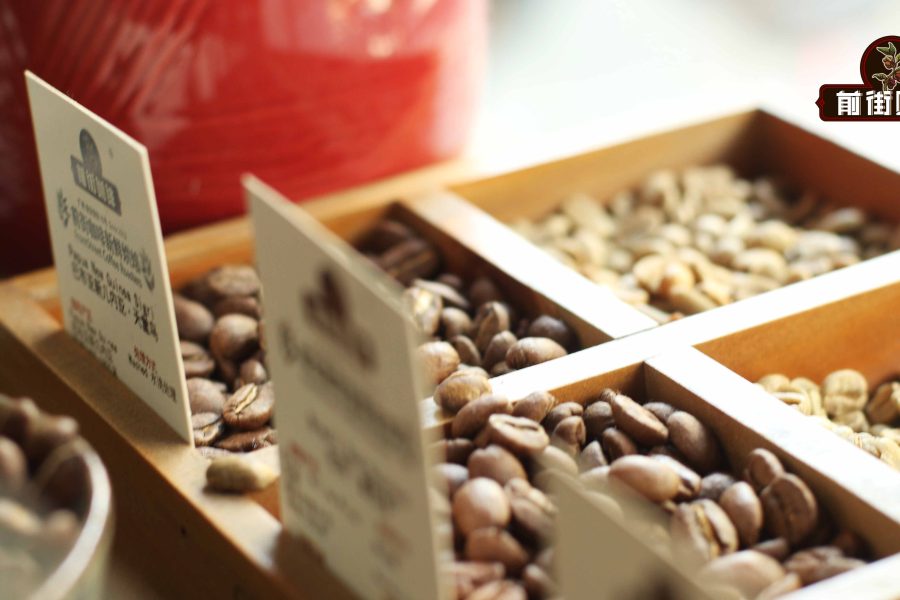
Introduction: Papua New Guinea coffee is often called the "Little Blue Mountain" by enthusiasts. Behind this nickname lie both climatic and cultivation-history origins and a subtle connection in flavor. This article delves into the cultivation origins and flavor characteristics of Papua New Guinea coffee, as well as its similarities and differences with Jamaica Blue Mountain, while also providing producing-region background, processing methods, and brewing suggestions to help you fully understand this specialty coffee bean with island character.
Papua New Guinea, this island nation located in the southwest Pacific, is both familiar and unfamiliar to many coffee enthusiasts. Although it is not a mainstream coffee-producing region, its coffee is often described as having certain qualities similar to Jamaica Blue Mountain, and is therefore affectionately called "Little Blue Mountain" by some coffee consumers. So what exactly makes this coffee special? And what connection does it have with genuine Blue Mountain coffee?
First, from the perspective of geographical and climatic conditions, Papua New Guinea is located south of the equator, within 10 degrees south latitude. It is a typical island-type climate region with abundant tropical rainforests, volcanic rock, and highland terrain, and cultivation elevations are mostly concentrated between 1,200 and 2,500 meters. Such elevation and climatic environment provide ideal conditions for the growth of high-quality coffee.
Unlike the herbal, earthy, and spicy flavors common in Indonesia, Papua New Guinea coffee shows brighter acidity, rich floral and fruity aromas, and a balance similar to South American coffee. These flavor characteristics are also one of the important reasons it is compared with Jamaica Blue Mountain.
The coffee cultivation history of Papua New Guinea can be traced back to 1931, when the Typica variety was introduced from Jamaica. Due to historical reasons, Britain controlled Jamaica for a long time, and Papua New Guinea was also once a colony within the British sphere of influence, so introducing the Typica variety was logically natural. This variety is precisely the foundation of Jamaica Blue Mountain coffee, which also explains why Papua New Guinea coffee is considered to have "Blue Mountain lineage."
Subsequently, in 1950, the country introduced the Bourbon variety from Kenya, further enriching the local coffee gene pool. It is worth mentioning that Kenya was also a British colony at the time, so this introduction path was not accidental.
By 1962, the New World and Caturra varieties were introduced from Brazil, significantly improving Papua New Guinea coffee in both variety diversity and overall quality.
However, the country's coffee industry has not had smooth sailing. In the last century, during the export quota system implemented by the International Coffee Organization (ICO), because Papua New Guinea was still under Australian trusteeship at the time, large quantities of coffee beans were purchased by Australia to meet quota demand. But after Papua New Guinea became independent in 1975 and the ICO abolished the quota system in the 1980s, the country's coffee industry faced severe challenges, as international buyers turned to other producing regions, causing exports to fall sharply.
Data shows that over the past decade, Papua New Guinea's coffee production has fallen from about 1 million bags (60 kg/bag) in 2009 to around 800,000 bags today, a decline of 20%. This trend is mainly related to the aging of coffee trees and the lack of replanting. Over the past more than 30 years, most coffee farmers have not effectively replaced old trees and have lacked corresponding technical support.
However, since April 2010, with the support of the World Bank and the United Nations International Fund for Agricultural Development, more than 7 million coffee trees have been replanted, and some coffee farmers have also reported improved cultivation benefits.
Although natural conditions are superior—including fertile volcanic soil, abundant rainfall, and suitable elevation and temperature—Papua New Guinea's coffee industry still faces many challenges. Among them, the main problem is that more than 85% of coffee is produced by smallholder farmers, who usually have limited cultivated area and are scattered among tribes across the country.
Papua New Guinea has more than 10,000 tribes and uses more than 800 languages. This high degree of cultural and linguistic fragmentation not only hinders the spread of coffee cultivation techniques but also creates complex problems such as unclear land ownership, further affecting the consistency of coffee quality.
In addition, local farmers often prioritize food crops to meet basic living needs. Coffee cultivation is only a side occupation, with limited input and relatively low returns. At the same time, complex government regulatory policies also make the development of the coffee industry more difficult.
According to the "2019 Papua New Guinea Coffee Market Study" report, to improve the current situation, efforts should begin with expanding agricultural extension services, strengthening scientific research support, encouraging women's participation, and enhancing domestic and international trade, so as to truly push this coffee-producing region with potential forward.
Take the Sigri Bird of Paradise Estate in the Wahgi Valley of Western Highlands Province, Papua New Guinea, as an example. Since its establishment in 1950, this estate has been a model of local coffee cultivation. The Typica variety it grows is said to have the same provenance background as Jamaica Blue Mountain, thus giving the coffee a uniquely elegant character.
The estate is located in a highland area above 1,500 meters elevation, with mineral-rich volcanic soil and a cool, humid climate, providing an excellent natural environment for coffee growth. The estate insists on not using pesticides or insecticides, emphasizes ecological protection, and also strictly manages cultivation and harvesting processes.
During the annual harvest season from April to September, only fully red ripe coffee cherries are picked to ensure the best flavor condition. The estate conducts daily cupping to ensure stable quality. After fine washed processing, the coffee presents bright fruit acidity and clean sweetness, with rich flavor layers.
The coffee beans produced by this estate are classified as AA grade, one of the highest grades in the country, representing large bean size, few defects, and high specialty potential.
In terms of processing, the Sigri Bird of Paradise Estate uses three rounds of washed fermentation, each about 24 hours, and changes the water to precisely control the fermentation process, thereby shaping clearer, softer acidity and a clean mouthfeel. This processing method differs slightly from common practices in Central and South America, placing more emphasis on detail and flavor orientation.
As an ancient coffee variety, Typica has elegant and refreshing flavor characteristics, but also has problems such as weak disease resistance and relatively low yield. Its bean shape is rather pointed, and its top leaves are bronze-colored, so it is often called "red-top coffee." When properly roasted, Typica can show high sweetness, good acidity, and a balanced mouthfeel structure.
For high-altitude-grown Typica such as that from Papua New Guinea, medium roasting is recommended to highlight its fresh fruit acidity and nutty notes. During roasting, special attention should be paid to heat control after first crack to avoid overdevelopment leading to flavor imbalance.
For brewing, it is recommended to use equipment with a lower-flow design such as the Kono dripper, with a water temperature of 88°C, a coffee-to-water ratio of 1:15, and a grind size of about 75% passing through a No. 20 sieve, similar to coarse granulated sugar. Through staged extraction, first bloom with 30 grams of water for 30 seconds, then pour in a small stream to 125 grams for the staged extraction, and finally top up to 225 grams. Keep the total extraction time at 2 minutes to 2 minutes 10 seconds. This helps fully express the coffee's nutty, cocoa, soft fruit acidity, and caramel finish, with an overall balanced and richly layered flavor.


