Costa Rica Geisha Coffee: Strawberry Gummy Flavors and Pour-Over Guide
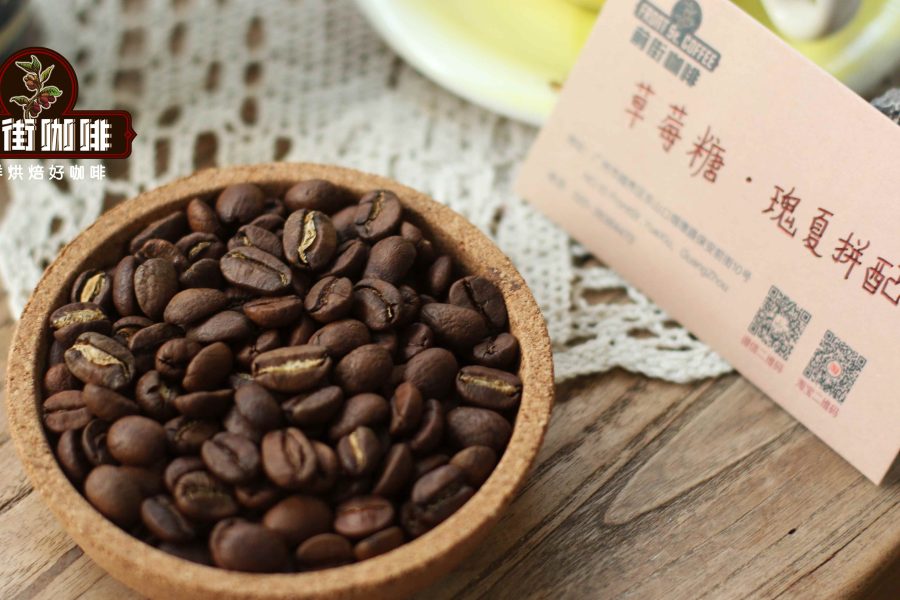
Introduction: Want to learn about the unique flavors of Costa Rica Geisha coffee? This article takes an in-depth look at a blend that combines Geisha with several other high-quality varietals, including the varietal combination behind its strawberry gummy sweetness, the raisin honey process, and professional roasting and pour-over parameters, giving you a full grasp of how to brew and taste this coffee.
To experience the unique Geisha flavors of the Costa Rica region, consider a blend that combines Geisha with other high-quality varietals. This coffee not only retains Geisha's signature floral and fruity aromas, but the varietal combination also brings a sweetness reminiscent of strawberry gummy candy, making it a favorite among coffee enthusiasts.

First, to be clear: in specialty coffee, a "single-origin coffee" usually refers to beans from a single region and a single varietal. In actual trade, however, mixed-varietal beans harvested from the same estate or processing facility are still regarded as single-origin coffee. Such coffees may be named after the region, varietal, processing facility, or even given creative names, so careful distinction is needed when choosing.
These beans come from Costa Rica's famous Tarrazú region, located in Central America's fertile volcanic belt, with a humid climate, high altitude, fertile volcanic soil, and ample shade, creating ideal conditions for coffee cultivation. Even within the same region, different estates show distinct flavor profiles due to differences in microclimate, soil, and varietal—one reason many coffee lovers keep exploring different beans from the same region.

Among them, Finca Mirazu is one of the representatives within the Tarrazú region. The owner, Esteban Sanches, graduated from the Costa Rica University of Agriculture with a degree in coffee, giving him a solid academic background, and he is also passionate about experimental innovation in coffee cultivation and processing. He has not only tried growing Ethiopian landraces such as ET47, but also personally designed and assembled small wet-processing equipment, showing a strong spirit of scientific inquiry.
The varietal combination of these beans includes Geisha, ET47, SL28, and Maico. The Geisha varietal was collected from Ethiopian forests in the 1930s and later recorded by CATIE (Tropical Agricultural Research and Higher Education Center), but was not widely planted due to its fragile branches. ET47 is one of the varietals introduced by the Costa Rica Coffee Institute in the 1990s for leaf rust resistance, with the lab number 47; it is known for its rich fruitiness and elegant acidity, though its detailed lineage has not been made public.
SL28 is a well-known drought-resistant varietal, and genetic testing shows it belongs to the Bourbon genetic group, with plump, thick beans. There is currently no official information on Maico, but based on actual tasting, this coffee—50% Geisha blended with 50% ET47, SL28, and MAICO—brings a distinct jasmine aroma from the Geisha, while the other varietals add rich berry flavors, and the special raisin honey process significantly enhances the layers of sweetness.

For processing, raisin honey processing is used, which means retaining 100% of the mucilage without washing, placing extremely high demands on precise control of the drying process. After harvesting, the coffee cherries are first sorted, then dried on raised beds for at least three days before depulping. Notably, the estate owner's self-made depulper can process two types of beans at once, improving efficiency. After depulping, the mucilage is retained and drying continues; during this time the beans must be turned frequently but gently to ensure even drying and avoid over-fermentation. This processing method gives the coffee a rich dried-fruit sweetness and high sweetness levels.

For roasting, a medium-sized roaster is recommended, such as equipment with a 480g batch capacity; preheat to 200°C then drop to 175°C for charging, with initial heat at 120 and airflow at 3. The turning point is around 1'32", after which heat and airflow are gradually adjusted according to temperature changes—for example, maintaining heat at 114°C, then lowering heat to 100 at 140°C while keeping airflow at 4. Watch for changes on the bean surface: when wrinkles and dark streaks appear, this indicates the prelude to first crack, so listen closely for the first crack sound. First crack begins at around 10'25", with development time of about 1'30", and the final drop temperature controlled at 193.5°C.

For cupping, it is recommended to cup within 8–24 hours after roasting, using a 200ml ceramic cupping bowl and a standard metal cupping spoon, with water at 94°C, a grind passing 70%–75% through a No. 20 sieve, and a coffee-to-water ratio of 1:18.18 (11.1g coffee + 200ml water), ensuring concentration falls within the golden cup range (1.15%–1.35%). The cupping process includes smelling the dry fragrance, confirming the wet aroma after pouring water, and evaluating flavors after breaking the crust; typically one can detect floral, dried fruit, and berry notes, along with a finish of nuts and cream.

For home pour-over, a Hario V60 01 dripper is recommended, with 15g of coffee, a 1:15 ratio, 90°C water, and a medium-fine grind (about 80% passing a Chinese standard No. 20 sieve). The procedure: first rinse the filter paper and preheat the equipment, pour 30g of water and bloom for 30 seconds, then pour in a slow circular stream to 125g and pause, resume pouring when the water level is about to expose the coffee bed until reaching 225g and stop, and remove the dripper when the water level drops and is about to expose the coffee bed again; total extraction time is about 2'01".
The flavor profile of this coffee is distinctly layered: the dry fragrance carries fresh floral notes, while the wet aroma brings forth dried fruit and berry notes; on the palate, the natural sweetness of raisins comes first, followed closely by a strawberry gummy-like sweetness, accompanied by the rich texture of nuts and cream, with an overall balanced and memorable cup.