Jamaican Blue Mountain Coffee Authentication Guide: The Japan Monopoly and Pour-Over Parameters
Introduction: Jamaican Blue Mountain coffee is hailed as one of the most expensive coffees in the world, yet the market is flooded with various counterfeit products. This article reveals why 90% of authentic beans are purchased by Japan, teaches you to identify authenticity through altitude, variety, and certification marks, and provides a professional pour-over recipe to help you experience the true Blue Mountain flavor.
Among coffee enthusiasts, Jamaican Blue Mountain coffee has always held a special status. This beverage, hailed as the "king of coffee," has made authenticity identification a required course for consumers worldwide. When you type "Blue Mountain coffee" into a search engine, the flood of identification guides precisely reflects the market chaos—a large number of products labeled "Blue Mountain flavor" or "Blue Mountain blend" actually have no connection to the genuine article.

True Blue Mountain coffee must meet strict geographical conditions. The Jamaica Coffee Industry Board (CIB) stipulates that only Typica variety coffee beans grown in the Blue Mountain range at altitudes of 910–1,700 meters are eligible to bear the name "Blue Mountain." This narrow growing belt is mainly distributed across four producing regions—St. Thomas, St. Mary, St. Andrew, and Portland—with a total area of only about 6,000 hectares, of which only one third meets the standards. The unique volcanic soil, abundant rainfall, and moderate cloud cover together create the signature mellow taste of Blue Mountain coffee.

The claim that "Japan monopolizes Blue Mountain coffee" is indeed true. In 1981, the Japanese company UCC (formerly Ueshima Coffee Co.) invested in establishing plantations in Jamaica and reached an agreement with the local government: obtaining priority purchasing rights to 90% of the annual total Blue Mountain coffee production. Because the Typica variety is extremely demanding about its growing environment—requiring high altitude, yielding low volumes, and being susceptible to disease—and the steep terrain makes manual harvesting costly, Jamaica currently produces only about 900 tons of Blue Mountain coffee per year, of which the beans meeting the highest grade standards are even scarcer.

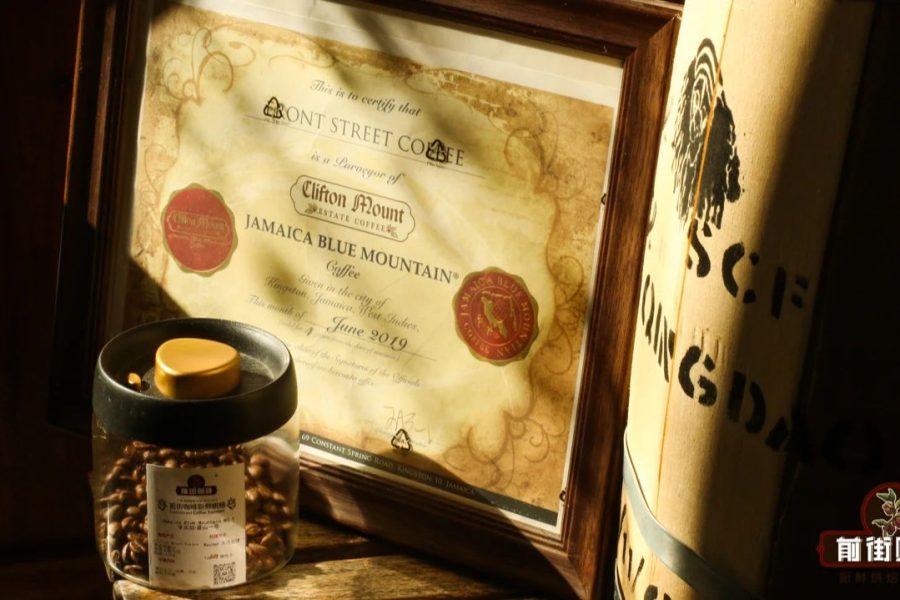
Not all Jamaican coffee can be called Blue Mountain. The CIB strictly classifies regional coffee into four grades: Blue Mountain No. 1 (the highest grade), Blue Mountain No. 2, Blue Mountain No. 3, and Blue Mountain Peaberry. Authentic Blue Mountain No. 1 must meet hard criteria such as bean screen size of 17 or above, defect rate below 3%, and moisture content of around 13%. Particularly noteworthy is that only Blue Mountain No. 1 through No. 3 are transported in precious wooden barrels, while other grades use ordinary burlap sacks. Each grade must pass official CIB certification and bear an anti-counterfeiting label, which is the key basis for distinguishing authenticity.
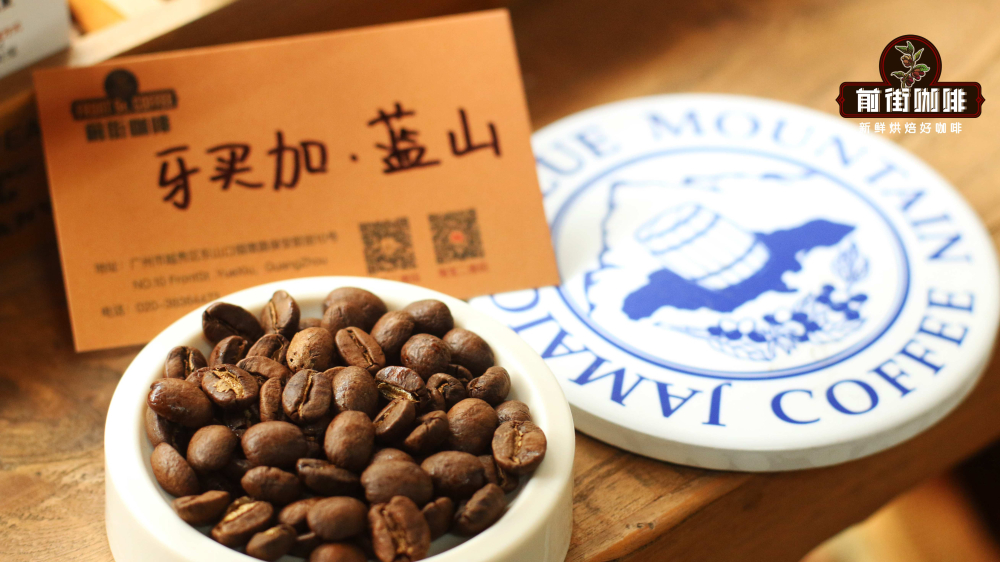
In terms of flavor characteristics, authentic Blue Mountain coffee presents a complex and balanced flavor profile. The dry aroma carries distinct nutty and chocolate notes, and the brewed cup shows low acidity, a mellow body, and a lingering sweet aftertaste. As the temperature changes, hazelnut, creamy sweetness, and subtle caramel flavors gradually emerge. This layered taste experience is precisely what distinguishes it from ordinary "Blue Mountain flavor" coffee.

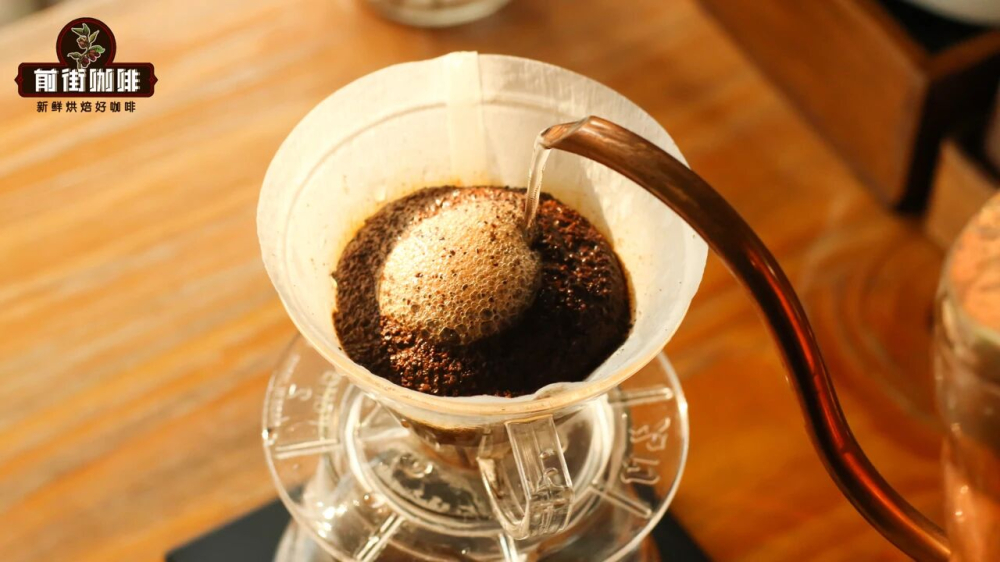
For home brewing, a medium grind is recommended (about 75% passing rate on the Chinese standard No. 20 sieve), with a coffee-to-water ratio of 1:15 and a water temperature of 87–88°C. Using a KONO dripper for extraction is recommended—its special rib design extends the time the coffee grounds absorb water, allowing the flavors to release more evenly. The specific procedure involves three pours: the first pour of 30 grams of water for a 30-second bloom, the second pour up to 125 grams, and the final stage topping up to a total of 225 grams, with the entire extraction taking about 2 minutes.

When identifying authentic beans, pay close attention to the following details: first, confirm whether the packaging bears the official CIB certification label; second, observe whether the beans are uniform and plump; finally, judge by the flavor performance after brewing—authentic beans should have a distinct nutty-chocolate base, soft acidity, and a clean finish. Be especially wary of products advertised as "Blue Mountain blend" or "Blue Mountain flavor," as these are usually commercial coffees with added artificial flavorings.

Common counterfeiting methods on the market include: passing off Typica coffee from other regions as Blue Mountain, adding artificial flavorings to create a "Blue Mountain flavor," and mixing low-altitude coffee beans into high-grade products. Consumers should be wary of excessively low prices—the market price of genuine Blue Mountain No. 1 is typically over a thousand yuan per pound, and so-called "imported Blue Mountain" at abnormally low prices can basically be judged as counterfeit.
By understanding this expert knowledge, consumers can not only avoid purchasing counterfeit products but also truly appreciate the unique flavor charm of Blue Mountain coffee. Remember, the core value of authentic Blue Mountain lies in its unreplicable growing environment and strict quality control system—this is the fundamental reason it is hailed as the "king of coffee."


