Ethiopian Sidamo Guji Coffee: Natural Processing and Regional Flavors
Introduction: Explore Ethiopia's Sidamo region and the unique charm of its signature coffee, Guji. This article covers geography, farming practices, variety characteristics, natural processing, and brewing recommendations, offering a comprehensive understanding of this notable coffee. Whether you are a beginner or a seasoned enthusiast, you will find practical guidance for selecting and brewing these beans.
Ethiopia, with its unique highland terrain and climate, is a major birthplace of the world's finest coffees. Elevations mostly range from 1,500 to 2,200 meters, and the tropical rainforest climate brings abundant rainfall and mist, along with significant day-night temperature differences, collectively creating coffees with distinctive and layered flavors. These natural advantages have long made regions such as Sidamo top choices for specialty coffee lovers.
Local coffee production broadly falls into four categories: forest coffee, semi-forest coffee, garden coffee, and large-scale plantations. Garden coffee is the most common, with farmers often intercropping coffee trees with bananas and other crops. This not only uses land efficiently but also creates a distinctive garden landscape. Intercropping also provides good shade and a microclimate for the coffee trees, helping the fruit mature slowly and accumulate more flavor compounds.

It is worth noting that Ethiopia's coffee varieties are extremely diverse, and many have not undergone systematic genetic certification. To protect these precious native resources, the government collectively refers to these unnamed varieties as "Heirloom." These beans are relatively small, round but irregular in shape, typically between screen sizes 14 and 15. In cupping, they often display elegant floral aromas, citrus fruit notes, and a multi-layered fruity tea-like mouthfeel, making them highly popular in the global coffee market.

Administratively, Ethiopia's nine coffee regions span five major states, including Jimma, Sidamo, Yirgacheffe, Harar, Limu, Ilubabor, Gimbi (Lekempti), Tepi, and Bebeka. Among these, Yirgacheffe, Harar, and Sidamo are the three most representative regions due to their unique flavors and long history.
The Sidamo region is located around Lake Awasa in the southern East African Rift Valley, at elevations between 1,500 and 2,200 meters. With ample rainfall and a mild climate, it is ideal for growing high-quality coffee. High elevation combined with moderate shade growing allows the coffee fruit to mature slowly at lower temperatures, helping flavor compounds develop fully, so the beans typically have distinct regional character and complex flavors.

As in other Ethiopian regions, Sidamo coffee is mainly grown by smallholders. Small-scale farming means limited output per household, and the coffee fruit is usually collected and processed by local cooperatives or washing stations. These stations are often built near water sources to ensure water availability for natural or washed processing. In recent years, with the promotion of specialty coffee concepts, more producers are working directly with farmers, using refined micro-lot management to further improve overall coffee quality and flavor expression.
In Chinese contexts, the names "Xidamo" and "Xidama" are often used interchangeably, but there are subtle historical and cultural differences behind them. The name Sidamo derives from the language of the local Sidama people, who have a unique culture and New Year celebration recognized by UNESCO. Historically, the region was invaded by other groups, and the original name Sidama was misread as Sidamo, and this misnomer gradually spread. After Ethiopia adopted a federal system in the 1990s, Sidama was restored as the official place name, but for trademark protection and market habit, the international market still widely uses the old name "Sidamo."

When it comes to the flavor of Sidamo coffee, processing method is a key factor. The natural method, the most traditional local process, is still widely used today. Through long natural drying, sugars and flavor compounds in the coffee fruit fully permeate the seed, giving the coffee a rich, full body and complex layers. Typical natural Sidamo coffees often have pronounced sweetness, a syrupy texture, and rich flavors interwoven with spice, floral, and tropical fruit notes, with a bright and lingering finish.
Compared with washed processing, the natural method has a longer fermentation period, allowing deeper reactions between the fruit pulp and microorganisms and producing more volatile aromatic compounds such as esters. These compounds are converted into aromatic substances like furans during roasting, giving the coffee a broader flavor spectrum and prominent sweetness. Many coffee lovers are drawn to this natural sweetness and intense fruit aroma, becoming devoted fans of natural Sidamo.

Among many Sidamo coffees, Guji coffee from Hambella has gained wide attention in recent years. Hambella lies at the border of Sidamo and Guji, currently administratively part of Guji. Surrounding mountains reach up to 3,200 meters, making it one of Ethiopia's highest coffee-growing areas. The name Guji comes from DW Company's submission of the coffee to the 2017 Ethiopia National Taste of Harvest (TOH) competition, where it won first place and rose to fame. Its actual origin is Hambella, with harvesting and natural processing handled by the local Buku Abel processing station.
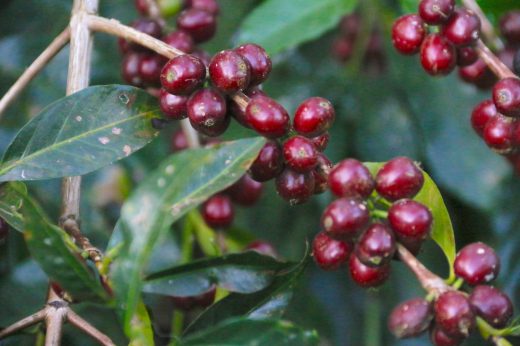
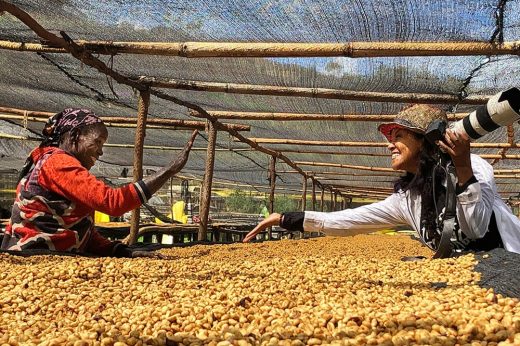
During the harvest season from December to January each year, the Buku Abel station strictly selects fully red coffee cherries with a sugar content of 30 or above, then places them on African raised beds for about 18 days of natural drying under strictly controlled temperature and humidity. To avoid over-fermentation and rain damage, the station shades the cherries at midday and protects them from rain at night, while continuously turning the fruit to ensure even drying, ultimately stabilizing the green bean moisture content at around 13%.

To fully express the berry and tropical fruit flavors of Guji coffee, most roasters tend to use a medium-light roast. In cupping, such coffees typically offer nutty, honey, berry, and slightly fermented aromas. On the palate, they show a full sweet-tart balance of passion fruit, strawberry, and cream, with a thick body and a soft cocoa note in the finish, making for a rich and memorable flavor experience.
For home brewing, choosing the right equipment and parameters is equally important. Basic gear includes a pour-over kettle, dripper, server, grinder, filter paper, digital scale, and thermometer. The grinder directly affects the uniformity of the coffee grounds and thus the extraction. It is usually recommended to test with a Chinese standard No. 20 sieve; for medium-light roasted beans, an ideal pass-through rate of 75% to 80% ensures full flavor release without over-extraction.
Water temperature is also a key factor. For medium-light roasts, 91 to 93°C water is recommended to fully bring out floral and fruity aromas and acidity; for medium-dark roasts, slightly lower temperatures of about 87 to 90°C are suitable to avoid over-extracting bitter compounds. For high-altitude medium-light beans like Guji, a V60 dripper is recommended; its unique spiral ribs and large center hole help extend water-coffee contact time and improve extraction uniformity and layering.

For a specific Guji 8.0 brewing recipe, a coffee-to-water ratio of 1:15 to 1:16 is suggested, adjusted to personal taste. Choose 1:15 for a richer mouthfeel, or 1:16 to highlight floral and sweet notes more clearly. Grind size should give about 80% pass-through on a No. 20 sieve, roughly fine sugar consistency; on a common EK43s grinder in cafés, this is about setting 10.
For brewing beginners, a three-pour method is recommended: first, bloom with 30 g of water for 30 seconds to awaken the grounds; then pour 95 g of water in even circles up to 125 g; when the water level drops halfway, add the final 100 g for a total of 225 g, with the whole process taking about 2 minutes. This method helps ensure even extraction, avoids local over- or under-extraction, and maximizes the rich flavor layers of Guji coffee.