Huakui 9.0 vs 8.0 vs Hambela Huakui: Ethiopian Heirloom Flavors and Brewing Guide
Introduction: As the birthplace of coffee, Ethiopia's native Heirloom variety has given rise to many distinctive specialty coffees. This article focuses on the Huakui series, comparing Huakui 9.0, 8.0 and the new-season Hambela Huakui, analyzing the growing environment and processing methods of Ethiopian Heirloom, and providing professional-grade pour-over parameters and flavor descriptions to help you better understand these popular coffees.
Ethiopian Heirloom and the Guji Region
Ethiopia is Africa's most important Arabica coffee-producing region and is globally recognized as the birthplace of coffee. The local Heirloom variety, through long-term natural evolution, displays distinct characteristics in different regions. The Guji region, one of the important birthplaces of Ethiopian coffee, was listed as an independent region by the Ethiopia Commodity Exchange (ECX) as early as 2010 thanks to its superior geographical conditions.

Guji is located in southern Oromia, Ethiopia, bordering Borena, with the Ganale Dorya River to the north and the Somali region to the east. Coffee in this area is grown mainly by smallholders, with coffee trees typically growing under shade among intercropped bananas and sugarcane; this ecological farming model provides the coffee cherries with abundant flavor precursors.
Hambela Sub-region: Cradle of High-Altitude Specialty Coffee
The core production area of the Huakui series, the Hambela sub-region, sits among indigenous communities at an altitude of 2,000 meters in the Guji area. This area faces the Kochore region of Yirgacheffe across the mountains, and its fertile black soil and significant diurnal temperature difference (daytime high of 25°C / nighttime low of 10°C) together create a unique microclimate.At the 2017 African Coffee Association TOH green bean competition, a natural-process coffee from Hambela took first place; this bean, later called "Huakui" by the market, was originally processed at a small washing station in western Hambela.

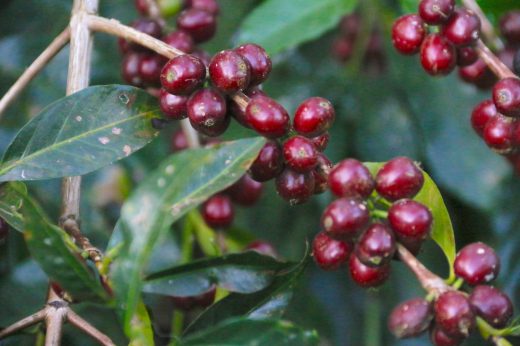
The actual growing belt is concentrated at the edge of primary forest at 1,900-2,100 meters, where farmers interplant banana trees (spaced at least 2 meters apart) and sugarcane among the coffee plants, both shading the coffee trees and improving soil fertility. During harvest (December to January), only fully red cherries are strictly selected, with refractometer readings required to be ≥30°Brix.
Key Details of the Traditional Natural Process
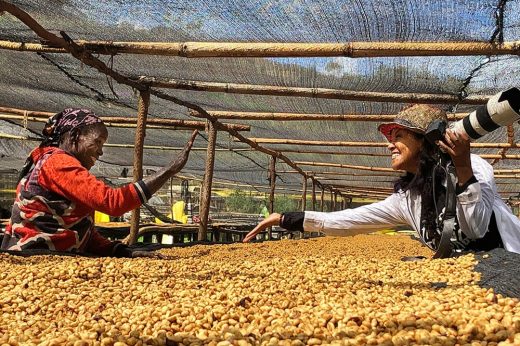
The champion coffee uses an 18-day staged natural processing method: the first 3 days involve thin-layer spreading (thickness ≤5cm) to promote pectin breakdown; in the middle stage, adjustable shade nets control the drying-bed temperature (daytime high of 45°C → 35°C in the afternoon); at night, PE film is used to prevent dew penetration. Throughout the process, the cherries are turned by hand 4-6 times daily to ensure even drying, with the final green bean moisture content stabilized at 12.8%-13.2%. It is particularly important to note that only natural lots from the Buku Abel washing station meet the original Huakui standard.

The Huakui Naming System and Version Evolution
The Huakui series follows a "year + 0" naming rule: Huakui 3.0 corresponds to the 2019 crop, Huakui 4.0 to the 2020 crop, and so on. The original 2017 version was limited to the Buku Abel washing station, but as DW expanded to four new villages including Buku Saysay, the processing volume of later lots increased by more than 300%, and the flavor characteristics changed noticeably — newer versions emphasize berry notes, while earlier lots were dominated by tropical fruit aromas.
The latest arrival, Huakui 9.0, continues the medium-light roast strategy (development time ratio 30%); the dry aroma presents a complex of guava, apricot and citrus, while the wet aroma shifts to honey and blueberry sweetness. Cupping performance: rich sweet-tart mango dried and jackfruit on entry, passion fruit acidity and a black tea finish emerging mid-palate, with overall body medium-full (SCAA standard 6-7 points).

Professional Brewing Recipe
For the bright acidity of Huakui 9.0, a Hario V60 dripper with the following parameters is recommended:
• Water temperature: 92±1°C (adjust ±2°C according to altitude)
• Coffee-to-water ratio: 1:15 (15 grams coffee to 225 milliliters water)
• Grind size: 80% passing through a Chinese standard No. 20 sieve (equivalent to EK43s setting 8-9)
• Three-stage pouring: 30 grams bloom (30 seconds) → pour to 125 grams (circular pour at 2 circles/second) → pour to 225 grams (water level drops in the final stage)
Common mistakes to avoid: avoid metal filters, which cause over-extraction; keep the pour height above 15 centimeters to reduce channeling. Storage advice: keep in a one-way valve foil bag away from light, and best consumed within 7 days of opening.

What Makes Hambela Huakui Unique
Compared with the new-season Huakui 9.0, the direct-supply lot from the Hambela region has more prominent blackcurrant and jasmine aroma layers, with brightness about 15% higher (pH range 5.8-6.0). The processing uses an improved honey method (removing 20% of the pectin), which extends the sweetness by about 30 seconds. When brewing, a finer grind (75% passing) and a longer extraction time of 2 minutes 30 seconds are recommended to better reveal its mineral finish.

In summary, the core differences among Huakui versions are reflected in: ① the regional micro-flavors brought by the washing station ② the effect of the year's climate on sugar accumulation ③ the degree to which the roast profile emphasizes acidity. Consumers can choose according to personal preference — those seeking classic tropical fruit notes can choose Huakui 8.0, those who prefer layered complexity should try the Hambela direct-supply lot, and beginners are recommended the better-balanced Huakui 9.0.