Yirgacheffe Coffee Guide: Grades, Pour-Over Parameters, and Flavor Basics
Introduction: Yirgacheffe coffee is known worldwide for its distinctive floral and fruity aroma and bright acidity, making it the entry point of choice for many coffee lovers. This article examines this classic coffee bean from region background and processing methods to variety characteristics and pour-over parameters, helping you understand how to brew the best flavor.
The town of Yirgacheffe is located in Ethiopia's Sidama region, at growing elevations between 1,700 and 2,200 meters. It is not only an important coffee administrative center in the area but also one of the world's renowned high-quality coffee regions. Coffee here is grown mainly by families, with limited output per household, so after harvest the coffee cherries are usually sent to the town's cooperative wet mills for centralized processing, then exported overseas under the cooperatives' names.
Most local coffee producers belong to the Yirgacheffe Coffee Farmers Cooperative Union (YCFCU), which consists of 23 cooperatives covering more than 40,000 farming households. Well-known cooperatives in the union include Konga, Worka, and Gedeb. These producers are not subject to unified control by the Ethiopia Commodity Exchange (ECX), so they can obtain higher quality premiums, including fair trade and organic certification, which helps preserve the coffee's distinctiveness and quality.

Some farmers may also join the Oromia Coffee Farmers Cooperative Union (OCFCU), an organization made up mainly of growers in the Oromia region. By integrating processing, sorting, and sales, it not only improves market efficiency but also more effectively safeguards the overall reputation of Ethiopian coffee. In addition, this model provides farmers with installment payments throughout the year, enhancing income stability, especially for grower groups that depend on seasonal harvests.
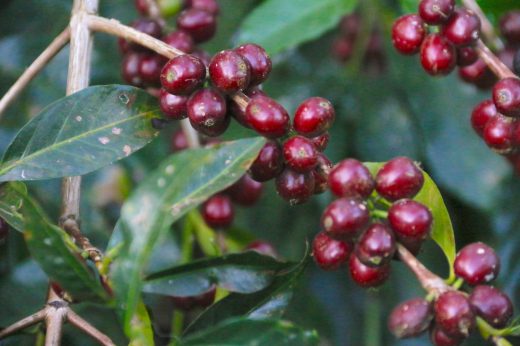
Why is Yirgacheffe coffee so popular? This is inseparable from its growing environment. The significant day-night temperature difference at high altitude slows the ripening of the coffee cherries, which favors the accumulation of flavor compounds. Typical Yirgacheffe coffee often displays vivid citrus acidity, fresh white floral notes, and a honeyed sweet finish; the overall flavor is fresh and bright, overturning many people's preconception that coffee tastes only bitter.
One of the processing methods commonly used for Yirgacheffe is the washed process. This technique is not simply washing the coffee beans; it extracts the beans through a series of professional steps. Specifically, after harvest the coffee cherries are first depulped and demucilaged, then placed in fermentation tanks with clean water for 12 to 36 hours of fermentation. The acidity produced during fermentation effectively breaks down the pectin; the beans are then rinsed clean with water and finally sun-dried. The advantage of the washed method is that it effectively removes impurities and defective beans, making the green beans more uniform in appearance, and it usually commands a higher trading price and offers greater quality consistency. However, the method involves many steps, has strict requirements for hygiene and operational management, and carries relatively high risk. Washed Yirgacheffe coffee usually has pronounced acidity, good cleanliness, a moderate mouthfeel, and fairly consistent green bean quality.

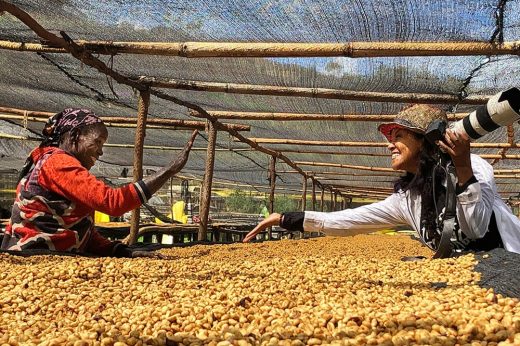
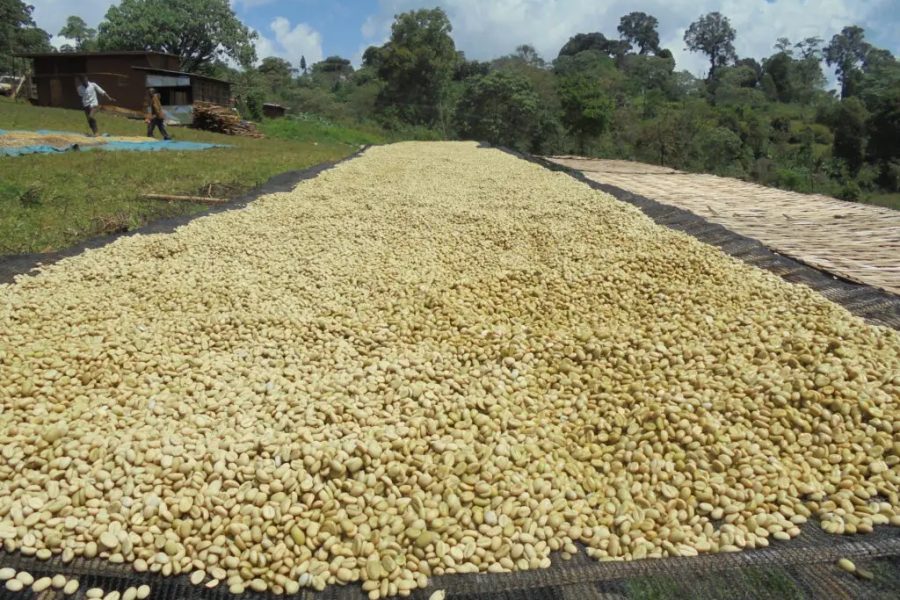
In addition to washing, the natural process is also a common way of processing Yirgacheffe. This method is relatively simple: after harvest, the coffee cherries are placed directly on drying beds and naturally dried in the sun. As one of the most traditional processing methods, the natural process is especially common in areas with abundant sunshine or scarce water resources; about 70 percent of Ethiopia's coffee cherries are processed this way. Compared with washed coffee, naturally processed Yirgacheffe has lower acidity, more prominent sweetness, and a clear mouthfeel, but slightly less cleanliness. Its flavor tends to be more complex, often with berry-like notes, suiting drinkers who enjoy layered, rich flavors.
Yirgacheffe coffee beans mostly come from Ethiopian native varieties. These varieties have not yet been clearly classified and usually exist as mixed plantings and mixed harvests, collectively called "Ethiopian heirloom varieties." These varieties form the cornerstone of Yirgacheffe's distinctive flavor, giving the coffee citrus and lemon fruit aromas along with jasmine floral notes and fresh, bright acidity. According to Ethiopia Commodity Exchange regulations, in addition to the town of Yirgacheffe, coffee produced in surrounding areas such as Wenago, Gelena Abaya, and Kochere can also be classified as belonging to the Yirgacheffe flavor region. Such coffee often has well-defined acidity and a clean, free-of-off-flavors cup.

To fully bring out Yirgacheffe's floral and fruity acidity, most beans are roasted to a medium-light level. Because the roast is lighter, the beans expand less and are harder in texture, so flavor compounds are not easily released during hot-water extraction, and brewing parameters need to be adjusted accordingly. A Hario V60 dripper is recommended, with a water temperature of 91 to 93°C, a coffee-to-water ratio of 1:15, and a medium-fine grind (about 80 percent passing a Chinese standard No. 20 sieve). A multi-pour extraction method effectively improves flavor expression.
In practice, first bloom with 30 grams of hot water for 30 seconds, making sure all the coffee grounds are evenly moistened. Then pour in a thin stream, circling from the center outward; when the total water reaches 120 grams, make the first pour break. When the water level drops close to the coffee bed, continue pouring to 225 grams and stop; wait for the level to drop again, then remove the dripper. Keep the entire extraction to about 2 minutes, which helps highlight flavors such as tropical fruit and berries while preserving a lingering citrus sweet-and-sour finish.

It is worth noting that Yirgacheffe differs clearly from Huakui coffee, which also belongs to the Sidama region, in flavor and processing. Huakui comes from the larger Sidama region, with its representative origin in Hambella, and is known for traditional natural G1-grade coffee beans. Huakui's traceable processing stations include Buku Abel and others, located within Dimtu town. As market demand has grown, several new independent drying stations have been added locally, further expanding Huakui coffee's production scale. Since 2018, although the origin and processing stations have not changed, Huakui's flavor has been slightly adjusted year by year; to make it easier to distinguish vintages and batches, the market often uses an "X.0" suffix, for example "Huakui 2.0" for 2018 and "Huakui 3.0" for 2019.
In brewing applications, Huakui coffee, because it is medium-roasted, is suitable for making espresso. Common parameters are 20 grams of coffee grounds extracting 40 grams of coffee liquid, with an extraction time of about 33 seconds. Espresso drunk straight often shows a complex aroma of dark berries, dried apricot, caramel, and creamy chocolate; used to make Americano, it highlights fresh citrus acidity; with milk added, the latte flavor becomes richer, with layers of butter cookie, plum, and almond.

In summary, Yirgacheffe coffee, with its unique geographical conditions, diverse processing methods, and distinctive flavor characteristics, has become an important starting point for coffee lovers worldwide exploring specialty coffee. From fine-tuning pour-over parameters to the flavor changes brought by different processing methods, understanding these details not only helps you better appreciate this classic coffee but also provides practical guidance for your coffee exploration journey.