Ethiopian Heirloom vs Landrace Coffee: G1 Varieties Explained
Introduction: Ethiopian coffee is often labeled "Heirloom" or the newer "Landrace." What is the difference between the two? This article takes an in-depth look at the growing background and variety characteristics behind these terms, helping you understand the roots of Ethiopian coffee diversity. It also recommends several high-altitude G1 heirloom coffees with their flavor profiles and brewing suggestions, so you can better choose quality beans.
When buying Ethiopian coffee beans, we often see the word "Heirloom," commonly translated into Chinese as "native species" or "heirloom." It usually refers to a coffee variety harvested as a mix, rather than a single variety. However, in the past two or three years, another word has begun appearing on some Ethiopian coffee packaging: "Landrace." So what exactly does "Landrace" mean? How is it connected to and different from Heirloom? Let's break it down in detail below.
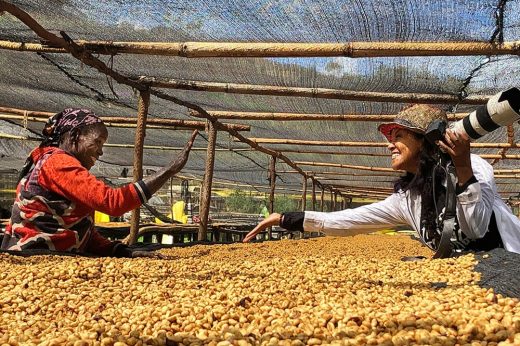
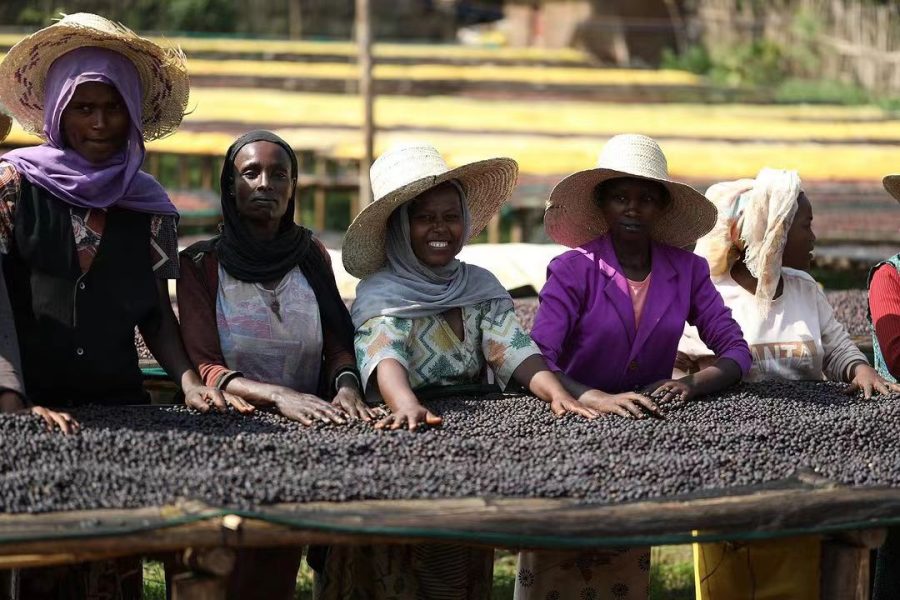
Most coffee in Ethiopia is grown by smallholder farmers, whose garden farming system is very traditional. The coffee trees these farmers grow may have been left by the land's previous owners, obtained through exchanges with neighbors, or grown from seeds brought from other producing regions. These coffee trees are often planted alongside other crops and are only harvested and sold together at harvest time.
< >
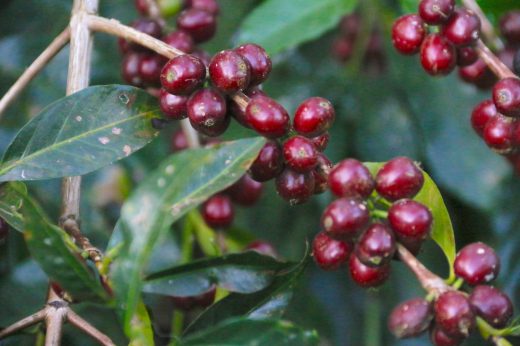
Because of this, "Heirloom" does not refer to one specific coffee variety but represents a mixed harvest of multiple coffee trees within a producing region. These coffees may come from several farmers, each with slightly different growing conditions, and are mixed together to form a lot. Each lot may contain dozens or even hundreds of varieties, none of which are subdivided. As a result, the beans vary in size and shape—some rounder, some slightly longer—and the whole can be seen as a "blended-style lot." For example, many popular coffees from the Ethiopian highlands, such as Kaffa Forest and Worka, usually list "Heirloom" in the variety field.
< >
When discussing Ethiopian coffee farming, the famous Kaffa Forest region must be mentioned. This area, located in misty high-altitude mountains, is recognized as one of the world's birthplaces of coffee. It is rich in biodiversity and an important source of Arabica coffee genetics. It is worth noting that the name of the Gesha variety comes from a place called "Gesha Mountain" within the Kaffa region. But because of this, some merchants mistakenly name Heirloom coffee from this area directly as "Gesha," when in fact it is completely different from the Panama Gesha variety famous for its floral and fruity notes.
Generally speaking, when we say "Gesha," we mean a famous variety in Panama once numbered "T2772." Its beans are long and slender with pointed ends, tend to curl inward after roasting, and feature a fresh floral-fruity profile with rich layers of sweetness and acidity that remain stable as the temperature changes—highly sought after by specialty coffee lovers. Ethiopian Kaffa Forest coffee, although grown in similar high-altitude cloud forests, is essentially still a local heirloom mix and emphasizes regional terroir and overall flavor expression—for example, the common washed process can bring out refreshing notes of lemon, peach, and green tea.
< >
So why has the term "Landrace" now appeared? In Ethiopia's garden farming, some coffee trees, having long adapted to local climate, soil, and other natural conditions, not only grow stably but also show relatively consistent flavor while possessing some disease resistance and high-yield traits. These trees, selected and cultivated by farmers over many years, have gradually been retained and formed relatively stable plant characteristics—this is what is called a landrace.
These coffee trees, which can be clearly described, have stable genetic traits and good flavor, are passed down from generation to generation by local farmers and called "Landrace," or landrace varieties; some also call them ancient superior varieties. They are not new varieties bred in laboratories but quality plants selected jointly by nature and humans under specific geographical environments and human management.
< >
So here is the question: since these landraces have always existed, why were they rarely labeled separately in the past? From a botanical perspective, a landrace cannot really be considered an independent variety, nor even a subspecies. Their "consistency" comes more from long-term interaction with the local terroir—the result of natural selection and accumulated time—rather than being controlled by a single gene. In the past, these locally distinctive varieties were mostly mixed into the broad "Heirloom" category without separate distinction.
In recent years, driven by Ethiopian agricultural research institutions such as JARC (Jimma Agricultural Research Center), more and more landraces originally classified as "Heirloom" have gradually been identified and categorized—for example, Kurume, Wolishao, and Dega in the south, and Choche, Sardo Buna, and Bedessa in the west and southwest. These landraces are beginning to be deliberately planted separately by farmers. However, because many coffee cherries are sent to large processing stations after harvest and processed together with fruit from surrounding smallholders, they are ultimately still exported under the name "Heirloom," making it difficult for consumers to distinguish them.
< >
With the development of the specialty coffee market, more and more international green coffee buyers are paying attention to these landraces with unique terroir characteristics. For growers, planting and selling landraces separately not only better showcases the region's character but also helps improve bargaining power and income stability. For consumers, it means the opportunity to taste coffees with more regional personality and consistency—for example, some landraces may highlight citrus notes, while others carry intense floral or berry aromas.
Overall, Heirloom reflects the rich diversity of Ethiopian coffee, gathering fruit from different farmers and different plants to form a unique naturally blended style; Landrace, meanwhile, refers to the landraces within it that are gradually being identified, with stable genetic traits and terroir adaptability, and are receiving increasing attention from coffee lovers and professionals. If you want to try Ethiopian coffee with more regional character, look for heirloom or landrace beans labeled G1 and processed by washed or natural methods—they often show clearer flavor layers and a cleaner cup.
< >
< >
< >