Why Yirgacheffe Coffee Tastes of Flowers and Fruit: Pour-Over Guide
Introduction: As a representative coffee region of Ethiopia, Yirgacheffe is memorable for its distinctive white floral notes and citric acidity. This article takes an in-depth look at the causes of this 'floral fruit tea' character, from the region's history to its washing process, and on to professional-grade brewing parameters and flavor wheel descriptions, helping coffee lovers fully understand the appeal of this classic bean.

Ethiopia is regarded as the birthplace of coffee, and the Arabica it produces holds an important place in the global specialty coffee market. A look at the local coffee map shows that although Yirgacheffe is only a small southern town, its unique washed-processing techniques have developed a highly identifiable flavor profile—a transformation that led it to separate from the Sidama region and become one of the regions specialty coffee lovers must try.

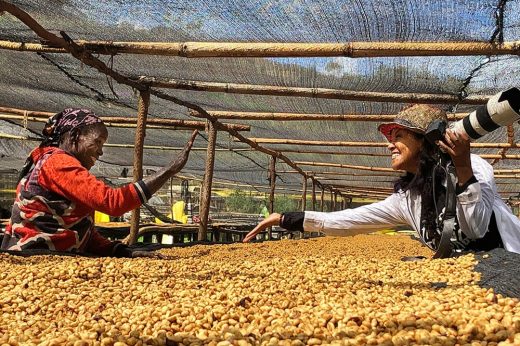
The town of Yirgacheffe lies downstream of the great lakes of the Gedeo Zone, and its abundant spring water provides ideal conditions for washed processing. In the local ancient language, the word "Yirgacheffe" is formed from Yirga, meaning 'calm,' and cheffe, symbolizing wetland, echoing its geographical character of 'settling peacefully in the wetlands.' Thanks to the standardized craft established by its washing stations, the region has successfully shaped a fresh flavor spectrum distinct from traditional Ethiopian coffee.

Typical washed Yirgacheffe beans show bright citrus acidity and white floral notes, such as jasmine or ginger lily, paired with honey-like sweetness; the overall flavor resembles cold-brewed fruit tea. This refreshing character makes it an entry-level choice for many coffee beginners. Data from local coffee farmer cooperatives show that more than 45,000 growers depend on coffee for their livelihood, but smallholders face challenges in international market competition, prompting regional cooperatives to improve their bargaining power through specialty coffee channels.

Professional cuppers summarize the Yirgacheffe flavor profile: bright citrus acidity (similar to lemon or lime), layered white floral notes, medium body, and a clean finish. Note that the ECX certification system also includes coffee from neighboring regions such as Kochere and Chelena Ambaya that meets specific flavor characteristics within the broad category of Yirgacheffe.

Observing the green beans reveals that Yirgacheffe beans are generally small and yellow-green. In the dry state they give off a complex floral and fruity aroma, with citrus notes especially prominent. A high-quality washed Yirgacheffe enters the mouth with soft fruit acidity, gradually revealing darker fruit notes such as plum as the temperature drops, and the finish often carries an oolong-tea-like sweetness.

The uneven bean size of Ethiopian coffee stems from its special grading system. Before the ECX system was implemented, grading was based on counting defective beans in a 300-gram sample (Grade 1 with ≤3 defective beans was the highest grade); the new system combines physical indicators (40%, including defect count, size, etc.) with cupping performance (60%). Note that although Grade 1 beans are more uniform in size, most lots still remain naturally mixed.

Given the washed-processing characteristics of Yirgacheffe, the following professional brewing recipe is recommended: a V60 dripper with 91°C water, a 1:15 coffee-to-water ratio (15 grams of coffee to 225 milliliters of water), and a grind size like fine sugar with 80% passing a Chinese standard No. 20 sieve. The operation is divided into three pours: the first pour of 30 grams of water for a 30-second bloom, then a circular pour up to 125 grams in stages, and when the water level drops to the surface of the coffee bed, continue pouring to 225 grams, with the total extraction time controlled at exactly 2 minutes.



Reference for actual flavor performance: the dry aroma presents delicate notes of jasmine and ginger lily; the first taste on the palate is mild citrus acidity; as the temperature drops, lemon and plum acidity become more prominent, accompanied by a clear sucrose sweetness; the finish carries a slight oolong-tea sweetness, presenting an overall distinct 'juice tea' texture. This flavor combination is precisely the core characteristic that distinguishes Yirgacheffe from other regions.