Ethiopia Gedeb Coffee Beans Review: Washed Processing, Flavor and Pour-Over Guide

Introduction: Gedeb coffee beans come from a small village in Ethiopia's Worka region, where the washed processing method preserves bright fruit acidity and floral aromas. This article details the origin background, processing technique, flavor layers and brewing plan, helping you precisely grasp the characteristics of this classic Yirgacheffe-style bean, and provides professional pour-over parameter suggestions.
Among the many specialty coffee beans, Gedeb coffee beans from Ethiopia's Worka region attract attention for their unique name and vivid flavors. Gedeb is not a brand but a small village located southeast of Yirgacheffe, where local coffee farmers jointly formed an agricultural cooperative focused on producing high-quality coffee.

The Gedeb cooperative was founded in 2012 and consists of about 300 farmers. Originally, most of these coffee farmers belonged to the larger Worka cooperative. As the global coffee market placed greater emphasis on "single origin" and "traceability," Gedeb village, as an area of outstanding quality within the Worka region, was the first to break away and establish its own dedicated cooperative. For this reason, Gedeb village is also known as "the last pure land of Yirgacheffe," and its coffee production still follows traditional and rigorous washed and natural processing methods.
The Gedeb coffee beans more commonly found on the market today are mostly the washed version. This processing method better highlights the typical fresh fruit acidity, bright citrus notes and delicate floral aromas of the Yirgacheffe region, along with a soft green-tea-like finish, and is deeply loved by specialty coffee enthusiasts.

Ethiopia is one of the birthplaces of coffee worldwide, with extremely rich coffee variety resources, and is known as a "treasure trove of coffee genes." However, because most coffee is grown by smallholder farmers and often processed in mixed lots after harvest, specific varieties are difficult to distinguish, so exports are usually collectively referred to as "heirloom." Nevertheless, washed coffee from the Yirgacheffe region has always been one of Ethiopia's most representative specialty coffees.
Although natural processing is widely used in Ethiopia, early natural techniques were relatively crude and often carried off-flavors or defects. Since the last century, the Yirgacheffe region introduced washing technology from the Americas, which not only improved the overall quality of the coffee but also gradually made this region a focal point of the global specialty coffee market. Washed processing clearly reveals the regional characteristics of the coffee beans, with cleaner and purer flavors.

It is worth noting that Gedeb village initially did not have its own independent processing facilities, and coffee farmers usually sent their harvested coffee cherries to the nearby Worka village processing plant for washing. But as international coffee buyers recognized the quality of Gedeb coffee, a dedicated processing plant was gradually established locally, ensuring that everything from picking to processing is completed within the village, further improving quality control and flavor consistency.
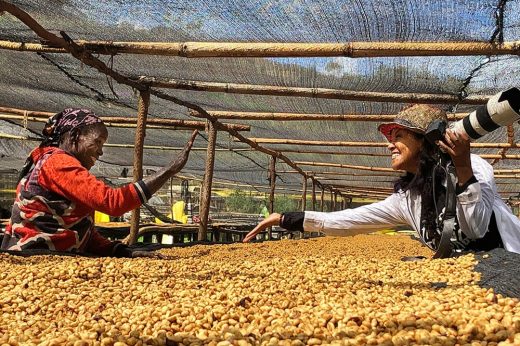
Washed processing is a technique with relatively high demands on equipment and skills, requiring large amounts of clean water and professional equipment, and is usually completed centrally at a processing plant. The basic process includes: first, placing the harvested coffee cherries in water and using buoyancy to remove unripe fruit; then removing the skin and pulp and placing the mucilage-covered parchment beans in fermentation tanks for 18 to 36 hours of fermentation; after the pectin layer breaks down, rinsing with clean water to remove residual pectin; finally, spreading the beans evenly on African raised beds for drying, with temperature and humidity strictly controlled throughout to ensure the purity and flavor performance of the final beans.

The greatest advantage of washed processing is that it preserves the coffee beans' inherent regional flavor to the greatest extent and reduces interference from external impurities. The processed Gedeb coffee beans often carry bright citrus and lemon acidity, accompanied by elegant floral aromas and a subtle green tea finish; the overall flavor is layered and clean and refreshing, very suitable for coffee lovers who enjoy fruit acidity and fresh taste.
In terms of roasting, light roast once became synonymous with Yirgacheffe flavor, emphasizing fruit acidity and floral aromas and avoiding the burnt bitterness and heavy nutty notes brought by dark roasting. To perfectly present the bright acidity and complex aromas of Gedeb coffee beans, a medium-light roast is recommended, which preserves the vibrant fruit acidity while bringing out rich layers of variation.

Cupping results show that this washed Gedeb coffee bean has a fresh and pleasant dry aroma, with sweet-tart notes of passion fruit, citrus and berries; the wet aroma further releases citrus, berries and a slight tea sensation; on the palate, the citrus acidity is bright, the berry sweetness stands out, accompanied by soft almond flavors and a delicate tea note, with a sweet honey-like aftertaste. The overall body is medium, the acidity is clean and crisp, making it a typical "fresh-style" Yirgacheffe.
If you want to recreate this coffee's flavor characteristics at home, the following pour-over plan is recommended: use a Hario V60 dripper with 15 grams of coffee grounds, a coffee-to-water ratio of 1:15, a medium-fine grind with 80% passing a Chinese standard No. 20 sieve, and a water temperature of about 90°C. The specific brewing method is: first pour 30 grams of water for a 30-second bloom, then pour in a slow circular stream until reaching 120 grams for the first stage; when the water level drops and is about to expose the coffee bed, continue pouring to 225 grams; when it drains again to near the coffee bed, remove the dripper. Total extraction time is about 1 minute 50 seconds. These parameters effectively bring out the fresh floral aromas, sweet fruit acidity and soft finish of Gedeb coffee; it is refreshing like green tea on the palate, with a slightly astringent but richly layered finish.