Yirgacheffe Konga Cooperative Natural Process: Origin to Brewing Guide

Introduction: An in-depth look at the natural process coffee beans from the Konga Cooperative in Ethiopia's Yirgacheffe region, covering everything from the high-altitude growing environment and iron-rich soil to its honor as the TOH natural category champion, with a full analysis of its unique flavor and processing methods. This article also provides professional roasting and pour-over parameter recommendations to help you precisely express this specialty natural bean's citrus, berry, and honey layers.

Ethiopia's Yirgacheffe region is home to many small cooperatives, each carrying the hopes and quality pursuits of local coffee farmers. Among them, the Konga Cooperative stands out with its dual Fair Trade and organic certification and its honor as the 2020 TOH natural category champion, making it a focus for specialty coffee enthusiasts. This article takes you through the origin background, processing methods, and brewing practice to fully understand this uniquely flavored natural coffee bean.

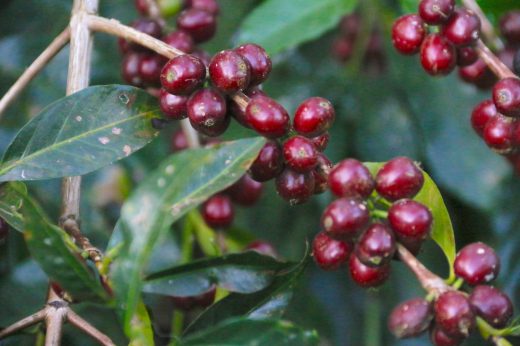
The Konga Cooperative is located in the Gedeo Zone south of Yirgacheffe town, adjacent to the Konga River and Konga village, from which it takes its name. The growing area sits generally above 1,800 meters in elevation, with the best harvest season from October to February each year. High altitude not only slows the ripening of the coffee cherries but also favors the full accumulation of flavor compounds.

The soil in the Gedeo Zone is rich in iron, with a soil depth exceeding 1.5 meters; this geological condition provides an ideal environment for the root development of coffee trees. Iron, as a key trace element for chlorophyll synthesis, can effectively promote photosynthesis in the plant, thereby enhancing the nutritional and flavor potential of the coffee cherries. For this reason, coffees from this area often show brighter acidity and richer layers.

In 2020, the Konga Cooperative, with its outstanding natural processing technique, won first place in the TOH (Taste of Harvest) natural category competition. This event, organized by the African Fine Coffees Association (AFCA), is known as the "African Cup of Excellence," and its judging process is strict: preliminary rounds eliminate lots scoring below 80, and the semifinals are cupped and scored by domestic and international judges according to SCAA standards, ultimately selecting the highest-scoring national winner. This honor is undoubtedly authoritative recognition of the Konga Cooperative's quality control capabilities.

The Konga Cooperative's natural beans mainly come from the Worke processing station, named after the Worke River that flows past it, with a pure and stable water source. Between 600 and 700 smallholder households supply coffee cherries to the processing station, with an average plot of less than 1 hectare per household, a coffee tree density kept below 1,500 trees per hectare, and frequent intercropping with sweet potato, mango, avocado, and other crops, forming a natural ecological growing environment.
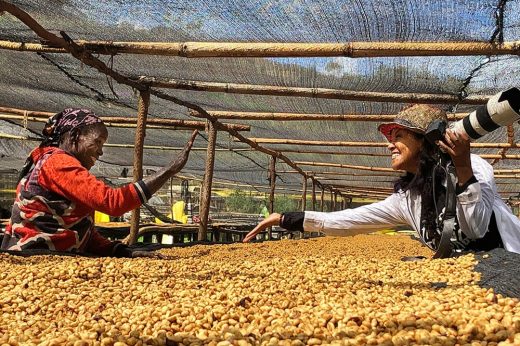
The natural processing workflow is rigorous: after picking, the coffee cherries undergo initial sorting to remove impurities and unripe beans; they are then placed in water channels, using density differences to separate ripe from unripe fruit—ripe fruit sinks, defective fruit floats. The selected ripe cherries are spread on raised drying beds, kept off the ground throughout to avoid earthy off-flavors. During drying, they must be turned several times a day to ensure even drying, covered at night to prevent dew, and the whole process lasts about 2 to 4 weeks, until the moisture content drops to 10%-12%, finally removing the parchment shell with a huller.

This natural bean from the Konga Cooperative uses local landrace varieties, a typical characteristic of Ethiopian coffee. Because the country's coffee gene pool is extremely rich, many varieties have not yet been systematically classified or named, and the government has not released detailed information in order to protect biodiversity. This also explains why Ethiopian coffee beans often vary in size yet contain diverse flavor possibilities.
In terms of flavor, this bean is led by citrus, honey, green tea, and jasmine aromas; the dry aroma is fresh and pleasant, the wet aroma carries a delicate jasmine note, and on the palate the complex juice-like body balances the sweet-tartness of ripe berries, with a long, sweet finish. Whether pour-over or French press, it showcases its bright acidity and clearly layered mouthfeel.

Professional roasting recommendations: when using semi-direct fire equipment, the initial drum temperature can be set to 175°C; after charging the beans, watch the changes on the bean surface. During the drying phase (about 140-150°C), adjust the airflow to setting 4 to ensure the grassy notes are fully transformed; after first crack begins (about 189°C), extend development time by 50 seconds to fully bring out sweetness and aroma complexity. The final drop temperature is recommended around 189°C to ensure flavor compounds are fully set.

Brewing practice parameters (for reference): use a V60 dripper, 15 g of coffee, a water-to-coffee ratio of 1:15, water temperature 90-91°C, grind size medium-fine (80% passing a No. 20 sieve). For technique, first rinse the filter paper and preheat the equipment, then bloom with 30 g of water for 30 seconds; afterward pour in a slow circular stream to 125 g in stages, and when the water level drops to the surface of the coffee bed, continue pouring to 225 g to finish. Keep the total extraction time around 2 minutes 10 seconds to highlight the bright flavors of berry, cream, honey, and citrus; as it cools, the mouthfeel becomes even smoother.