Ethiopian Heirloom vs Geisha Coffee: Choosing Washed Light Roasts

Introduction: As the birthplace of coffee, Ethiopia is home to the world's richest coffee gene pool, with flavors ranging from wild-forest washed beans to the legendary Geisha variety. This article takes a deep look at the growing environments, processing methods, and flavor characteristics of both, and offers a professional pour-over recipe to help you find the coffee experience you love.
Not every region is suited to growing coffee. Coffee trees prefer tropical and subtropical climates and need a warm, humid environment, ample sunlight, and moderate rainfall. The equatorial belt between the Tropics of Cancer and Capricorn is known as the "Coffee Belt" for its favorable climate. More than three-quarters of the African continent lies within this belt, with average annual temperatures above 20°C, and its vast highland terrain (average elevation 750 meters), abundant volcanic resources, and water sources make it a gathering place for quality coffee regions—Ethiopia especially stands out.
As Africa's largest producer of Arabica coffee, Ethiopia is not only recognized as the birthplace of coffee but also nurtures diverse coffee regions through its unique terroir. The country is divided into 12 regional states and 2 chartered cities, and includes 10 well-known coffee regions such as Sidama, Jimma, Harar, Kaffa, Guji, and Yirgacheffe. Notably, Guji and Yirgacheffe were once part of the Sidama region and later became independent regions due to their distinctive flavors.

The Yirgacheffe region is located in Sidama State, with the core area around the town of Yirgacheffe and surrounding sub-regions including Wenago (26 km north), Kochere (south), and Gedeb. The terrain is complex, bordering Lake Abaya to the west, at elevations of 1,750–2,200 meters, with a humid, mild climate and distinct dry and rainy seasons. The temperature difference between day and night at high altitude and the fertile soil provide ideal conditions for coffee growing. After washing, local heirloom coffee often shows floral, citrus, and berry flavors, with a bright acidity like lemon and a refreshing mouthfeel.

The legend of Ethiopian coffee begins in the Kaffa Zone in the southwest. It is said that humans first discovered wild coffee trees in the forests here, and large numbers of mother Arabica trees still survive today. Historically, the area belonged to the Kingdom of Kaffa and was incorporated into present-day Ethiopia in the late 19th century. Administratively, Kaffa is located in the north of the Southwest Ethiopia Peoples' Region (formerly the Southern Nations, Nationalities, and Peoples' Region, which became independent by referendum in 2021), in a humid rainforest zone, and is especially known for the Kaffa Biosphere Reserve.

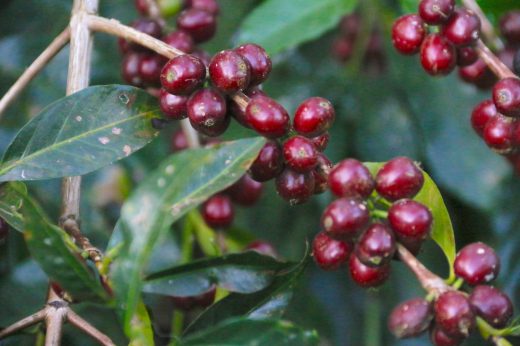
The Kaffa Biosphere Reserve covers 760,144 hectares, spans more than half of Ethiopia's mountain forests, and contains over 5,000 coffee tree species; it is the center of genetic diversity for wild Arabica coffee worldwide. More than 30 coffee-producing cooperatives are distributed within and around the reserve, harvesting forest coffee cherries, processing them, and selling them. Unlike conventional garden cultivation, the coffee trees here grow in the shade of cloud forests at elevations of 1,400–2,100 meters, where red soil, abundant rainfall, and a microclimate together create a distinctive "wild coffee" flavor.

Beans from this region are given a medium-light roast, with a vivid flavor profile: white florals on grinding, bright lemon acidity on the palate, accompanied by sweet orange and bergamot notes, a sweet finish with melon and nutty aromas, and a refreshing mouthfeel like green tea. Note that because the Kaffa forest is the place where the Geisha variety got its name (the site of the Geisha Mountain area), some vendors call heirloom coffee from here "Kaffa Forest Geisha," but its actual variety is a common Ethiopian heirloom and has no connection to Panama Geisha.

When people talk about Geisha, they usually mean the legendary variety from Panama (original number T2772). The beans are slender with pointed ends and a plump center, and after roasting the inner side of the bean surface curls outward (resembling a sausage roll). Its flavor overturns the intense impression of traditional coffee and is closer to a fresh floral-fruit tea—richly fragrant with complex fruit notes, revealing delicate layers of sweetness and acidity at different temperatures along with a full body. Classic Geisha flavors can be experienced through Panama Hacienda La Esmeralda Red Label, Green Label, and Boquete region beans.

For washed heirloom beans from Ethiopia's Kaffa forest (medium-light roast), a V60 dripper is recommended to highlight their floral and fruity notes. The specific parameters and steps are as follows: use 15 g of coffee, a 1:15 coffee-to-water ratio, a water temperature of 91–92°C, and a grind similar to fine sugar (80% passing a No. 20 sieve). Use a three-pour extraction: first pour 30 g of water and let it bloom for 30 seconds until a dome forms; second pour 95 g of water until the bed drops by half; third pour 100 g of water until dripping is complete. Throughout, use a slow, centered stream and gentle circling to avoid uneven extraction. After extraction, gently swirl the cup to even it out, and begin tasting from the hot stage.

Coffee extracted this way has a refreshing mouthfeel, led by the sweet-tart notes of yellow stone fruits such as yellow peach, sweet orange, and pomelo; stirring adds a clean sweetness, and the overall flavor is lively like freshly squeezed juice. Whether you seek the wild forest flavors of Ethiopian heirloom coffee or prefer the refined floral-fruity notes of Panama Geisha, both showcase the diversity of Ethiopia's coffee genes; consumers can choose according to their personal taste preferences.