Sidra Coffee Origin and Processing: A WBC Champion's Brewing Guide
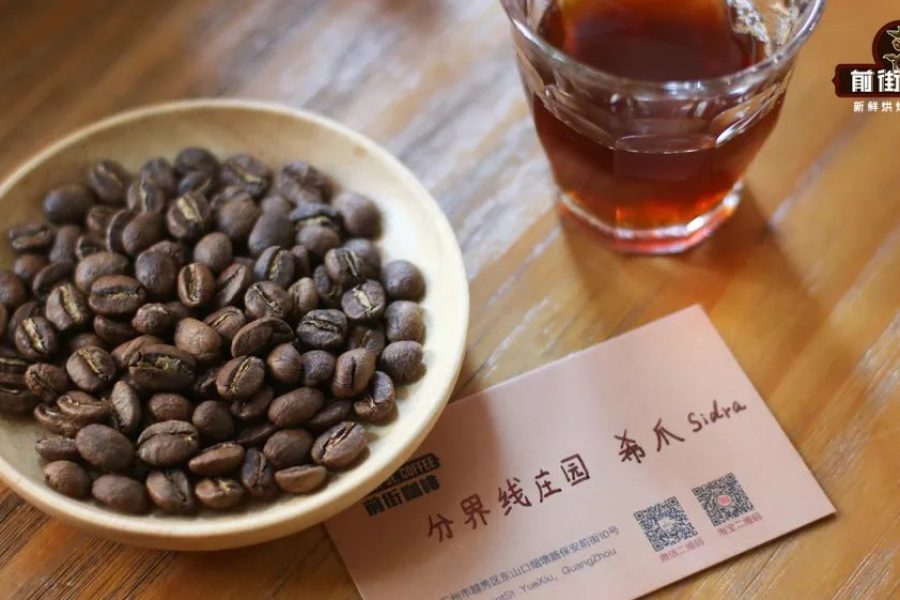
Introduction: Sidra coffee beans have attracted attention because they were chosen by two World Barista Champions. What makes this rare variety unique? This article explains Sidra's origin, main growing regions, distinctive flavor characteristics, and the anaerobic processing method used by champion baristas. It also provides professional pour-over parameters to help coffee enthusiasts replicate a flavor experience close to competition level at home.

Sidra coffee variety has risen to fame in the specialty coffee world in recent years, largely thanks to the favor of two World Barista Champions. The 2019 champion, Korean barista Jooyeon Jeon, and the 2022 champion, Australian barista Anthony Douglas, both chose this rare variety from South America. Their choices brought Sidra from professional competitions to the wider view of coffee enthusiasts.

The Sidra variety can be traced back to Pichincha Province, Ecuador, where it is locally called Sydra. Research shows that this variety was developed through laboratory hybridization, with Typica and Red Bourbon as parents. However, subsequent genetic comparisons showed that Sidra has highly similar genetic characteristics to Ethiopian landraces, so some experts speculate that it may be a descendant of an experimental variety exported from Ethiopia crossed with local Bourbon coffee. Currently, the main growing regions are concentrated in the high-altitude areas of Ecuador and Colombia.

The Sidra coffee beans used by Anthony Douglas in the 2022 WBC competition came from Finca El Diviso in the Huila region of Colombia. The farm is located in the core of the Huila region, at an altitude of about 2,100 meters, covers 14 hectares, and has over 25 years of coffee cultivation history. The farm was founded by Jose Uribe Lasso in 1996 and is now managed by second-generation operator Nestor Lasso.

After taking over, Nestor Lasso continued to innovate in cultivation and processing techniques. The farm currently grows 12 coffee varieties, including Caturra, Colombia, Sidra, Castillo, Geisha, and Bourbon. The family-style management model ensures continuity and high-quality standards in cultivation and processing, which also lays the foundation for producing high-quality Sidra coffee beans.

The popularity of the Sidra variety is not accidental. In 2019, WBC third-place winner Cole Torode and champion Jooyeon Jeon both selected Sidra lots from Finca Palm Tree and Toucan in Colombia. In 2022, Anthony Douglas won the championship with Sidra coffee beans processed using anaerobic fermentation from Finca El Diviso, bringing unprecedented attention to this variety. These competition results directly drove the popularity of Sidra in the global specialty coffee market.

Sidra coffee trees are vigorous, with thick trunks that can grow up to 4 meters tall. They require appropriate shade when planted and have good insect resistance, but are relatively susceptible to leaf rust and coffee berry disease. The leaves are slender, and the flowers have five petals. The fruits are densely distributed and high-yielding, with individual fruits larger and rounder than most Arabica varieties. The green beans are slender and somewhat similar to the Geisha variety. They are mainly grown in highland areas at altitudes of 1,650–1,800 meters, and some experimental planting areas may have slightly different altitudes.

The flavor characteristics of Sidra coffee are the main reason for its popularity. This variety typically exhibits rich floral and fruity aromas, including complex flavors such as peach, citrus, grape, and honey, with moderate acidity and a round mouthfeel. Due to limited planting area and unique flavor, Sidra coffee beans are usually priced higher than ordinary commercial beans. Its flavor profile is similar to Geisha but has its own unique personality.

Professional processing methods are crucial to revealing Sidra's flavor potential. For example, the champion lot used a double anaerobic washed process, which effectively enhances the coffee's acidity and flavor complexity. In terms of roasting, a medium-light roast can better preserve Sidra's terroir and floral-fruity aromas. For brewing, it is recommended to use a water temperature of 90°C, a coffee-to-water ratio of 1:15, and a grind size equivalent to 80% passing through a Chinese standard No. 20 sieve, to fully display its bright acidity and rich fruity layers.

When brewing Sidra coffee at home, a V60 dripper is recommended. Specific parameters: water temperature controlled at 90°C, 15 grams of coffee grounds, and a 1:15 coffee-to-water ratio (i.e., 225 grams of water). The grind size is suggested to be set at EK43s setting 10, or about 80% passing through a Chinese standard No. 20 sieve. For the brewing technique, first bloom with 30 grams of water for 30 seconds, then pour in a small circular stream until the water reaches 125 grams, pause, and when the water level is about to expose the coffee bed, continue pouring until 225 grams and stop. The entire extraction process takes about 2 minutes; when the water level again approaches exposing the coffee bed, remove the dripper. This brewing method can balance Sidra's floral aroma, fruity notes, and sweet-tartness, presenting its best flavor performance.


