Honduras Coffee Regions: Three Famous Origins, Flavors and Pour-Over Guide
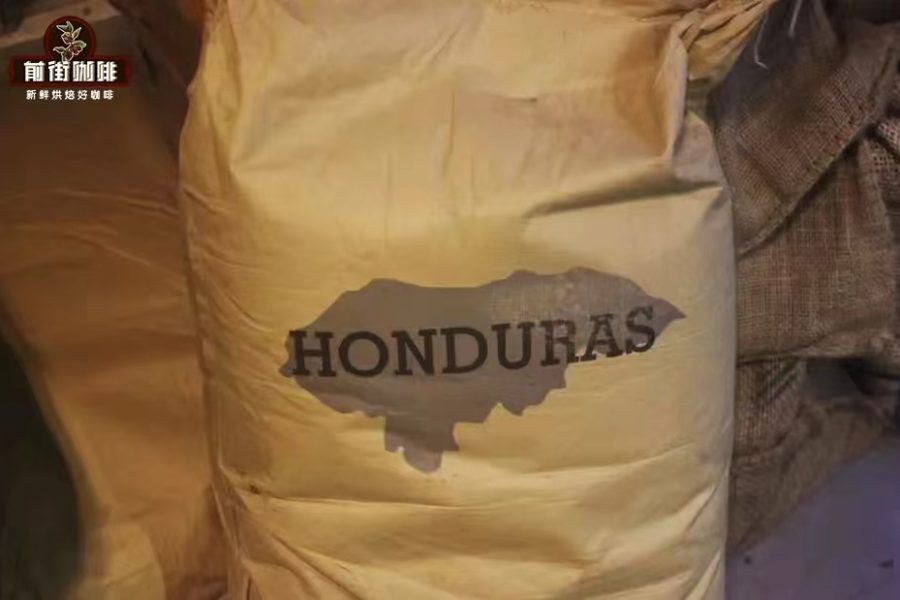
Introduction: As the world's seventh-largest coffee producer, Honduras produces many high-quality beans thanks to its high-altitude growing environment and distinctive processing methods. This article takes an in-depth look at the geographical features and flavor differences of the country's six core regions, highlights the flavor profiles of three famous origins, and offers professional-grade pour-over parameter suggestions to help you master the complete body of knowledge from growing source to brewing practice.

In recent years, coffee and liquor fusion drinks have gradually become popular, and among them sherry-barrel fermented coffee beans from Honduras have attracted much attention. This Central American country was long low-profile, but is now the world's seventh-largest coffee producer—output exceeded 450,000 tons between 2017 and 2019 alone, and in 2020 it still maintained a scale of 336,000 tons.

Honduras's coffee industry began when merchants introduced it in the 18th century; large-scale cultivation was only recorded in the 19th century, and it truly grew strong only in the 20th century. The Honduran Coffee Institute (IHCAFE), founded in the 1970s, significantly raised quality standards. After the 1998 hurricane disaster the industry recovered quickly, and by 2011 output had surpassed the combined total of Costa Rica and Guatemala.

The country's coffee-growing advantages are exceptional: bordering the Caribbean Sea to the north and the Pacific Ocean to the south, combined with high-altitude growing areas formed by complex terrain (generally above 1,000 meters) and a mild climate, effectively reducing the risk of pests and diseases and enabling high-quality accumulation in the coffee fruit.

Core Region Flavor Map
The Copán region lies on the border between Honduras and Guatemala; its climate at over 1,000 meters gives the coffee pronounced sweetness and intense aroma. The neighboring Montecillos region, with altitudes up to 1,600 meters and marked day-night temperature differences, extends the coffee cherry's ripening cycle, bringing a more prominent balance of fruity acidity and sweetness.
The Comayagua region in the central mountains led the country in output in 2016; its remote mountain environment nurtures a complex flavor of citrus and honey with a smooth, harmonious mouthfeel. The Acata region, at 1,000–1,400 meters, draws on the ecology of forest reserves to produce fruity coffee with chocolate notes.

Paraíso, bordering Nicaragua, is Honduras's oldest region; its 1,000–1,400 meter range produced a champion bean at the 2017 COE competition. The neighboring Opalaca region, thanks to its higher growing altitude, has developed a distinctive tropical fruit aroma, and its sub-region Marcala is especially well known.

Distinctive Processing Methods
The Moca estate in the Marcala region is known for innovative processing: Caturra, Catuai and other varieties grown at 1,500–1,700 meters undergo whisky-barrel fermentation—after picking, the fruit is washed to remove the mucilage, the parchment green beans are placed in sherry barrels for low-temperature fermentation of 30–40 days, and finally dried in the shade to avoid sunlight destroying flavor compounds.

Another brandy-barrel fermented bean from a similar estate (varieties Caturra/Catuai) balances sweetness and fruity aroma through medium roasting. Professionals recommend 92°C water with a faster-flowing V60 dripper and a three-stage pour (first pour 30 g to bloom for 30 seconds, continue to 125 g, then once the water level is more than half gone top up to 225 g), with total extraction time kept to about 2 minutes.

Practical Brewing Advice
Barrel-fermented beans require special care: avoid direct sunlight during drying to prevent the liquor aroma from evaporating, and prevent over-fermentation from producing sourness and astringency. Different barrel treatments produce different flavors—sherry barrels give more pronounced vanilla-cream notes, while brandy barrels highlight mellow sweetness.
For grind size, aim for 80% passing through a No. 20 sieve, with a coffee-to-water ratio of 1:15 as the baseline. Water hardness should not be too high; filtered water is recommended for brewing. Keep the pouring technique steady to avoid disrupting the coffee bed structure and affecting extraction uniformity.