Decoding Coffee Bean Grades: How to Choose Between AA, G1, and SHB
Introduction: Many coffee lovers are often puzzled by the different grade labels such as AA, G1 and SHB printed on coffee packaging. These seemingly arbitrary letter combinations actually represent each country's unique green coffee grading system. This article takes an in-depth look at the coffee grading standards of major producing regions such as Ethiopia, Kenya and Central America, reveals how key parameters such as defect rate, bean size and altitude affect coffee quality, and offers purchasing advice to help you choose the coffee beans that best suit your needs.
When you buy coffee beans, have you ever been stumped by the letter labels such as AA, G1 and SHB on the packaging? These seemingly irregular grade marks actually reflect the differing green coffee evaluation systems of each country. Just as the same fruit in a fruit shop varies widely in price due to differences in quality, coffee beans also need to be graded to standardize quality and provide buyers with a reference for value.
Why are these grading standards so diverse? The root cause lies in the unique geographical environments and cultivation patterns of the world's coffee-producing regions. From the African highlands to the American mountain ranges, different climatic conditions, variety characteristics and processing traditions have prompted each country to develop an evaluation system suited to local conditions. The main dimensions considered include four aspects: defect rate, green bean size, growing altitude and cup performance.

The typical example of grading based mainly on defect rate is Ethiopia. The country classifies beans by the number of defective beans per 300 grams of green coffee; for example, Grade G1 requires no more than 3 defective beans, while G2 allows 4-12. This evaluation method stems from the local industry model, which is dominated by smallholder farming, and from the relatively simple early processing techniques, which led to considerable variation in coffee quality. It is worth noting that Ethiopia has a rich variety of native coffee varieties, whose bean sizes differ significantly, and that altitude differences in the highland regions are small, so it is not suitable to use size or altitude as the main grading criteria.
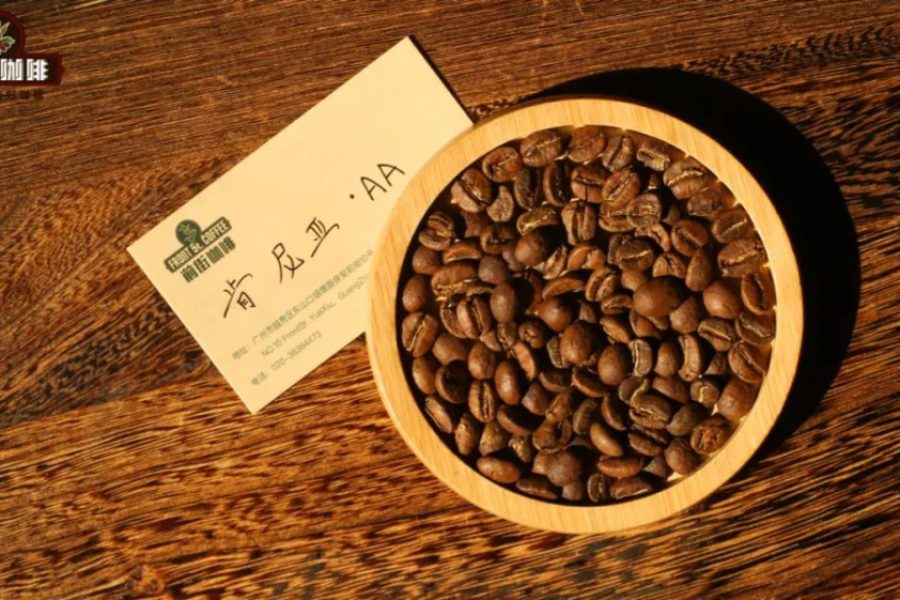
Kenya, by contrast, pioneered a grading system centered on bean size. Although the country has as many as nine grades, the three most commonly encountered by consumers are AA, AB and PB. Among them, Grade AA uses the SL28 and SL34 varieties, and in theory the larger the bean, the better the quality. Particularly worth mentioning is Grade PB (peaberry): because the fruit develops only a single seed, this special form, though about 14-15 screen size, often commands a price close to Grade AA due to its scarcity. For first-time tasters, it is recommended to start with Kenya's small tomato coffee.

Central American countries generally use altitude as the grading benchmark. The mountain ranges running north to south through the region create significant vertical climatic differences, and higher altitude usually means denser coffee beans and richer flavor. However, the specific definition of high altitude differs from country to country: Costa Rica sets SHB grade at above 1,200 meters, Guatemala's standard is 1,350 meters, and Panama sets it at 1,400 meters. Such differences reflect both geological features and each country's different pursuit of coffee quality.
Some regions use composite standards for grading. Jamaica's Blue Mountain coffee system combines both altitude and bean size, dividing coffee into three categories—Blue Mountain, High Mountain and Prime—while distinguishing green bean specifications by NO.1 to NO.3. Brazil, meanwhile, takes into account defect rate (the highest grade being NY2), green bean size (commonly 17-18 screen) and cup performance (rated in five levels from Fine cup to Bad cup), forming its own unique grading logic.

What is the practical significance of understanding these grading systems for consumers? First, the same letter grade does not mean the same standard in different countries; for example, Ethiopia's G1 and Kenya's AA cannot be directly compared. Second, most specialty coffee on the market belongs to each country's top grades, so consumers should pay more attention to the terroir characteristics of the specific producing region when buying. It is worth noting that the roasted bean market usually presents only high-grade products, and the price differences between grades are often smaller than expected.