Where Does Indonesian Mandheling's Herbal Aroma Come From? Wet Hulling Explained
Introduction: Why does Indonesian Sumatra Mandheling coffee carry such distinctive herbal and spice notes? The secret lies largely in the region's unique wet hulling process. This article takes a close look at how this distinctive method works, the technical principles behind it, and how it shapes the coffee's flavor profile. It also recommends several high-quality Mandheling varieties processed with wet hulling, to help enthusiasts better understand and choose.
Indonesia lies in a tropical rainforest climate zone, with high temperatures and abundant rain year-round, humid air and little wind. This environment not only makes people feel uncomfortably hot and sticky, but also poses a serious challenge to the coffee drying process—how to dry coffee beans quickly in a humid environment while avoiding mold has long been a problem for local coffee producers.
Although the traditional washed process can remove the pulp and mucilage through tank fermentation, thereby shortening drying time, it consumes large amounts of water, and the wastewater from fermentation also pollutes the environment, so it is clearly not very eco-friendly. The natural (dry) process, by contrast, dries the beans together with the skin and pulp, making it difficult to bring the beans down to a moisture content suitable for long-term storage—another obvious drawback.

To address these pain points, Indonesian coffee farmers creatively combined the washed and natural methods to develop the distinctive wet hulling process (also known as wet hulling, or Giling Basah). This technique not only improves drying efficiency but also gives Mandheling coffee its unique flavor characteristics.
The first step in wet hulling is carefully sorting the coffee cherries. Farmers first place the ripe cherries in a water tank for flotation, removing impurities, dust and unripe fruit. Next, a depulper removes the pulp, leaving only the mucilage layer. These mucilage-covered beans are then placed in a water tank for 12 to 36 hours of fermentation, so that the mucilage layer naturally breaks down and falls away.
After fermentation, the beans must be thoroughly rinsed with plenty of clean water, then spread on the ground for about two days of initial drying. At this point the moisture content drops to 30% to 50%, and the beans are half-soft, half-hard in texture. These still-soft beans are then fed into a huller to remove the parchment layer on the surface.

Because the beans are not yet fully dry and are relatively soft, removing the parchment requires considerable pressure, which easily causes uneven stress on the beans and produces a split on one side—what the industry calls "goat's foot beans" or "horse hoof beans." Finally, the processed beans need about two more days of sun drying until the moisture content falls to around 12%, at which point the entire wet hulling process is complete.
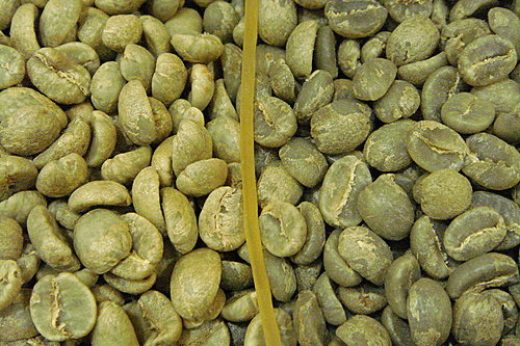
From practical observation, Mandheling green beans that have been wet-hulled and stripped of parchment usually show a blue-green hue, give off a clear grassy, herbal aroma, and often have a distinctive goat's-foot or horse-hoof shape.These visual and olfactory features are the vivid mark left by wet hulling.

Compared with the washed process, wet-hulled Mandheling coffee generally has lower acidity and a fuller body. The industry widely holds that, apart from varietal characteristics and local climate conditions, wet hulling deserves much of the credit for the rich herbal and spice flavors of Indonesian Mandheling, and is one of the key factors in forming its distinctive flavor.
It should be noted, however, that even with the same wet hulling method, Mandheling beans from different origins, altitudes and quality grades may still differ significantly in final flavor and cleanliness. In particular, beans from low-altitude areas with inherently poor quality can easily develop off-flavors such as earthiness or mustiness if handled improperly during drying.Choosing reputable growing regions and processing plants is therefore essential.

In summary, the wet hulling process of Sumatra, Indonesia, is not only a clever solution to the local humid climate but also an important step in shaping the distinctive flavor of Mandheling coffee. By understanding the details of this process, coffee enthusiasts can not only appreciate Mandheling's complex flavors more deeply, but also make wiser choices when selecting coffee beans.