How to Set Your Pour-Over Coffee Ratio: A Full Guide to Three-Pour Parameters and Flavor Control
Introduction: The key to mastering pour-over coffee lies in understanding the water-to-coffee ratio and the logic of extraction. This article explains in detail how to adjust coffee strength through scientific ratios, analyzes the influence of the golden 1:15 to 1:16 range on flavor, and provides a beginner-friendly three-pour brewing scheme. From blooming technique to the practice of staged pouring, it helps you avoid the trap of over-extracted bitterness and precisely present the layering and purity of coffee.
The essence of pour-over coffee is the contact between hot water and ground coffee, efficiently extracting flavor substances and filtering out residue. When hot water penetrates the coffee bed, acidic substances are released first, followed by sweet and bitter components gradually emerging. The balance of this process depends largely on the foundational parameter of the coffee-to-water ratio.
The coffee-to-water ratio is defined as the ratio of coffee grounds weight to total water volume. For example, the common 1:15 ratio means that every 1 gram of coffee grounds corresponds to 15 milliliters of water. Taking 15 grams of grounds as an example, 225 milliliters of hot water must be poured, and the resulting coffee liquid has a moderate concentration, highlighting floral and fruity notes without being too thin. If the ratio is adjusted to 1:16, the water volume increases to 240 milliliters for the same amount of grounds, and the overall flavor becomes more refreshing; conversely, a 1:14 concentrated scheme suits drinkers seeking a full-bodied mouthfeel.

The variables affecting extraction go far beyond the ratio itself. The dripper structure, water hardness, grind size, and even the pouring technique all produce chain reactions. Professionals recommend choosing fresh coffee beans within 2-4 weeks after roasting, when flavor substances are at their most active. In terms of equipment preparation, it is advisable to have a scale with 0.1-gram precision, a temperature-controllable pour-over kettle, and basic gear such as a V60 or flat-bottom dripper; these tools help stabilize extraction conditions.
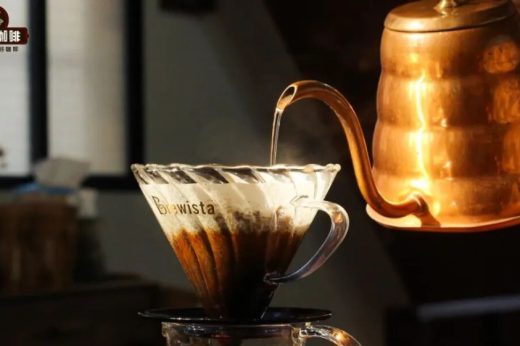
The core value of staged pouring lies in simulating a professional-level extraction rhythm. The first pour (the blooming stage) uses 1.5-2 times the grounds weight in water (about 30 milliliters), held for 30 seconds to let the coffee grounds fully degas; this step directly affects the efficiency of subsequent flavor release. Then comes the formal extraction stage, where the common three-pour operation divides the remaining water into two pours: the first uses a medium flow to activate the middle-layer flavors, and the final pour switches to a thin flow to gently extract the bottom substances. This stepped pouring method avoids channeling and extends the ideal extraction time window.

As for practical parameters, take 15 grams of coffee grounds with 225 milliliters of total water: the first pour is 30 milliliters of hot water for a 30-second bloom, the second pour uses 95 milliliters at medium flow to lift the coffee bed, and the final 100 milliliters is finished with a small flow. Throughout the process, the coffee bed must be kept level, and the pouring path is best drawn in concentric circles from the center outward, avoiding direct impact on the edge of the filter paper. After all pours are complete, waiting for the coffee liquid to finish dripping usually takes 1 minute 40 seconds to 2 minutes, at which point the extraction yield is about 18%-22%, the ideal range.
Grind size follows the principle of "medium-fine," equivalent to a 78% pass rate on the Chinese standard No. 20 sieve, with particles resembling fine granulated sugar. Too coarse leads to under-extraction and a sharp acidity, while too fine easily causes over-extraction and bitter, muddy flavors. Water temperature control is equally key: light-roast beans are recommended at 92-93°C to stimulate bright fruit acidity, while medium-dark roast beans can drop to 88-90°C to soften tannins.

Regarding flexible use of the coffee-to-water ratio, 1:15 suits most conventional bean types, balancing the three dimensions of acidity, sweetness, and bitterness; those who prefer floral and fruity notes can choose 1:16 for more refreshment, while 1:14 strengthens heavy flavors such as chocolate and caramel. In practice, the total hot water can be fine-tuned to personal taste, but it is recommended to keep the baseline water per gram of grounds within ±1 milliliter.
Common beginner mistakes include neglecting the blooming step, uneven pouring speed, and over-pursuing high concentration. Remember that a quality pour-over coffee should be characterized by distinct layers rather than a single heavy body; when obvious astringency or a woody taste appears, it often means the extraction parameters need recalibration. By recording the grounds weight, water temperature, time, and flavor feedback of each brew, you gradually build your own parameter database.

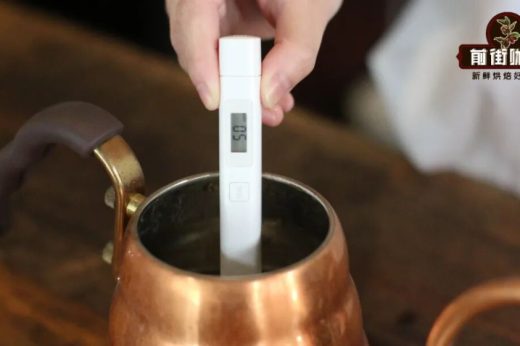
In terms of tool selection, conical drippers (such as V60) are better for highlighting acidity and aroma, while flat-bottom drippers (such as Kalita Wave) bring a more stable, full-bodied mouthfeel. As for water quality, a total dissolved solids (TDS) of 120-150 ppm is optimal; filtered soft water is recommended to avoid mineral interference. Regular cleaning of equipment is equally important, as residual oils affect the extraction performance of subsequent batches.