The Complete Guide to Iced Pour-Over Coffee: How Ice Ratio and Brewing Order Affect Flavor
Introduction: Iced pour-over coffee is loved for its refreshing taste, but should you add ice first or after brewing? How does ice quantity affect flavor? This article explains ice-adding techniques at a 1:10 coffee-to-water ratio through comparative experiments, analyzes how brewing order affects clarity and aroma, and provides key parameters like grind size and water temperature to help you easily brew your ideal iced coffee.
Iced pour-over coffee is a popular summer choice, but many coffee enthusiasts are often confused when making it: should ice be added first or after brewing is complete? And how should the amount of ice be controlled to achieve the best flavor? This article will reveal the answers to these questions through actual comparative tests.

In this test, 15 grams of coffee grounds were used with a 1:10 coffee-to-water ratio, meaning 150 grams of hot water was used for extraction, and finally 100 grams of ice was added for cooling and dilution. This ratio ensures coffee concentration while effectively lowering the temperature through ice, creating a balanced mouthfeel. Note that it is recommended to use ice made from purified water to avoid impurities affecting the coffee's flavor.

A coffee bean from a high-altitude forest region was selected; its growing environment gives the coffee a unique regional character. The bean is washed processed, with a flavor profile featuring soft white floral notes, followed by the fresh sweet-tartness of sweet orange, apricot, and peach on the palate, along with a slight acidity of green grape and lemon—rich and balanced overall. This flavor type is very suitable for making iced pour-over, as it highlights a cooling mouthfeel.

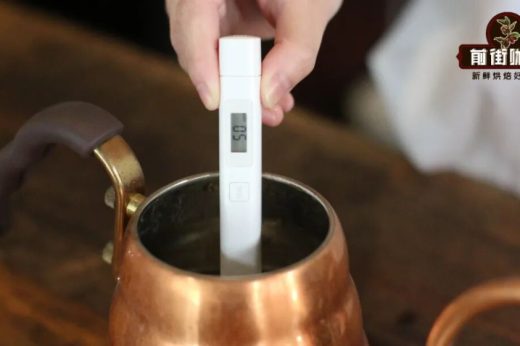
Compared with regular hot pour-over, iced pour-over requires a finer grind. For example, if a medium-coarse grind is used for hot pour-over (such as 80% passing through a No. 20 sieve), iced pour-over is recommended to use a slightly finer grind (such as 85% passing through a No. 20 sieve). A finer grind helps fully extract coffee compounds at lower water temperatures. Meanwhile, for light roasts, the water temperature is recommended to be controlled at 90-91°C, while for medium-dark roasts it can be slightly lowered to 87-89°C to avoid over-extraction causing bitterness.

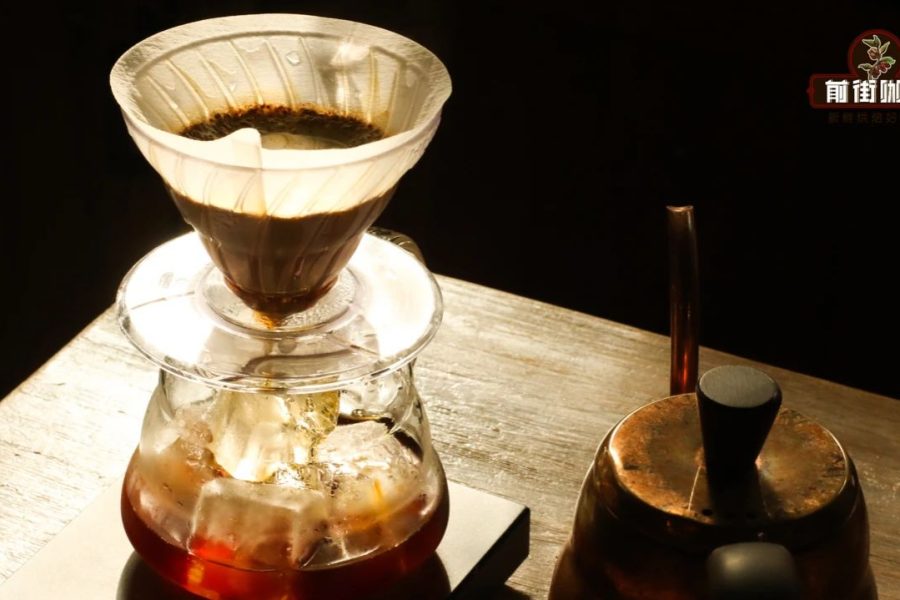
The test first compared the "ice-first" method: 100 grams of ice was pre-placed in the server, then the dripper and filter paper were placed, followed by 15 grams of ground coffee. After taring the scale, the first step was to pour 30 grams of hot water for a 30-second bloom, then pour 70 grams of hot water in a spiral from the center outward. Due to the finer grind, the coffee bed absorbs water and expands quickly, and the flow rate is slightly slower than hot pour-over. When the water level drops to half of the server, continue pouring 50 grams of hot water; after all the coffee liquid has dripped through, remove the dripper. The entire extraction process takes about 1 minute 40 seconds. Finally, gently swirl the server to quickly cool and evenly mix the coffee liquid.

The other method is "ice-last": also prepare 15 grams of coffee grounds, and follow the same steps for pouring and blooming—first pour 30 grams of hot water for a 30-second bloom, then pour 70 grams of hot water in a spiral, and after the water level drops by half, continue pouring 50 grams of water. After dripping is complete, remove the dripper; the extraction time is also 1 minute 40 seconds. But after all the coffee liquid has flowed into the server, add 100 grams of ice and shake to quickly cool the coffee liquid.

In the sensory tasting session, the two methods were generally similar in flavor but still had subtle differences. On first taste, the ice-first coffee usually showed a cleaner, more refreshing character, with aromas mainly of delicate floral and fruity notes. The ice-last coffee had more concentrated and intense aromas, with a slightly richer layering of flavor changes on the palate. However, without careful comparison, most people would find it difficult to distinguish the differences between the two.

From a scientific perspective, in the ice-first method, because the ice continuously contacts the hot coffee liquid during brewing, it melts faster, allowing the initially hot coffee liquid to cool rapidly; therefore, the overall temperature of the coffee liquid is lower and the mouthfeel is more refreshing. In the ice-last method, the coffee liquid first cools slightly at room temperature and is then cooled by ice, so less ice melts, the final temperature is slightly higher, and flavor release differs slightly.

Based on the experimental results, if you prefer a refreshing, clean iced coffee mouthfeel, you can prioritize trying the ice-first method; if you want fuller aromas, you can also choose ice-last. Either way, the key is to control the coffee-to-water ratio, grind size, and water temperature so as to consistently extract high-quality coffee liquid, then adjust it to the ideal flavor with ice. Why not try it at home and find your best iced pour-over method.