Slow Pour-Over Flow and Long Extraction Times: Causes and Solutions
Introduction: When brewing pour-over coffee at home, do you often run into the problem of the coffee liquid dripping too slowly and the overall extraction time dragging on? It not only affects the taste but also easily leads to over-extraction and bitterness. This article takes an in-depth look at the common causes of overly long pour-over extraction times or slow drainage, including grind size, pouring technique, and coffee bean roast level, and offers practical adjustment suggestions and optimization tips to help you precisely control brewing time and improve coffee flavor.
In the pour-over process, many variables such as water temperature, coffee-to-water ratio, and grind coarseness are parameters you can adjust directly, but time often seems passive and hard to master. Yet brewing time is one of the important indicators for judging the extraction state of coffee. Many coffee enthusiasts report that when brewing pour-over at home, the coffee liquid often drips too slowly, stretching out the overall extraction time, forcing them to stop pouring early to avoid over-extracting the coffee into something bitter and hard to drink. So what exactly causes the flow to slow down? And how can it be effectively addressed?
Generally speaking, the ideal time to stop pouring for pour-over coffee should be controlled between 1 minute 30 seconds and 1 minute 40 seconds, and the time for the whole pot of coffee liquid to finish dripping is recommended to fall around 2 minutes, with a margin of error of no more than 10 seconds. If it is under 2 minutes, the flow is too fast, which easily leads to under-extraction and thin flavor; if it exceeds 2 minutes 10 seconds or even longer, then because the flow is too slow, impurities and undesirable substances in the coffee may be over-released, making the taste worse and producing obvious bitterness, off-flavors, and astringency.

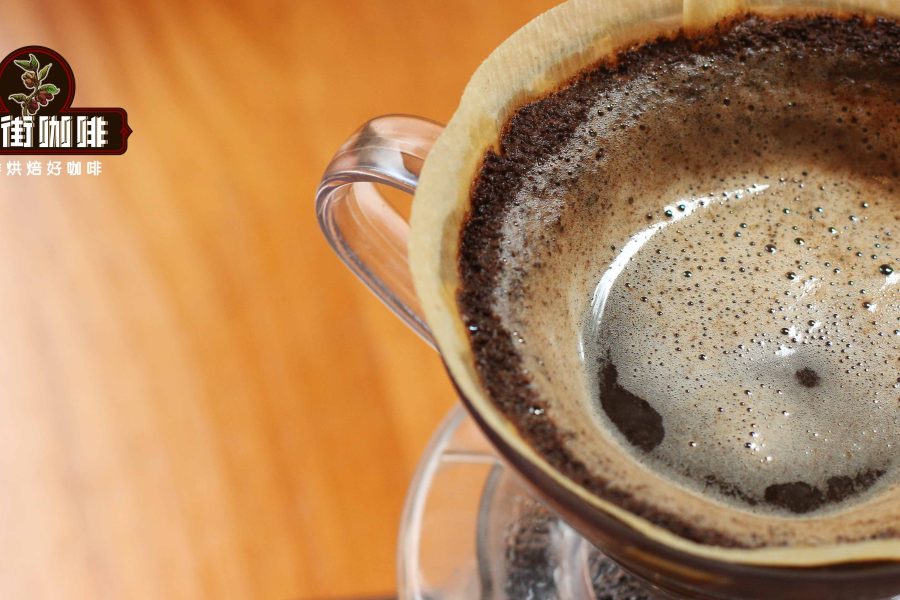
This time range is not absolute but is based on common pour-over recipes, for example using 15 grams of coffee grounds, a 1:15 coffee-to-water ratio, a grind size with a 70–80% passing rate through a No. 20 sieve (close to the coarseness of granulated sugar), and a three-stage pouring method. With this setup, the coffee grounds and hot water can come into even contact within a reasonable time, ensuring stable release of flavor. But once it exceeds 2 minutes 10 seconds, the coffee liquid almost stalls, and the foam on top becomes thin or even disappears, which often indicates that the water flow is blocked and the coffee bed may already be clogged; at this point the substances extracted in the final stage are mostly large-molecule bitter components, which is detrimental to the overall performance of the coffee.
1. Too many fines are one of the main causes of slow flow
The most common cause of overly long coffee extraction time is coffee grounds that are too fine, especially when accompanied by a large amount of very fine particles. Fines significantly increase the resistance to water flow, making it hard for the coffee liquid to drip smoothly. Even with a good-quality grinder, a certain proportion of very fine particles is unavoidable—this is a normal phenomenon in the physical grinding process. But if the grinder performs poorly, with uneven cutting and a polarized particle distribution, it is easy to end up with "coarse grounds too coarse and fine grounds too fine," further worsening the poor drainage.
Usually, home or commercial grinders should be set so that the coffee grounds reach a coarseness similar to granulated sugar, corresponding to a passing rate through a No. 20 sieve of 70% to 82%. If using an electric grinder such as the EK43s, you can refer to a setting between 9.5 and 11; if using a hand grinder such as the C40, a setting of around 22 to 26 is recommended.
If you find that water accumulates severely in the later stage of brewing, the drip rate is extremely slow (over 2 minutes 20 seconds), and after brewing the coffee bed looks muddy but still has obvious coarse particles left, with weak coffee aroma and prominent bitterness, then it is very likely that the grinder is producing too many very fine particles. It is recommended to switch to a high-quality grinder or use a sieve to pre-filter the very fine particles, so as to optimize flow and flavor performance.
2. Improper pouring technique can also slow the flow
Besides grinding issues, the pouring method also affects the flow rate of the coffee liquid. Some coffee enthusiasts are used to continuously pouring in large circles after the blooming stage. Although this method helps the water level rise evenly, if not controlled properly—especially if large-circle pouring is maintained in the later stages—it easily causes the coffee bed structure to loosen, pushing fines to the bottom or edges of the dripper and forming a blockage, thereby slowing the water's passage.
In addition, if the blooming stage is not stirred sufficiently and the coffee grounds fail to rise evenly to form a stable "coffee wall," then during the later pouring stages the fines easily concentrate at the conical bottom of the dripper, causing poor channels so that the water can only drip slowly under gravity, greatly prolonging the extraction time.
3. Light-roast coffee beans are more prone to flow problems
The roast level of the coffee is also an important factor affecting flow rate. Usually, light-roasted coffee beans—such as single-origin beans with pronounced floral, fruity acidity, or citrus notes—have a denser internal structure and higher bean density, absorb water more slowly, and are also more likely to produce fines when ground. When water flows through these areas where fines gather, it is easily blocked, causing clogging of the filter paper or dripper, especially noticeable when using a circular pouring method.

Therefore, if you often brew light-roast beans and encounter severe water accumulation at the end and overly long drip times, you need to pay special attention to adjusting grind size and pouring method.
Solutions and optimization suggestions
To address the above problems, you can take the following measures to optimize:
1. Adjust grind size: Try coarsening the grind by 1 to 2 settings and observe the changes in flow and flavor. If the flow speeds up but the flavor becomes weaker, you can moderately raise the water temperature by 1–2°C, or slightly lower the coffee-to-water ratio (e.g., from 1:15 to 1:14) to compensate for strength and extraction.
2. Use a sieve or change the grinder: If the problem of too many fines persists after adjusting the grind size, you can use a sieve to remove some of the very fine particles, or consider investing in a grinder that cuts more evenly and produces a lower proportion of fines.
3. Change the dripper and filter paper: Some dripper designs (such as wedge-shaped, conical, etc.) and filter papers of different thicknesses also have a noticeable impact on water permeability and filtration speed. You can try switching to highly breathable filter paper or choosing a dripper style with a faster flow rate to help improve the drip speed.

4. Improve the pouring technique: A "mound-building" pouring method is recommended, that is, first pour in small circles from the center, and after the coffee grounds have initially expanded and formed a relatively even coffee wall, gradually expand outward; for the final stage, use a small stream to maintain small-circle pouring, which helps extract evenly and prevents the edge coffee bed from collapsing or the fines from being washed apart.
By systematically adjusting grinding, technique, and equipment pairing, you will be able to effectively control the extraction time and flow rate of pour-over coffee, and thereby consistently extract a high-quality cup with rich layers and balanced taste.