Pour-Over Coffee Keep Failing? Master These 4 Key Parameters for Great Flavor
Introduction: Why is the coffee you brew at home sometimes good and sometimes bad? You use the same beans, yet you can never reproduce the taste from a coffee shop? The problem often lies in key parameters such as grind size, water temperature, pouring technique and coffee-to-water ratio. This article breaks down the four core elements of pour-over coffee to help you find the brewing plan that suits you best, so you can say goodbye to the embarrassment of 'coffee turning into Chinese medicine' and easily brew a layered, flavorful cup.
Many people new to pour-over coffee run into the same trouble: with the same beans, sometimes the cup is full of aroma, and other times it is bitter and astringent, even like drinking Chinese medicine. The reason mainly comes down to poor control of a few key parameters during extraction.

To brew a good cup of pour-over coffee, you first need to understand the basic principle of extraction. Simply put, it means using hot water to dissolve the flavor compounds out of the coffee grounds. But this process is like adding seasoning when cooking: too much and it's bitter, too little and there's no flavor. Only by controlling the evenness and strength of extraction can you achieve a balanced flavor.

Four key factors mainly affect the taste of pour-over coffee: the coarseness of the coffee grounds, the water temperature, the pouring technique and the coffee-to-water ratio. When your coffee is sometimes good and sometimes bad, it is most likely because these parameters are not adjusted properly.

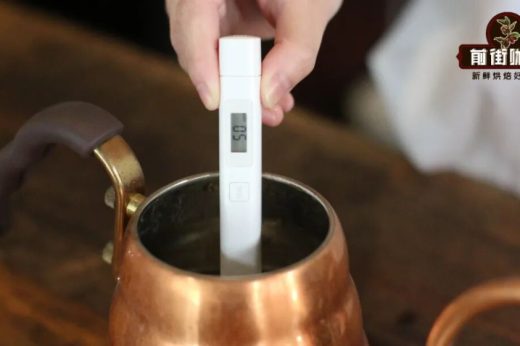
The first is the choice of water temperature. Coffee beans of different roast levels need different water temperatures. Generally speaking, light-roasted beans (lighter roast, bright acidity) are best brewed with hot water at 92-94°C, which better extracts the aromatic compounds and acidity from the beans. Dark-roasted beans (darker roast, pronounced bitterness) suit a slightly lower temperature of 86-88°C to avoid the bitterness brought on by over-extraction.

Many coffee packages do not state the roast level directly, because the industry's classification of roast levels is actually far more complex than a simple 'light, medium, dark'. A simple way to judge: if the flavor is dominated by high-acid fruits such as lemon, citrus and blueberry, it is usually a medium-light roast suited to higher water temperatures; if it is dominated by sweet aromas such as melon, grape and peach, it is a medium-light to medium roast; flavors with sweetness such as maple syrup, chocolate and almond mostly belong to medium-dark roasts; and rich sweet-bitter flavors such as roasted hazelnut, dark chocolate and caramel indicate a deeper medium-dark roast suited to lower water temperatures.

The second key point is grind size. Many beginners easily 'fail' here. Simply put, the finer the grind, the faster the extraction and the stronger the coffee; the coarser the grind, the slower the extraction and the lighter the coffee. You can use the coarseness of granulated sugar as a reference: medium-light roasted beans suit a finer sugar-like grind, while medium-dark roasts suit a medium sugar-like grind.

A more accurate method is to watch the extraction time. Taking the common 15 g of grounds and a 1:15 coffee-to-water ratio as an example, if the extraction time exceeds 2 minutes 30 seconds, the flow is too slow and the coffee may be over-extracted, so you can coarsen the grind slightly; if it is less than 1 minute 30 seconds, the flow is too fast and the taste will be thin, so you need to grind finer. If the time is within a reasonable range but the taste is still off, the grinder's consistency may be insufficient, and you can try adjusting other parameters to balance the flavor.

The third step prone to problems is pouring. Many people pour casually without paying attention to the coffee-to-water ratio and pouring technique. A commonly used basic recipe is a 1:15 coffee-to-water ratio (for example, 15 g of grounds with 225 ml of water); this ratio balances extraction and strength fairly well.

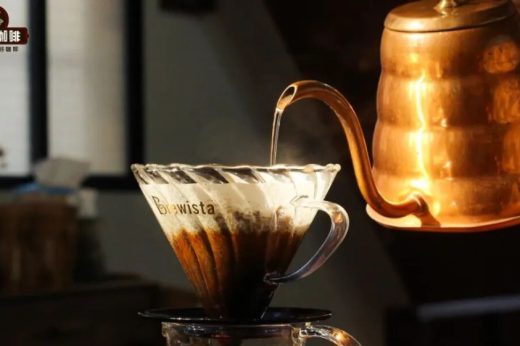
Pouring technique also matters. Pay attention to controlling the flow rate, the pouring height and the speed of circling. It is recommended to practice forming a 'perfect coffee bed'—after the grounds have been evenly extracted, they form a bowl-shaped depression in the filter paper that is thin at the top and thick at the bottom with neat edges. If the coffee bed is unevenly distributed, your pouring technique needs improvement.

One final reminder: always use a digital scale to precisely measure the amount of grounds and water; pouring by feel makes it hard to guarantee consistent quality. Once you have adjusted all these key parameters to the right state, you will be able to brew a consistently good cup of pour-over coffee.