Pour-over flow rate differences: how roast, altitude and processing affect extraction
Introduction: Have you ever noticed that during pour-over brewing, some beans drain incredibly fast, finishing in under two minutes, while others hold water for a long time and leave you at a loss? In fact, this is closely related to the coffee beans' roast level, processing method and growing altitude. This article takes a deep look at how these factors affect flow rate and offers practical adjustment solutions to help you precisely control every brew.
During coffee brewing, flow rate is one of the key factors affecting the final flavor. Many coffee lovers find that even when brewing with the same parameters, extraction times still differ significantly between different coffee beans. Understanding the reasons behind these differences can help you better adjust your brewing strategy and achieve the ideal flavor expression.
The primary factor affecting flow rate: roast level
The roast level of coffee beans directly affects their internal density and the structure of the coffee bed. Light-roast beans spend less time under heat, retaining more moisture and substances internally, which results in higher density and a more compact coffee bed after grinding. In this case, the path for hot water through the bed is narrower, making clogging easy. In addition, light-roast beans are more brittle and tend to produce more fines during grinding; these tiny particles further obstruct water flow, slowing the drawdown.

By contrast, medium-dark roast beans expand internally under high heat and lose density, making the coffee bed looser and more uniform. This structure provides clearer channels for hot water, making extraction smoother and usually completing within a more reasonable time.

The secret of processing: traditional versus non-traditional methods
The processing method of coffee beans also affects their physical properties. Traditional washed, natural and honey processes interfere less with the bean structure and preserve its original density characteristics. In recent years, however, popular non-traditional processes such as anaerobic fermentation have brought significant changes.
During anaerobic processing, coffee beans undergo temperature-controlled fermentation in a sealed environment; the breakdown of pulp and pectin slows, extending fermentation time. This process not only gives the coffee richer fruity and fermented flavors but also reduces the tightness of the bean's cell walls, making the internal structure looser after roasting. As a result, beans processed this way usually grind more smoothly and drain noticeably faster.

Take certain beans processed with double anaerobic natural, for example: although they retain a medium-light roast level, their internal structure has already become very loose, so water may pass through much faster during actual brewing than with conventional natural or washed beans. This requires particular attention to controlling extraction time to avoid under-extraction.

Altitude: the overlooked key variable
Growing altitude is another often overlooked yet crucial factor. Generally, for every 100 meters of elevation gain, the temperature drops by about 0.6°C. This means coffee trees grown at high altitude ripen their fruit more slowly, have more time to accumulate aromatic substances, and their beans are also harder.
Take coffee beans grown above 2,000 meters, for example: these beans usually have a firmer structure, and the coffee bed formed after grinding is more compact, so water encounters greater resistance when passing through, and brewing time tends to be longer. Without adjustment, over-extraction or unclear flavors easily result.

Solutions for different flow rate problems
Now that we understand the three major factors affecting flow rate, we can adjust brewing parameters accordingly to achieve the ideal extraction result.
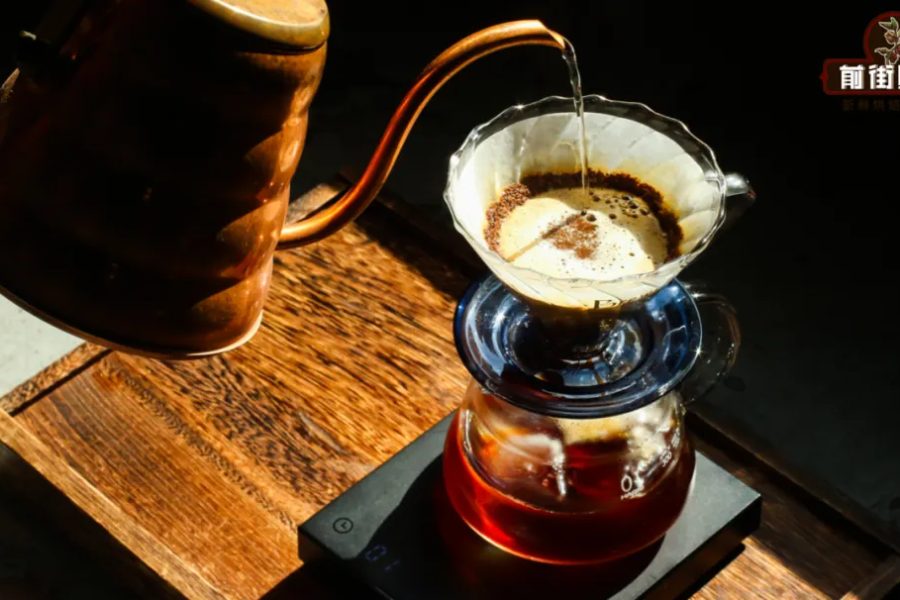
When the flow is too fast (common with anaerobically processed and dark-roast beans): when the drawdown is unusually fast and aroma is lacking, first consider adjusting the grind, usually finer than the standard setting. At the same time, control the size of the pouring stream to avoid overly disturbing the coffee bed; this helps extend extraction time and enhances the intensity and fullness of flavor.

For when the flow is too slow (common with high-altitude light-roast beans): you can start from two directions—adjust the grind or change the brewing technique. Coarsening the grind by 3-4 clicks effectively increases the gaps between particles and reduces the proportion of fines, thereby speeding up water flow. If you don't want to change the grind setting, you can improve things by adjusting the pouring technique, such as gradually widening the spiral after the bloom to use the larger coffee particles to form clearer channels.
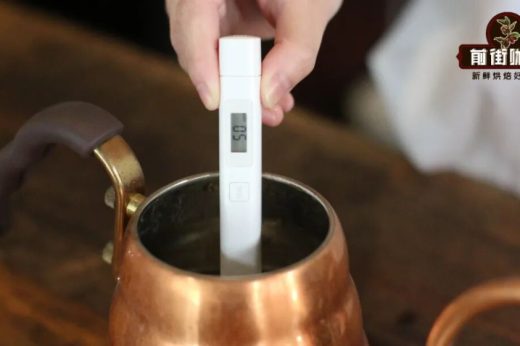
When the above methods have limited effect, you can also try lowering the water temperature; this can effectively improve the over-extraction caused by slow flow without compromising flavor clarity.

Remember, there is no one-size-fits-all standard for pour-over coffee. The key is to understand how various factors interact and adjust flexibly according to the actual situation. By observing changes in flow rate and combining information such as the coffee's origin, processing method and roast level, you will be able to predict brewing performance more accurately and make appropriate parameter adjustments.