Geisha and Blue Mountain Pour-Over Guide: Freshness, Roast Level and Flavor Extraction
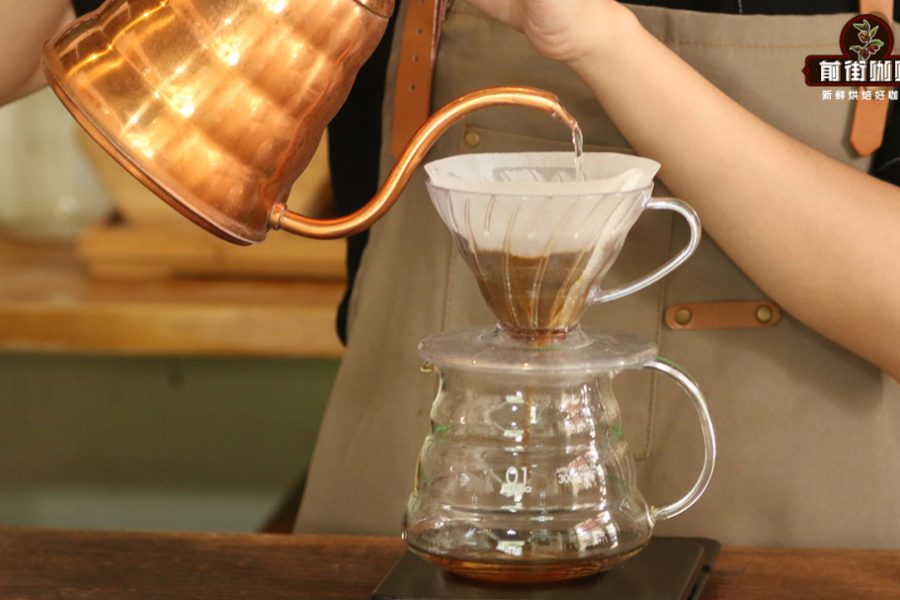
Introduction: When facing expensive specialty coffee beans, how can you release their best flavor through scientific pour-over parameters and a reasonable resting period? This article focuses on two representative types of coffee beans—light-roast Geisha and medium-dark-roast Blue Mountain—and explains the complete extraction logic, from resting timing and roast-level judgment to pouring technique and coffee-to-water ratio. It also offers actionable, practical parameter suggestions to help you precisely capture the flavor potential of every high-priced bean.

When many coffee enthusiasts first encounter high-end coffee beans, they often recognize their high value from professional competition labels on the packaging such as "TOH" and "CoE," yet improper parameters during actual brewing cause the flavor to be lost. How can you avoid wasting these specialty coffee beans? The key lies in mastering three core elements: freshness management, roast-level adaptation and refined extraction parameters.

The premium on high-priced coffee beans usually stems from three factors: a distinctive varietal flavor (such as the signature citrus notes of Geisha), the scarcity of small regional yields, and the brand premium backed by competition honors. For ordinary consumers, it is advisable to focus first on the bean's flavor description and roast level—these two indicators directly affect the choice of brewing strategy.

The golden window of freshness: Coffee beans enter a flavor-decline period 50-60 days after roasting; beans within 5 days of roasting are recommended. If stored for more than 30 days, resting is needed to eliminate the harsh sensation caused by excess carbon dioxide. Observation shows that medium-light-roast beans (such as Geisha types) reach peak flavor on the 7th day after roasting, while medium-dark-roast beans (such as Blue Mountain types) are best consumed after 4-6 days of resting.


Freshness can be judged by two signs: first, a strong antioxidant smell when the bag is opened (a characteristic of unrested beans); second, a noticeable green, astringent sensation or thin aroma after brewing. The solution is to adjust the resting time—let light-roast beans sit for 7-8 days and medium-dark-roast beans for 4-6 days, keeping them sealed and away from light during this period.

Quick tricks for identifying roast level: When the packaging does not state the roast level, the flavor-wheel description allows quick classification: those dominated by citrus, floral and berry notes are medium-light roasts (such as Geisha's flavor keywords: peach and plum, jasmine, composite fruit); those with dark-toned descriptions such as chocolate, caramel and nuts are mostly medium-dark roasts (such as Blue Mountain's chocolate, cream and roasted nut characteristics). Color as an aid: light brown with a yellowish tint indicates a light roast; dark brown, nearly black, indicates a medium-dark roast.



Parameter-adjustment principles for different roast types:
• Medium-light roast (such as Geisha): use a high 1:16 coffee-to-water ratio to raise the extraction yield, with a slightly coarser grind (78% passing a No. 20 sieve, corresponding to 10.3 on the EK43s scale), and use only 25 ml of hot water in the first bloom to trigger degassing
• Medium-dark roast (such as Blue Mountain): lower the water temperature to 85-86°C to reduce bitterness, use a 1:16 coffee-to-water ratio to balance concentration, and pour in four stages (30 ml bloom + three increasing pours) to strengthen layering

Geisha pour-over details (taking a light-roast high-altitude bean as an example):
1. Grind adjustment: lower the usual light-roast 80% sieve pass rate to 78% to prevent hard beans from clogging the filter holes
2. Bloom stage: pour 25 ml of hot water to cover all the grounds and complete degassing within 30 seconds
3. Main extraction: first pour 120 ml of hot water to form a bowl-shaped bed (taking 1 min 10-15 sec), then, when the water level drops to one-third of the bed, add 95 ml in a semicircle around the surface
4. Total time control: complete all pouring within 2 min 05 sec to ensure the tail end is not over-extracted

Key Blue Mountain pour-over techniques (a medium-dark-roast representative):
1. Water temperature control: 2°C lower than usual (85-86°C) to highlight sweetness
2. Staged pouring: 30 ml bloom → 80 ml from the center outward → 70 ml in a small circle → 60 ml finishing pour
3. Flow rhythm: between each pour, watch the rate at which the water level drops; total extraction time is recommended at about 2 min 30 sec
4. Coffee-to-water ratio: keep 1:16 to ensure body while avoiding over-extraction

Advanced suggestions: For highly aromatic beans such as competition-lot Geisha, try extending the bloom to 45 seconds (increasing the initial pour to 30 ml) to use the hot steam to further open up the aromatic compounds. For dark-roast beans such as Blue Mountain, if an astringent aftertaste appears, you can shorten the extraction time by making the grind coarser (lowering the sieve pass rate by 2-3%).