Iced Pour-Over Coffee Advanced Guide: Water, Coffee, and Ice Ratios and Brewing Parameters
Introduction: On a hot summer day, a cup of icy, full-bodied pour-over coffee is an excellent choice. This article takes an in-depth look at the core techniques of iced pour-over coffee, from the golden ratio of water, coffee, and ice to grind size adjustment and pouring technique optimization, guiding you to master professional-level iced pour-over methods. Through precise control of a 1:15 coffee-to-water ratio, the golden balance of ice and hot water, and a scientific pouring plan, you can brew a full-flavored, layered iced pour-over coffee at home.

After Major Heat, the intense summer heat is hard to bear. A cup of iced coffee not only cools and quenches thirst but also brings a unique flavor experience. For coffee lovers who like making coffee at home but pursue lightweight operation, iced pour-over is an advanced option worth trying. Recently I have received many questions about iced pour-over. This article systematically analyzes the four key techniques that make iced coffee flavor stand out.

First, understand the core principle of iced pour-over: the dual action of "high-temperature extraction + ice-chilled aroma lock." Unlike the simple method of pouring hot coffee directly over ice, the professional method uses fine control in two stages: first, hot water quickly extracts the coffee's essence at high temperature to form a high-concentration coffee liquid; then the hot coffee liquid drips precisely onto the ice, rapidly cooling while locking in volatile aroma molecules, achieving a perfect balance of retaining rich flavor while diluting moderately.
The key to achieving this effect lies in a precise water-coffee-ice ratio. It is recommended, based on standard hot pour-over parameters, to replace one third of the total water with ice. For example: when using 15 grams of coffee grounds, at a 1:15 coffee-to-water ratio, regular hot pour-over requires 225 grams of hot water, while iced pour-over is adjusted to 75 grams of ice (1/3 of total water) with 150 grams of hot water (2/3 of total water). Similarly, when using 20 grams of coffee grounds, 300 grams of total water should become 100 grams of ice with 200 grams of hot water. For beginners' convenience, here is a proven universal formula: coffee grounds × 10 = grams of hot water, coffee grounds × 5 = grams of ice. Taking 15 grams of coffee grounds as an example, use 150 grams of hot water with 75 grams of ice. This recipe applies to most coffee bean varieties.

Grind size adjustment is equally crucial. Because the total pouring water for iced pour-over is reduced by one third, keeping the original grind size would lead to insufficient extraction of flavor compounds in the tail end, making the coffee taste thin. The solution is to adjust the grind 0.5 to 1 notch finer, increasing the contact area between coffee particles and water to improve the release efficiency of soluble substances. Specifically, for some light to medium roast coffee beans recommended by baristas, such as common varieties like Yirgacheffe G1, Geisha, and Sidra, when using hot pour-over with an EK43s grinder set at 10 notches, for iced pour-over it is recommended to adjust the grind finer to 9.5 notches; for medium to dark roast varieties, such as PWN Golden Mandheling, Queen's Estate, and Blue Mountain No. 1, it is recommended to keep 10 notches or adjust 1 notch finer with a hand grinder. Note that the adjustment should not be too large, otherwise it may cause over-extraction and make the coffee bitter.

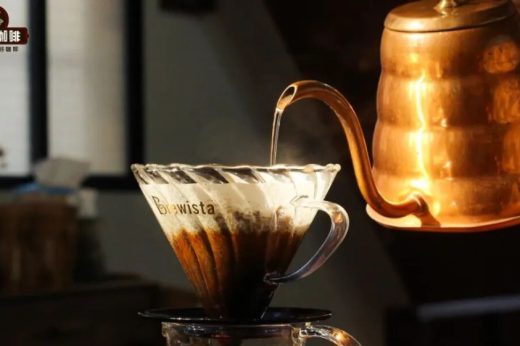
Optimizing the pouring technique is key to compensating for insufficient extraction time. Because the total pouring water is reduced, conventional pouring methods lead to too short an extraction time (usually under two minutes), affecting full extraction of flavor compounds. The professional approach is to use staged pouring and control the flow rate to extend extraction time to 1 minute 45 seconds to 2 minutes. A recommended four-stage pouring plan is "30 grams - 40 grams - 40 grams - 40 grams," with a total of 150 grams of water (using 15 grams of coffee grounds as an example). If too many stages seem hard to operate, it can be simplified to a three-stage "30 grams - 65 grams - 55 grams." At the same time, note to reduce the flow rate to ensure every drop of water fully contacts the coffee grounds. A fine-spout pour-over kettle is recommended for precise flow control.

Finally, pay special attention to ice quality, an easily overlooked but highly influential detail. Many homemade ice cubes are too small and not hard enough; they melt quickly when exposed to heat, causing the coffee to be over-diluted and lose its proper full-bodied taste. The ideal state is to use large, high-hardness ice cubes. The larger the ice cube, the slower it melts, better preserving the coffee's original concentration and flavor layers. It is recommended to make quality ice cubes in batches in advance and store them properly. During brewing, the "ice-cooling method" can be used: slowly pour the brewed hot coffee liquid into a large amount of ice, and through the surrounding cooling of the ice, it cools quickly while minimizing dilution. If conditions permit, prepare a dedicated large square ice mold to make high-quality ice cubes.

Summarizing the above points: a precise 1:15 coffee-to-water ratio with 1/3 ice replacement, a moderately finer grind (0.5-1 notch), a staged pouring technique (1 minute 45 seconds to 2 minutes extraction time), and the use of quality large ice cubes. These four elements together form the core technical framework of professional-level iced pour-over. Through systematic parameter adjustment and attention to detail, even a home environment can consistently reproduce cafe-level iced pour-over quality. Remember, the charm of iced pour-over lies in the balancing art of hot and cold blending; you need to keep fine-tuning in practice to find the plan that best suits your taste.

Common reminders: if the brewed iced pour-over lacks aroma or tastes thin, besides checking the above parameters, also pay attention to water quality (filtered water is recommended), coffee bean freshness (within the best flavor period), and the uniformity of the coffee grounds before brewing. Regularly cleaning the grinder and pour-over equipment can also significantly improve extraction quality. Through continuous practice and parameter fine-tuning, you will gradually master this refined coffee craft.