Pour-Over for Beginners: Z-Pattern Single-Pour Technique and Staged Extraction Parameters
Introduction: Want to learn pour-over coffee but not sure where to start? The Z-pattern single-pour method, a distinctive staged extraction technique, has drawn attention from many coffee enthusiasts in recent years. This article takes an in-depth look at the principles, steps and parameter settings of the Z-pattern single-pour method to help beginners build a steady brewing rhythm, and compares its flavor differences with the traditional three-stage extraction so you can find a brewing method that suits you.
Recently, a new pour-over technique called the "Z-pattern single-pour" has gradually gained popularity, attracting attention from many coffee beginners because of its distinctive pouring path. This brewing method is not only unusual in technique but also distinctive in both flavor expression and difficulty of operation. So how exactly do you perform a Z-pattern single-pour? And what are its advantages and disadvantages compared with the common three-stage brewing? This article breaks it down in detail.
The so-called "Z-pattern single-pour" is actually a combination of two concepts: "Z-pattern" and "single-pour." Among them, "single-pour" means that after blooming is complete, the remaining hot water is poured into the dripper all at once, without interruption, usually in two stages. This method requires a steady stream of water and places high demands on water-flow control, so it is better suited to coffee enthusiasts with some experience.
The "Z-pattern" refers to controlling the wrist during pouring so that the hot water sweeps back and forth across the surface of the coffee bed along a path resembling the letter "Z." Specifically, start from above the dripper and move slowly in a "Z" shape while pouring, making sure every part of the coffee grounds comes into even contact with the hot water. Go from top to bottom and then from bottom to top, repeating until the remaining water is no longer enough to cover the entire surface, at which point switch to a centered, stationary pour.
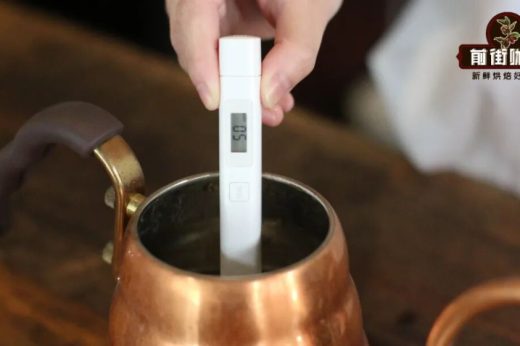
In practice, the equipment and basic parameters required for the Z-pattern single-pour are similar to those of regular pour-over. For example, you can use about 20 grams of coffee grounds with a 1:15 coffee-to-water ratio; for the dripper, you can choose a V60#02 or a flat-bottomed cake filter, such as Kalita. The water temperature is recommended to be between 92 and 93°C, and the grind size is roughly 10 on the Ek43s scale, or a Chinese standard No. 20 sieve pass rate of 80%. These parameters can lay a good foundation for stable extraction.
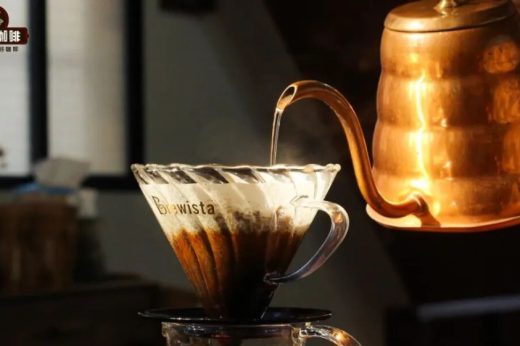
Next, let's look at the specific brewing process. First, wet the filter paper and place it in the dripper, add 20 grams of coffee grounds and gently tap them level. Start the timer, then begin the blooming pour, generally adding about 60 grams of hot water; the main purpose of this stage is to awaken the coffee grounds. The stream should not be too strong; keep it gentle and even, similar to filling in color when painting, moving slowly along a "Z" path to make sure the surface of the coffee bed is fully wetted. This process lasts about 30 seconds.
After blooming ends, move on to the second pour. Continue using the "Z" path, starting from above the dripper and moving slowly along the surface while pouring until the stream reaches the other side of the dripper. Note that you should try to keep the flow rate consistent during this process; about 3 milliliters per second is recommended, avoiding too fast or too slow a flow that would affect overall extraction efficiency.
Immediately afterward, without interrupting the flow, reverse direction from the other side and return to the starting point in a "Z" path, again keeping the surface evenly covered to avoid over-extraction or missed spots in any area. Repeat this "Z" pouring motion until only about 40 grams of water remain, then adjust the pouring point to the center of the dripper and finish the remaining water with a stationary pour; this reduces disturbance to the coffee bed and maintains overall extraction stability.
The entire brewing process is usually controlled at around 2 minutes 25 seconds, and the resulting coffee liquid has a distinctive flavor profile. If you use the same parameters with the traditional three-stage brewing method for comparison, the flavor differences between the two are easy to see. The three-stage method usually more easily brings out the coffee's layers, such as clear floral aromas, fruity acidity and sweetness, while the Z-pattern single-pour tends to present a heavier tea-like sensation and overall body; citrus notes are still present, but the overall layering may be somewhat more one-dimensional.
It is worth noting that although the Z-pattern single-pour looks simple, it actually places higher demands on the operator. First, you need to keep the water flow consistent and moderate throughout; too strong a flow easily scatters the coffee bed, while too weak a flow leads to under-extraction. Second, your wrist must be flexible to ensure a smooth "Z" path and avoid pauses midway that cause local over-extraction. In addition, because the total pour is split into two stages, operators can easily focus on drawing the lines and neglect time control, causing the overall extraction time to deviate from the ideal range; therefore, you must balance pouring rhythm with time management.
In addition, the Z-pattern single-pour is closer to a washing-style extraction method, in which hot water repeatedly covers the coffee bed so that soluble substances are gradually released. Compared with circular pouring, this method disturbs the coffee bed less, and if paired with a flat-bottomed dripper (such as a Kalita fan-shaped dripper or cake cup), it can further enhance the effect of immersion extraction, making the coffee fuller and richer in mouthfeel.
In summary, the Z-pattern single-pour is a pour-over method that is both challenging and fun, suitable for coffee enthusiasts who want to advance their pour-over skills. By controlling the pouring path, water flow rate and time management, you can not only extract consistently but also explore different flavor expressions. Why not give it a try at home and find your own best brewing rhythm.