How to Choose Iced Coffee: Comparing 4 Types, Parameters, and Flavors
Introduction: On hot summer days, iced coffee becomes the first choice for many coffee lovers. But iced Americano, iced pour-over, cold brew, and iced drip coffee differ clearly in brewing process, taste characteristics, and suitable scenarios. This article compares the core differences among these four mainstream iced coffee types from the dimensions of extraction method, production time, ease of operation, and flavor performance, to help you quickly find the one that best suits your taste preferences and needs.
Iced coffee on the market falls mainly into four categories: iced Americano, iced pour-over, cold brew, and iced drip coffee. Although all are based on "ice," their production methods, flavor profiles, and suitable audiences are quite different. Understanding these differences can not only help you choose a drink you like better, but also improve your satisfaction with your daily coffee experience.
In terms of extraction method, iced Americano and iced pour-over are essentially hot-extracted coffee rapidly cooled with ice: the former uses espresso diluted with ice water, while the latter is hot pour-over coffee cooled with ice. Cold brew and iced drip, by contrast, use cold water for extraction throughout, without going through a high-temperature stage, thereby bringing a gentler, low-acid flavor performance.
Iced Americano is one of the most common iced coffees. Espresso is extracted with an espresso machine, then an appropriate amount of ice cubes and cold water are added to blend. Medium-dark roasted coffee beans are generally recommended; such beans usually have a balanced taste and mellow aroma, such as blend beans with nutty, caramel, or chocolate notes. During production, use 20 grams of coffee grounds at a 1:2 coffee-to-liquid ratio to extract about 40 grams of espresso within 25–33 seconds, then add it to a cup containing 90 grams of ice cubes and 180 grams of water, stir evenly, and it is ready to drink. The finished drink has rich layers on the palate, with both nutty or roasted chestnut aromas and a creamy smooth texture; it is icy and refreshing, very suitable for quick refreshment in summer.

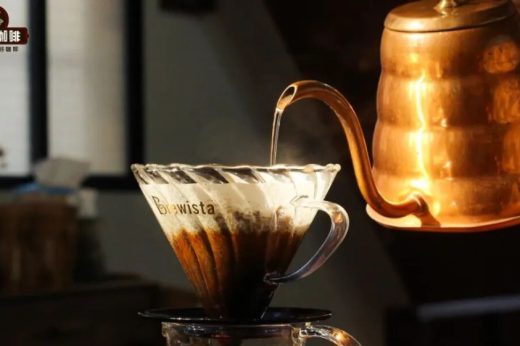
Iced pour-over is made by first brewing a relatively strong hot coffee by pour-over, then adding ice cubes to cool and dilute it. This method suits a wider range of coffee beans, especially medium-light roasted single-origin beans, such as beans with bright acidity or prominent fruity aromas. Beginners can start with medium-light roasted beans with strong fruity or fermented notes, because their flavors are clear and the margin for error is relatively high. Taking 15 grams of coffee grounds as an example, use about 150 grams of 92°C hot water for high-concentration extraction, then pair with 75 grams of ice cubes for cooling. For the overall parameters, control the grind size at about 83% passing through a No. 20 sieve, use a V60 dripper with a three-stage pouring technique, and keep the final extraction time between 1 minute 50 seconds and 2 minutes.


Cold brew coffee is made by steeping coffee grounds in cold water for a long time, usually requiring 8–12 hours of refrigerated extraction. It is simple to operate: just mix coffee grounds (fine granulated sugar coarseness is recommended, about 80% passing through a No. 20 sieve) with water at a 1:10 ratio, place in a sealed container in the refrigerator, and stir appropriately during the process to promote even extraction. After completion, filter out the coffee grounds and it is ready to drink. This method can effectively reduce bitterness and astringency; the finished product usually has a balanced taste, obvious sweetness, and a relatively clear liquid.

Iced drip coffee is more particular: it uses ice water dripping continuously at an extremely slow rate of a few drops per second, extracting coffee flavors through long soaking. The production time is usually 6–8 hours, the drip rate is recommended to be controlled at about 7 drops per 10 seconds, and the coffee-to-liquid ratio is mostly 1:10; for home production, it can also be adjusted to 1:12–1:14. Because iced drip coffee often needs to be refrigerated for several hours after extraction for "aging" to develop richer fermented aromas and vinous notes, it is more suitable for advance preparation. Its flavor often has obvious vinous aromas and fermented notes, with relatively heavier bitterness, but the overall taste is rich in layers with a long finish.


In terms of production time, iced Americano and iced pour-over are "quick" types, with the whole process taking only a few minutes; cold brew and iced drip are "slow and careful work," with cold brew requiring at least 12 hours of waiting and iced drip also taking 6–8 hours to complete. If you pursue efficiency, the former two are more suitable; if you are willing to invest time for flavor, the latter two can bring a more unique experience.
In terms of ease of home production, iced pour-over and cold brew have lower equipment requirements; ordinary pour-over equipment or a sealed bottle is enough. Iced Americano requires an espresso machine, and iced drip coffee requires a special drip device, so the cost and operational threshold are relatively higher.
In terms of flavor, although the four differ, the core still depends on the roast level and flavor characteristics of the coffee beans themselves. Iced Americano usually has a light, refreshing taste, with a flavor expression close to the basic tone of the coffee beans, but the liquid is relatively cloudy; iced pour-over has a clean, bright taste and can better present the main flavor characteristics of the beans, with higher liquid transparency; cold brew coffee has low bitterness and sufficient sweetness, a fuller texture, and slightly lower clarity than iced pour-over; iced drip coffee, due to long low-temperature extraction and subsequent aging, often has complex flavors such as vinous and fermented notes, with relatively obvious bitterness, but the overall taste is the richest in layers.