Pour-over iced coffee guide: coffee-to-water ratios and brewing parameters
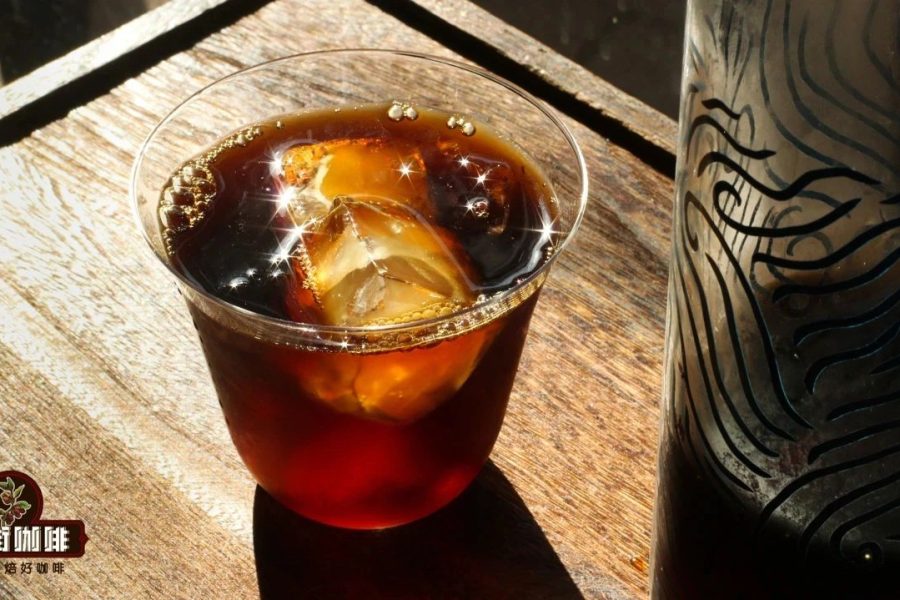
Introduction: With summer here, iced pour-over coffee has become the first choice for many coffee lovers. But how do you brew a well-balanced iced pour-over? How should the coffee-to-water ratio be controlled? And how does it fundamentally differ from hot pour-over? Starting from the principles of extraction, this article explains in detail the core differences between iced and hot pour-over, offers practical coffee-to-water ratio recommendations, and explains how beans of different roast levels perform in flavor under the two brewing methods, helping you choose the best brewing approach for your needs.
As temperatures rise, more and more coffee lovers are starting to wonder: for the same specialty coffee, is hot pour-over or iced pour-over better suited to the current season? In fact, there is no absolute answer to this question; the key lies in understanding the underlying logic that distinguishes the two brewing methods.

From a historical perspective, iced pour-over evolved from traditional hot pour-over. Modern mainstream iced pour-over techniques draw heavily on the approach of Japanese-style iced pour-over. Standard hot pour-over uses a full coffee-to-water ratio for extraction, which can fully express the regional characteristics and processing-method style of the coffee beans themselves.

What makes iced pour-over special is that it uses a lower coffee-to-water ratio for the initial extraction, producing a more concentrated coffee liquid, which is then cooled and diluted by adding ice. This approach needs to compensate for the drop in extraction efficiency caused by the reduced water volume, usually solved in two ways: grinding 0.1-0.2mm finer, or raising the water temperature appropriately to the 92-94°C range.

Analyzing flavor extraction completeness, iced pour-over actually omits the late-stage extraction process of hot pour-over. This creates a sharp contrast in flavor presentation between the two: iced pour-over is usually weaker than hot pour-over in body, sweetness layers and the duration of the finish, but has an advantage in clarity and bright acidity.

There are equally significant differences in aroma. Hot brewing better releases the volatile aromatic substances in coffee—the floral and citrus-fruit notes of light-roast beans are more prominent when served hot; iced pour-over, meanwhile, strengthens the expression of sugars and fermented aromas. The chocolate, caramel and other rich aromas of dark-roast coffee are more three-dimensional when hot-brewed; when iced, such aromas become relatively restrained, and sometimes a subtle vinous undertone emerges.

It is worth noting that beans of different roast levels suit different brewing methods. Medium-roast coffee beans often have more balanced attributes; for example, varieties with berry notes may show fresh fruit aromas and moderate sweetness in iced pour-over, while dark-roast beans require particular care in iced brewing to avoid the bitterness caused by over-extraction.

For beginners trying iced pour-over, it is recommended to start with the following basic parameters: keep the coffee-to-water ratio between 1:8 and 1:10 (fine-tuned according to grind size), and calculate the total poured water with space reserved for the final ice amount. For example, to make 300ml of iced coffee, first extract 100-120ml of concentrated liquid, then add an appropriate amount of ice. The grind should be about one step finer than your everyday hot pour-over, and the water temperature is recommended at 90-93°C.

In practice, also note: it is recommended to freeze ice cubes in advance using purified water, to avoid the off-flavors of ordinary tap-water ice; for pouring, use a center pour combined with slow circular motions to ensure even extraction; the entire extraction process should be extended by 10-15 seconds compared with hot pour-over, to compensate for extraction efficiency in a low-temperature environment.

In summary, if you seek the complete expression and complex layers of coffee flavor, hot pour-over remains an irreplaceable choice; while iced pour-over, with its refreshing character and unique aroma expression, is especially suited to hot weather or drinking scenarios that favor clean acidity. Only by adjusting parameters to your personal taste preferences can you find the cup of iced coffee that suits you best.


