AeroPress Coffee Guide: Extraction Tips from Beginner to Pro
Introduction: The AeroPress, a versatile coffee device combining features of pour-over, French press, and espresso, has become a practical tool for coffee enthusiasts thanks to its unique extraction method and consistent results. This article explains the AeroPress's invention background, component functions, and the two main brewing methods—standard and inverted—and provides professional-grade parameter settings and practical steps to help you master this 'dangerous yet handy' coffee gadget.
Nicknamed the 'big syringe' in coffee circles, this device—with its distinctive syringe shape and piston design—has opened a new path in coffee brewing. It was created for single-origin coffee, yet through simple modifications it can produce a rich cup close to espresso; this flexible, adaptable nature is exactly the appeal of the AeroPress.
Its birth brings us to inventor Alan Adler—a creator holding more than 40 patents who once taught at top institutions such as Stanford University, and whose company Aerobie still holds the world record for the farthest flying disc throw. Launched in 2005, this coffee device completely changed the complicated process of traditional coffee extraction. Before its arrival, pour-over coffee relied on a precise grinder and filter working together, and a small misstep could cause clogging that affected consistency; the AeroPress, through a fully controllable immersion and pressing process, makes coffee preparation simple with predictable results.
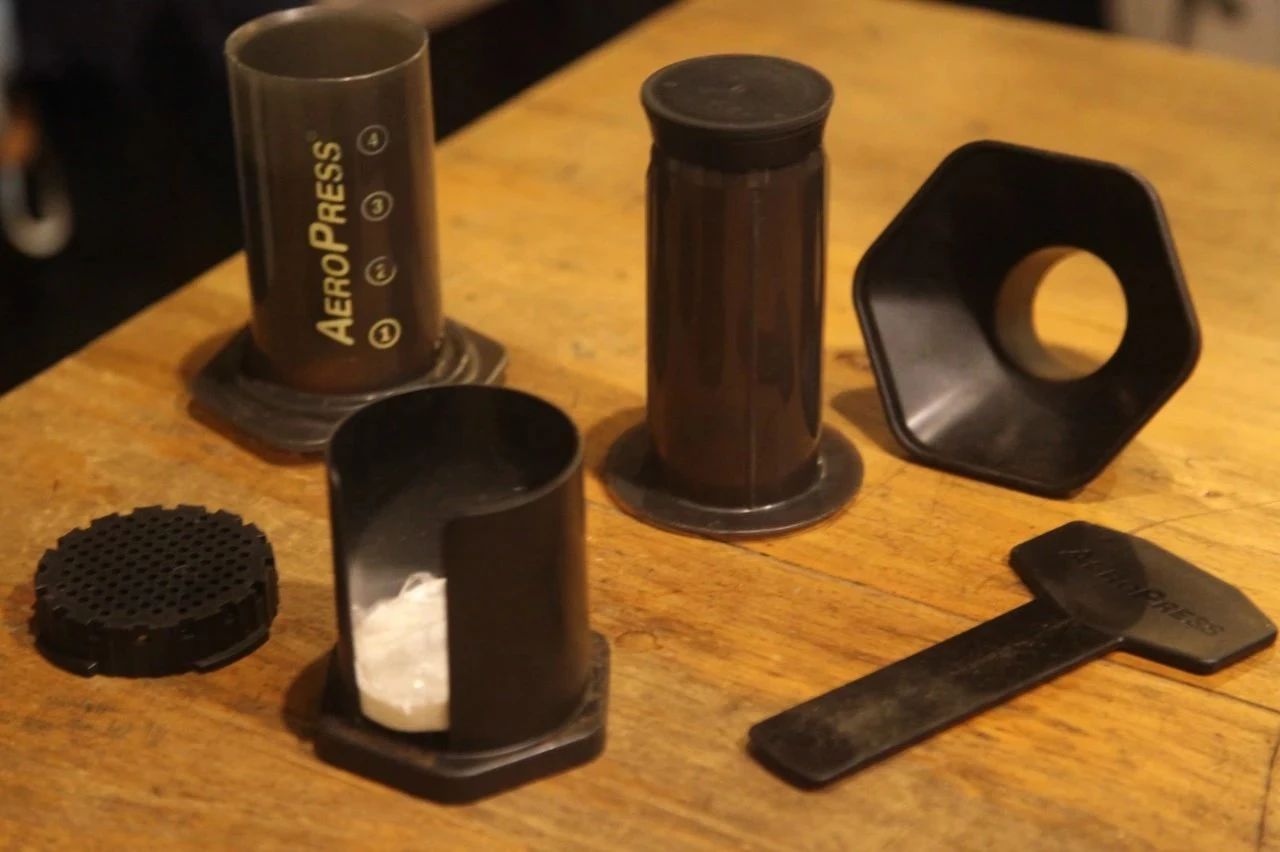
The AeroPress's core components include the chamber, filter cap, plunger, companion funnel, dedicated paper filters and storage cylinder, plus a paddle for stirring. Its uniqueness lies in combining the essence of three classic extraction methods: immersion extraction similar to a French press lays a full-bodied base, drip-style extraction borrowed from pour-over ensures a clean cup, and the rapid pressurization principle of espresso machines adds concentration and depth. By adjusting grind size, water temperature, water ratio, and pressing speed, users can precisely steer the final flavor.
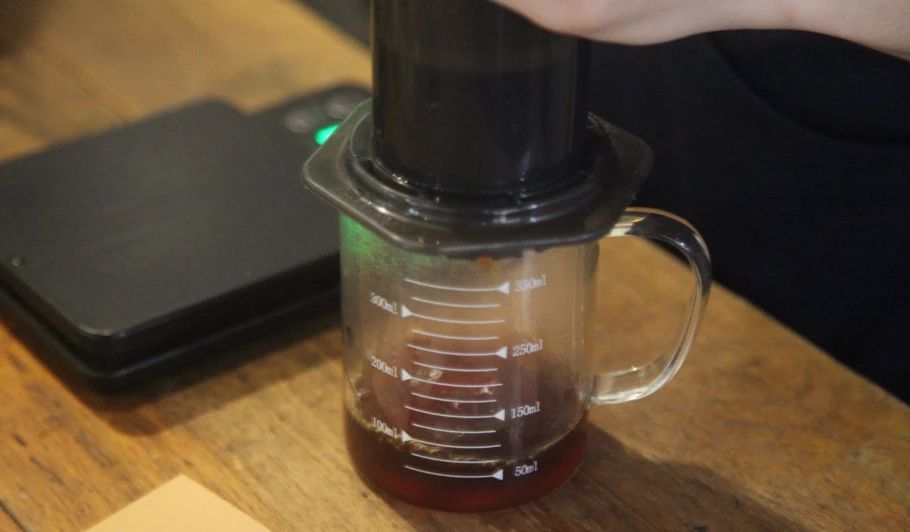
In practice, there are two mainstream techniques: standard and inverted. With the standard method, the chamber is placed upright over the receiving cup, coffee grounds and hot water are added in turn and stirred, then the plunger is inserted and slowly pressed down. Because filtering begins as soon as water is poured, the coffee flows quickly and typically shows the smooth texture characteristic of pour-over, but it is extremely sensitive to grind size—if the grind is too coarse, extraction is insufficient and the cup tastes flat and weak. Beginners trying it for the first time are advised to choose a medium-fine grind (such as BG #5R), keep water temperature around 90°C, and maintain a basic coffee-to-water ratio of 1:15.
The inverted method is the approach favored by more advanced users. First combine the plunger with the chamber and turn it upside down, add coffee grounds, pour in hot water and stir evenly, let it sit briefly, then attach the filter cap, quickly flip the chamber and press down. This method extends immersion time so the grounds fully unfurl, yielding higher extraction efficiency and richer, fuller flavor layers. Practical tests show that the inverted method releases about 15% more aromatic compounds than the standard method, making it especially suited to specialty beans with pronounced fruit notes and fermented aromas.
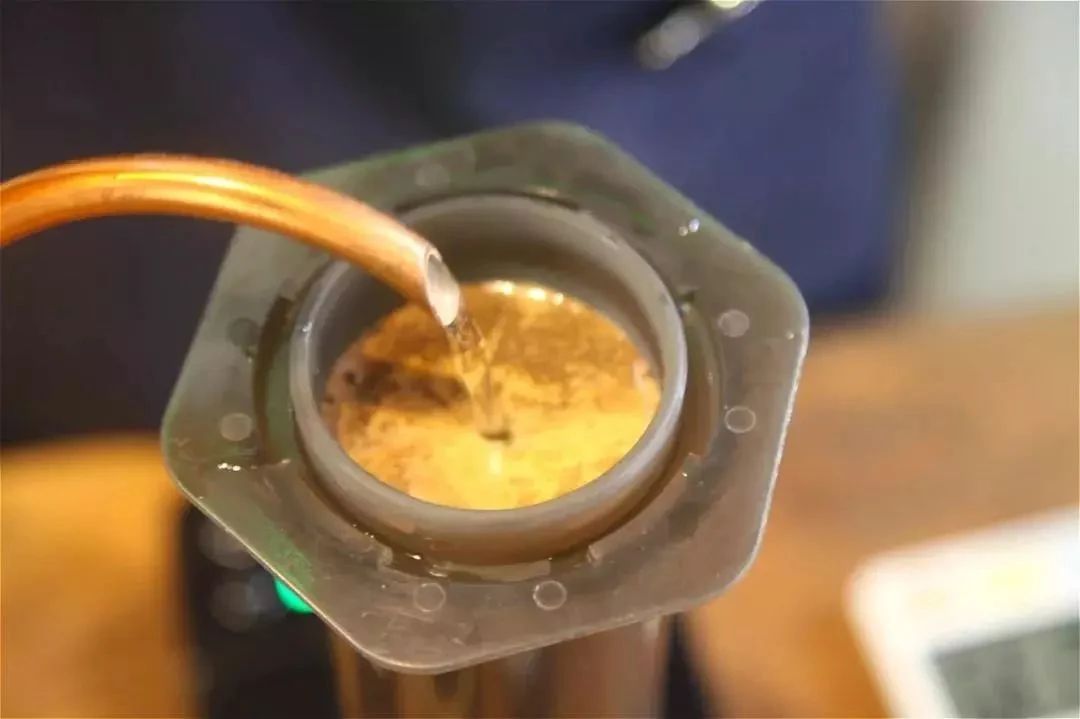
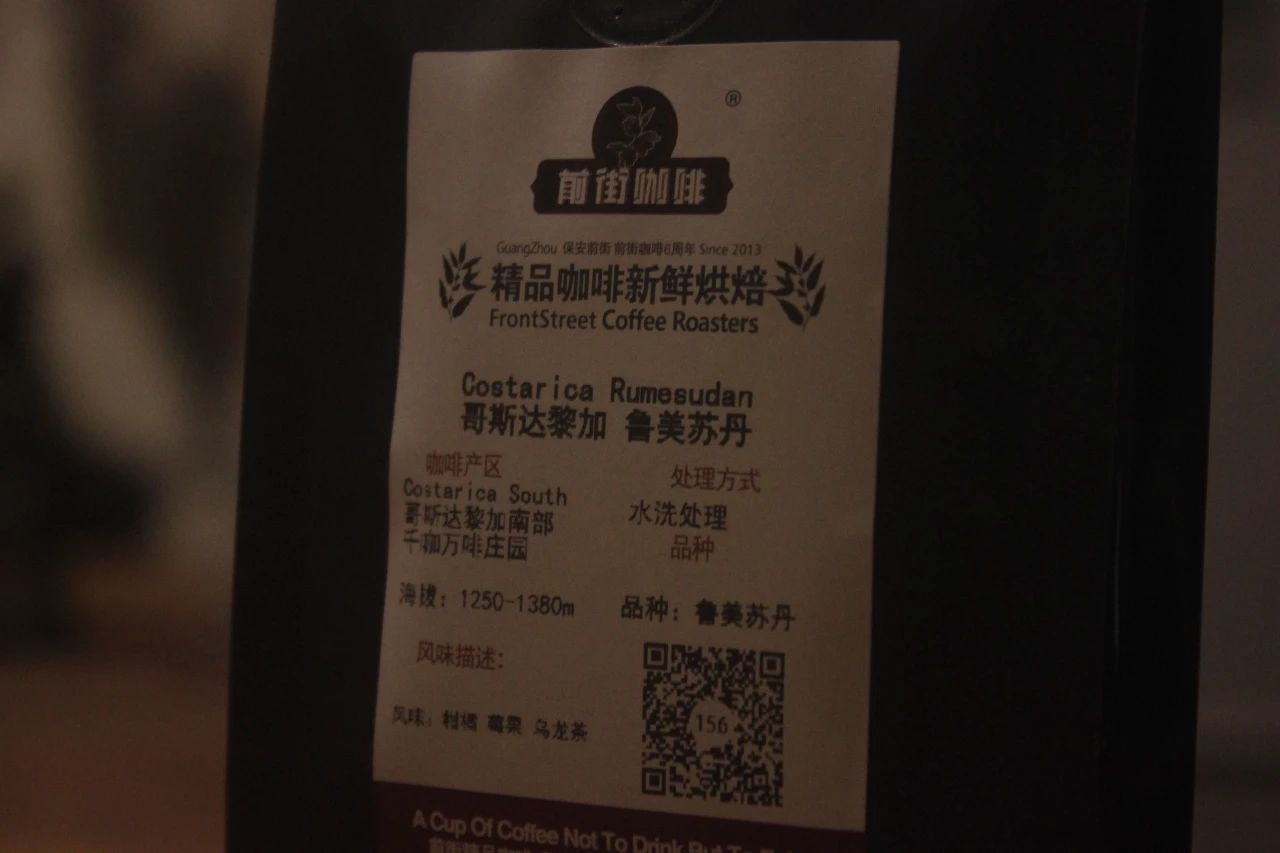
Take a coffee from a high-altitude growing region in Central America (for example, a washed Ruiru 11 variety grown at 1,250–1,380 meters), whose typical combination of citrus, berry, and oolong tea flavors is very well suited to the inverted method. The specific process is as follows: first wet the paper filter and place it in the filter cap, assemble the inverted chamber and add 15 grams of coffee grounds, pour in 40 grams of hot water to start pre-infusion and stir quickly; after 30 seconds, top up the water to 225 grams (corresponding to a 1:15 coffee-to-water ratio) and stir gently with the paddle to help release gases; at 1 minute 30 seconds, attach the filter cap, flip the chamber and align it over the receiving cup, then press slowly, keeping the whole pressing process to about 30 seconds. This parameter combination ensures full extraction while avoiding the bitterness of over-extraction.
It is worth noting that the AeroPress is called 'dangerous' not because of any safety hazard, but because of an anecdote—in 2014 the U.S. Federal Aviation Administration (FAA) banned using the device to make coffee on airplanes. At the time a group called 'Mile High Aeropress' was keen on teaching high-altitude brewing techniques, but as aviation safety regulations improved, this creative way of enjoying freshly ground coffee at 10,000 meters became history. This also indirectly confirms the AeroPress's portability and practicality: with the right method, you can easily make a consistently good cup whether at home every day or outdoors while traveling.
For users chasing the ultimate flavor, you can also try adjusting grind size to change the extraction style: use a finer grind (close to espresso fineness) and press faster to get a rich cup close to espresso; switch to a coarser grind and extend immersion time to present the refreshing qualities of cold brew. Adjust one variable at a time (such as water temperature ±2°C, grind setting by one step, pressing time by 5 seconds), and by comparing and recording the differences through tasting, gradually find the golden parameter combination that best suits your personal taste.