Yirgacheffe Coffee Bean Flavor Analysis and Pour-Over Guide: Ratio and Processing
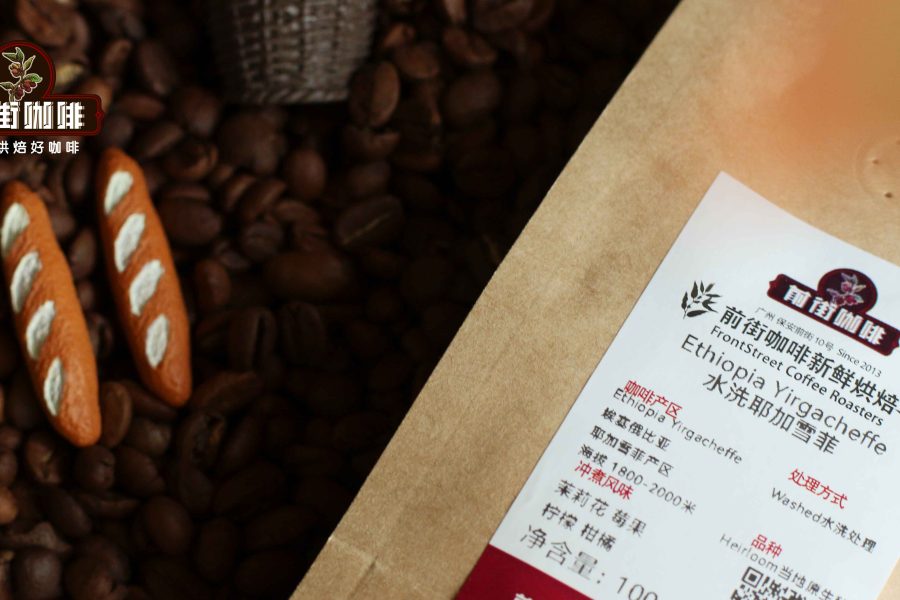
Introduction: Why has Yirgacheffe coffee become a star in the specialty coffee world? This article takes a deep dive into this celebrated bean from Ethiopia, from the terroir of its growing region to the differences between washed and natural processing, guiding you through its bright acidity and floral-fruity characteristics. It also offers professional pour-over parameter recommendations to help you brew a layered, complex Yirgacheffe coffee.

Why does Ethiopian Yirgacheffe coffee appear so frequently on the menus of specialty coffee shops worldwide? This is due not only to its long history of cultivation but also to its unique flavor, which overturns traditional perceptions of coffee. As a classic entry point for coffee lovers, Yirgacheffe, with its clean and refreshing mouthfeel and distinctive floral-fruity profile, perfectly meets modern consumers' diverse demands for coffee flavor.

The Yirgacheffe growing region is located on the western Ethiopian highlands east of the East African Rift, administratively a small town in the Sidama Province, with an average elevation between 1,700 and 2,400 meters and an average annual rainfall of about 1,300 mm. Thanks to its special elevation and complex microclimate, the coffee beans produced in this area gradually gained independent international recognition, eventually forming the separate concept of the Yirgacheffe region. It is worth noting that all coffee beans produced here are named after the place of origin, becoming a byword for quality.

Coffee lovers tasting Yirgacheffe for the first time are often surprised by its entirely different flavor characteristics. Unlike the traditional image of bitter coffee, the coffee here displays a pleasant bright acidity and multi-layered aroma. Professional cupping shows that high-quality Yirgacheffe coffee usually has prominent citrus acidity, accompanied by elegant white floral or jasmine aromas, and presents a refreshing mouthfeel similar to lemon black tea on the palate, with distinct flavor layers and a long finish.

Modern consumers favor Yirgacheffe mainly for two reasons: its fresh and pleasant flavor characteristics lower the psychological barrier to drinking coffee, and its unique acidity breaks the stereotype that "coffee must be bitter." It is particularly worth noting that the Ethiopian Commodity Exchange (ECX) has redefined the classification standard for Yirgacheffe—no longer strictly limiting the geographical range; as long as coffee beans show the typical flavor characteristics of the region in cupping, they can be classified as Yirgacheffe. This flexible standard further enhances the inclusiveness of the brand.

The processing method of Yirgacheffe coffee has a decisive influence on its final flavor. Because the region is rich in water resources, the washed process has traditionally been mainly used: by removing the mucilage layer and controlling fermentation, it can significantly enhance the coffee's bright acidity and clean mouthfeel. In contrast, the older natural process retains the whole fruit for drying; although it may carry risks such as earthy notes, after technical improvements, modern natural processing can develop richer tropical fruit flavors and full-bodied sweetness.

The introduction of washed processing technology can be traced back to 1972, when Ethiopia learned the depulping and fermentation process from Central and South America. This processing method, by precisely controlling fermentation time and drying conditions, makes Yirgacheffe's citrus aromas more prominent and significantly improves the purity of the mouthfeel, making it an ideal choice for showcasing the region's terroir. The traditional natural process, meanwhile, has undergone a revival and improvement; modern techniques control the drying process through professional drying beds, giving the coffee more complex berry notes and full sweetness. The natural Red Cherry process is a typical example, whose perfect combination of white floral and tropical fruit flavors makes it suitable for various brewing methods, including pour-over and cold brew.

To meet different brewing needs, some producers have specially launched medium-roast Yirgacheffe SOE coffee beans, optimized for espresso performance. These coffees can show a distinct balance of berry sweetness and acidity in espresso, retaining the varietal characteristics of Yirgacheffe while adapting to the extraction characteristics of espresso machines. Professional advice is to use a medium grind to fully display its complex fruity layers.

By comparing Yirgacheffe coffee beans processed by washed and natural methods, the influence of processing on flavor can be clearly observed. Cupping data show that naturally processed Red Cherry coffee beans have an intense dry aroma with complex tropical fruit aromas such as strawberry and mango, a syrupy, viscous wet aroma, and a full-bodied mouthfeel reminiscent of fruit black tea on the palate; while washed processed Guodingding coffee beans show fresh passion fruit and citrus acidity, with wet aromas dominated by citrus and berries, bright acidity and a clear tea-like quality on the palate, a finish with mild honey sweetness, and overall lower body but excellent cleanliness.


Many coffee lovers encounter problems such as insufficient aroma or astringent mouthfeel when brewing Yirgacheffe at home, which are usually related to freshness, roast level, and brewing parameters. Professional advice is to choose fresh coffee beans shipped within 5 days of roasting to ensure the best flavor performance. For light-roast Yirgacheffe, it is recommended to use a high water temperature of 92-93°C to bring out the floral and fruity aromas, with a medium-fine grind (about 78% passing a Chinese standard No. 20 sieve, equivalent to fine granulated sugar). Grinding too coarse leads to under-extraction and a thin flavor; too fine may produce bitterness due to over-extraction.

To fully display the aromatic characteristics of Yirgacheffe, professional brewing recommends using a V60 dripper. The specific parameters are: 15 g coffee dose, 1:15 coffee-to-water ratio, total water 225 ml. The staged pouring plan is as follows: first, a 30-second bloom with 30 g of water to activate the coffee grounds; then pour 95 g of water (total about 125 g), taking about 1 minute; finally, when the water level drops to two-thirds of the coffee bed, pour the remaining 100 g of water (total about 225 g), with the entire extraction process controlled to complete in about 2 minutes 10 seconds. This parameter combination effectively balances sweetness, acidity, and body, highlighting the regional characteristics of Yirgacheffe.