Inside Brazil's Coffee Birthplace: Mogiana and the Classic Flavor
Introduction: Explore Brazil's most iconic coffee region, Mogiana, and learn how this land grew from a coffee trial plot in the late 18th century into an important source of specialty coffee worldwide. The article traces coffee's spread through Brazil, explains the railway-building story behind the Mogiana name, and details the region's signature Yellow Bourbon variety processing methods and flavor characteristics, offering coffee lovers practical reference for choosing origins and tasting flavors.
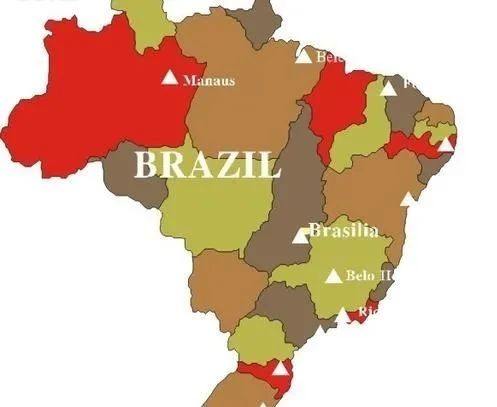
At the border of São Paulo and Minas Gerais in Brazil, the Mogiana region is known for consistently producing high-quality natural coffees with prominent sweetness and balanced structure. About 3,500 coffee farmers are gathered here, managing more than 200,000 hectares of plantations. Through strict selection of fruit from different farm lots and precise processing, the result is clean-tasting, consistently high-quality coffee—a characteristic of consistently excellent performance that makes it a choice coffee lovers can trust all year round.
Brazil's coffee story began in the early 18th century. As its commercial value emerged, coffee cultivation gradually expanded from the north to the south. 1797 was a key year: during his tenure as governor of São Paulo, Portuguese nobleman Castro Mendonça gave coffee seeds to his ally, the Prado family. After these seeds were successfully trialed in the town of Jundiaí, they were moved to Campinas (then called São Carlos) and grew into the first commercial coffee trees; this area later developed into the core of São Paulo's coffee industry.
That same year, Campinas was formally established as a town. This former frontier outpost was transformed by the prosperity of the sugar industry, and when international sugar prices hit a new high in 1796, 61 local "distinguished residents" who were eligible to pay taxes pushed for its upgrade to a town. Notably, those later approving Campinas's promotion to a municipality were representative figures among these 61 people, including its first mayor, Antônio Andrade (a road named after him is still preserved locally) and Francisco Camargo (also commemorated by a road of the same name).
About ten years after the coffee trees were planted, an important turning point arrived. In the late 18th century, Haiti, which supplied 60% of Europe's coffee, saw a sharp drop in production due to a slave uprising, and Brazil gained the opportunity to fill the market gap. But the Napoleonic Wars disrupted the rhythm—the British blockade caused French coffee prices to soar by 197%, and then demand collapsed, pushing coffee purchase prices below cost. Early Campinas coffee farmers were forced to return to sugarcane planting; fortunately, some coffee trees survived the turmoil.
In 1817, descendants of the Camargo family replanted the remaining coffee trees and expanded the scale. As Haitian coffee remained depressed and demand in Europe and America recovered, São Paulo's coffee industry gradually took off. Seventy-five years after planting, Campinas's founding families, such as the Prado family (the first recipients of the seeds) and the Aranha family, had become local leaders. But coffee farmers faced a transport problem: the cost of shipping fruit to the port of Santos was as high as 10% of output value. In 1868, they pooled funds to build a 25-mile narrow-gauge railway to Jundiaí, which later connected to the São Paulo main line operated with British capital and ran directly to the port.

As the planting area expanded westward, 21 coffee families led the construction of the grander Mogiana Railway in 1872, with the line extending northwest across the border of São Paulo and Minas Gerais. This railway not only solved transport problems but also promoted the migration of inland labor after abolition. Because Brazil's private railways generally focused on north-south freight rather than passenger transport, and companies used different track gauges, this railway, built specifically for the coffee region, ultimately led the areas it passed through to be named "Mogiana"—the railway made the region, not the other way around.
Data shows that in 1872 São Paulo's coffee output accounted for only 20% of the national total, but by 1890 it had jumped to 50%. In Brazil's peak period in the 1920s (80% of global output), São Paulo state contributed half and mainly exported through the port of Santos, with output growing 40-fold over 40 years. But as the global market changed, regions such as Minas Gerais later overtook it, and the Mogiana Railway Company was nationalized in 1952 due to debt.

Alta Mogiana, the core sub-region of the modern Mogiana producing area, is dominated by the Yellow Bourbon variety and uses the traditional natural sun-dried processing method. Typical grading parameters show: selected 17-18 screen size fruit (BRA CA NAT FY NY 2/3 SC 17/18 grade), with flavors showing a clear chocolate base, accompanied by honey sweetness, almond nutty notes and a layered dried-fruit finish. These characteristics come from the region's high-altitude growing environment and rigorous post-harvest processing, offering pour-over enthusiasts seeking a balanced, full-bodied cup an excellent choice.


