Pour-over coffee three-stage brewing technique and full V60 parameter guide
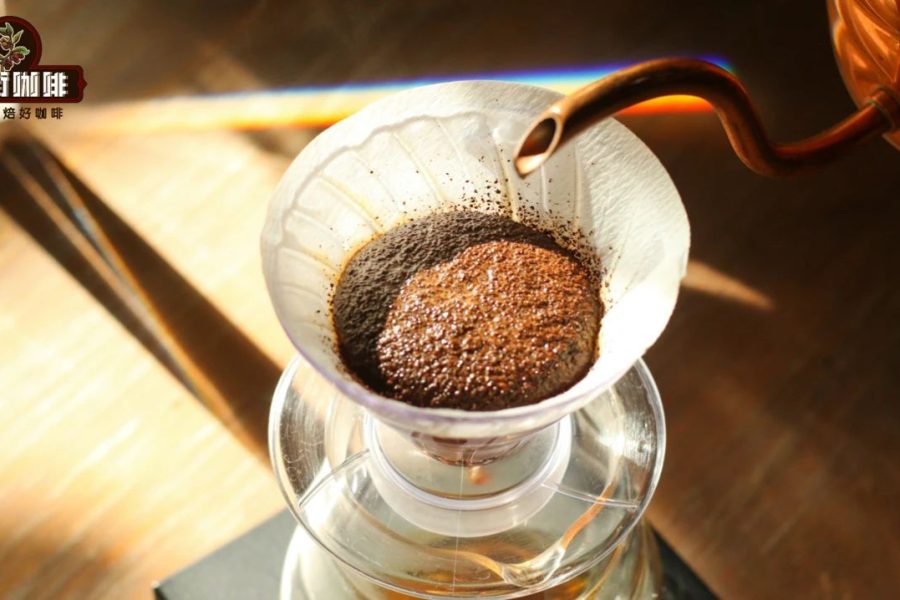
Introduction: The appeal of pour-over coffee lies in precisely controlling water flow and time to release the unique flavors of the coffee beans. This article explains in depth the core steps of the three-stage brewing method, including water ratios, timing and water temperature control, to help you master the use of the V60 dripper. We will also share how to adjust grind size and water selection according to the roast level of the beans, comprehensively improving the layers and clarity of pour-over coffee.
As a refined brewing method, pour-over coffee is loved by more and more coffee enthusiasts. But many beginners are often confused about pouring technique, coffee-to-water ratio and brewing rhythm. This article focuses on the three-stage brewing technique, breaks down the key points of each step in detail, and uses the V60 dripper as an example to guide you systematically through an efficient and stable pour-over process.
Before officially starting the pour-over, preparing the necessary equipment is the first step to success. You need: freshly roasted coffee beans, suitable water (filtered water or mountain spring water is recommended), a pour-over kettle, a V60 dripper, a server, a grinder, filter paper, a digital scale and a thermometer. In addition, a relaxed and happy mood can also help you better feel the subtle changes during the brewing process.
First, the freshness of the coffee beans directly determines the final flavor performance. Generally speaking, coffee beans are at their best for drinking within 4 to 30 days after roasting is completed, when the aroma and flavor compounds are most abundant. To obtain ideal flavor, it is recommended to choose coffee beans within one week after roasting to ensure the flavor is at its peak.
Different roast levels require different grind coarseness. For light to medium roast coffee beans, grind to a medium-fine degree, similar to the texture of fine granulated sugar, with a passing rate through a No. 20 standard sieve of about 75-80%. Medium-dark to dark roast coffee beans are more suitable for medium-coarse grinding, with a feel similar to white granulated sugar, and a passing rate controlled at 65-70%, to adapt to higher extraction temperatures and longer brewing times.
The influence of water quality on pour-over coffee cannot be ignored either. Water that is too hard or too soft will affect the extraction of coffee flavor, so it is recommended to avoid purified water or mineral water with excessively high mineral content. Ordinary filtered water or mountain spring water is usually a good choice; if you are unsure about your home water quality, brand filtered water such as Nongfu Spring is also a reliable option.
As for equipment, beginners are advised to choose a fine-spout gooseneck kettle for pour-over, as this design facilitates precise control of water flow size and landing point. For the dripper, the V60, with its large hole and spiral rib design, provides good venting and layering, and is very suitable for adjusting flow rate and flavor expression; it is a cost-effective choice suitable for both beginners and advanced users.
The server should be made of a material resistant to both high and low temperatures, to prevent cracking due to temperature differences during brewing. In addition, the digital scale is used to accurately measure the weight of coffee grounds and water, while the thermometer helps you accurately control water temperature. Light to medium roast coffee beans are suitable for a water temperature of 90-92°C, while medium-dark to dark roast is recommended at 87-89°C, to adjust extraction strength and flavor tendency.
A common coffee-to-water ratio is 1:15, for example 15 grams of coffee grounds with 225 grams of water. This ratio achieves a good balance between full extraction and balanced taste. The more coffee grounds, the higher the requirements for pouring time and flow rate control, so setting a reasonable coffee-to-water ratio is the key to consistent results.
Three-stage pouring is one of the most commonly used pour-over techniques and can effectively improve overall extraction uniformity. Taking 15 grams of coffee grounds and 225 grams of water as an example, the first step is to pour 30 grams of water for blooming, lasting 30 seconds, to help activate the coffee grounds and release carbon dioxide. Use a small flow for this step, circling evenly from the center outward, to ensure all coffee grounds are wetted.
The second step is, after the bloom ends, to pour about 100 grams of water, bringing the cumulative water amount to 130 grams, with the time controlled at around 55 seconds. At this stage, a slightly larger flow can be used, poured vertically and evenly, with the aim of raising the coffee bed and promoting the release of more flavor compounds. Note that the flow should be steady to avoid disrupting the structure of the coffee bed.
In the final step, when the liquid level drops to half, begin pouring the remaining 95 grams of water, bringing the total water amount to 225 grams. At this point switch to a small flow and control the circling range, to avoid the coffee bed loosening due to excessive flow and affecting extraction uniformity. The entire extraction process is usually completed in about 2 minutes 05 seconds, ensuring flavor compounds are fully extracted while avoiding the bitterness caused by over-extraction.
Take a Geisha coffee from Panama as an example; its flavor profile usually includes rich floral aroma, citrus notes, bright acidity and soft sweetness, accompanied by oolong tea aroma and honey texture in the finish. Through the above three-stage technique, its multi-layered flavor characteristics can be better displayed: fresh on the palate, with a long finish. It is a classic variety that pour-over enthusiasts should not miss.