Burundi Coffee Regions: A Guide from Flavor to Processing
Introduction: Burundi coffee is known for its unique high-altitude growing environment and meticulous washed processing, and its berry-toned flavors are popular among pour-over enthusiasts. This article takes you through the elevations, harvest periods, and variety characteristics of Burundi's main coffee regions, as well as the processing differences that influence flavor, to help you grasp the key knowledge for selecting quality Burundian beans.
The history of coffee cultivation in Burundi dates back to the 1920s during the Belgian colonial period, and it has gone through several changes in production models—shortly after independence it shifted to private ownership, in 1972 it was brought under state ownership due to political changes, and it gradually returned to privatization after 1991. Today, the country's coffee is mainly grown in a dispersed manner by smallholder farmers; although this model is small in scale, it ensures the purity of the coffee's terroir characteristics.
Burundi's geographical conditions are ideal for coffee growing: the mountainous terrain provides a wide range of elevations, and together with a mild climate, it gives coffee trees ample sunlight and well-drained soil. It is worth noting that the local wet-processing stage has improved significantly in recent years—small wet mills in various regions often spontaneously form management integration units (similar to associations), and by sharing advanced hardware equipment, they have greatly improved the overall consistency of coffee quality.
In terms of processing, Burundi coffee generally uses the washed method, which clearly highlights clean and bright acidity, and the main variety is the classic Bourbon. Note, however, that similar to neighboring Rwanda, improper processing can easily produce defective flavors such as "potato taste," so when buying, it is advisable to prioritize products with clear regional traceability.
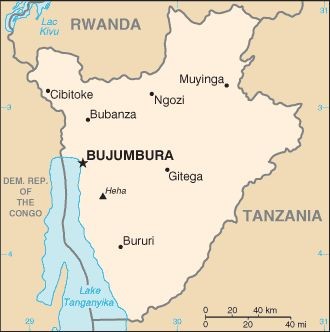
In terms of regional distribution, Burundi can be divided into several distinctive coffee-growing areas: in the northwest, Bubanza, Bujumbura rural, and CIBITOKE, at elevations of 1,350–1,450 meters, with harvest concentrated from April to July, mainly growing Bourbon, Jackson, Mibrizi, and a small amount of SL system varieties; in the southwest, BURURI is at a higher elevation (about 1,550 meters), harvested in the same period, with a similar variety composition.
GITEGA in the center is home to one of the country's two state-owned dry mills, at an elevation of 1,450 meters, with variety choices similar to the above regions; KARUZI to the west reaches 1,600 meters and is also harvested from April to July. KAYANZA and KIRUNDO in the north are wet-mill-dense areas bordering Rwanda (the second-highest density in the country), with an average elevation of 1,700 meters and outstanding variety richness.
The separately mentioned KIRUNDO region is slightly lower (about 1,500 meters), while MAKAMBA in the south is at 1,550 meters, both maintaining the regular April–July harvest cycle. The small central regions of MURAMVYA and MWARO have the highest elevations (1,700–1,800 meters), and MUYINGA in the center is located in the northeast near the border with Tanzania at 1,600 meters; these areas are all dominated by Bourbon-series varieties.
The northern town of NGOZI is the country's most densely concentrated coffee-producing region, home to 25% of the country's wet mills, with an average elevation of 1,650 meters; although RUTANA in the south has only one wet mill, its growing environment at 1,550 meters also produces quite distinctive coffee. Overall, Burundi coffee is mainly planted with Bourbon and its variants, at elevations ranging from 1,350 to 1,800 meters, and coffee from high-quality regions often presents complex berry aromas, lively and refreshing on the palate like juice—a quality choice for pour-over coffee lovers.